
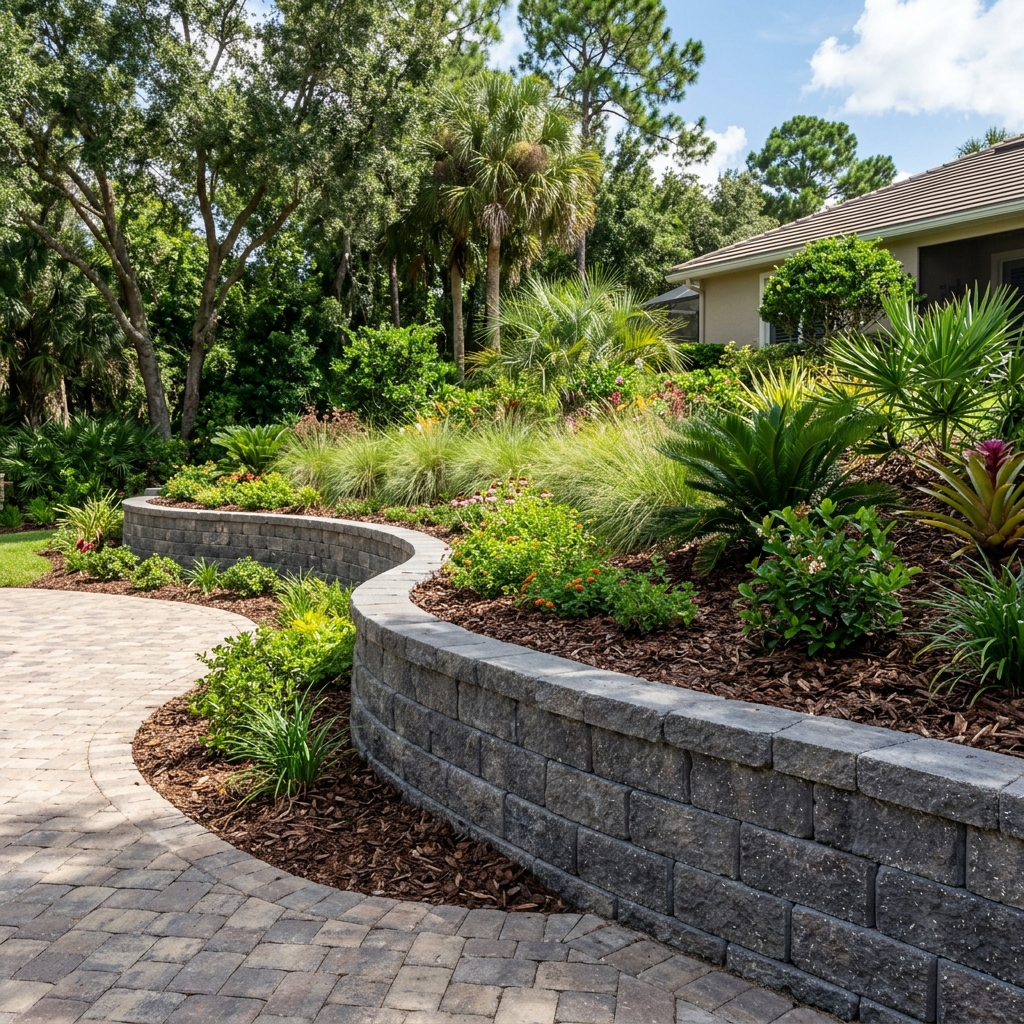
Curved block retaining wall with landscaped plantings in Florida
15 Smart Retaining Wall Ideas for Your Backyard
A retaining wall is a blank canvas waiting for your personal touch. While its primary job is to hold back soil, its design potential is nearly limitless. You can transform this hardworking structure into the centerpiece of your outdoor living area. Consider a wall with built-in bench seating around a fire pit, or a tiered design that creates a cascading vertical garden. You could even incorporate a gentle waterfall for a peaceful, relaxing atmosphere. This is your chance to get creative and build a feature that is uniquely yours. We’ve gathered some inspiring retaining wall ideas for backyard spaces to show you how to turn a functional necessity into a stunning, custom statement piece.
Key Takeaways
- Turn tricky slopes into usable outdoor space: Retaining walls are a practical solution for managing sloped yards, preventing soil erosion, and controlling water runoff, creating level ground for patios, gardens, or play areas.
- Make your wall a central design feature: The materials you choose, from natural stone to modern concrete, and creative additions like built-in seating or terraced planters, are what define your backyard’s unique style.
- A strong wall requires a smart foundation: The long-term success of your retaining wall depends on critical planning steps, including a proper site evaluation, an effective drainage system, and a solid, level base.
Why Your Backyard Might Need a Retaining Wall
Retaining walls are much more than just a decorative border for your garden. They are hardworking structures that solve some of the most common and frustrating landscape challenges, especially here in Central Florida. If you’re dealing with a sloped yard, soggy spots, or soil that seems to be washing away with every rainstorm, a retaining wall might be the perfect solution. They work by holding back soil, turning tricky terrain into a stable, beautiful, and functional part of your property. Let’s look at a few key reasons why a retaining wall could be exactly what your backyard needs.
Stop soil erosion on slopes
Living in Florida means enjoying beautiful weather, but it also means dealing with heavy rainfall. On a sloped property, that rain can wash away valuable topsoil, a process called soil erosion. This can expose tree roots, damage your lawn, and even threaten your home’s foundation over time. A retaining wall acts as a sturdy barrier, holding the soil in place and preventing it from eroding down the hill. By stabilizing the land, a professionally designed retaining wall installation protects your landscape investment and gives you peace of mind, knowing your yard is secure and stable no matter how much it rains.
Create level, usable space from a hilly yard
Is a steep slope keeping you from having the patio, garden, or play area you’ve always wanted? Hilly yards can feel limiting, but a retaining wall can completely reshape your outdoor space. By cutting into the slope and building a wall, you can create level tiers or terraces. This instantly transforms an unusable incline into functional, flat ground. Imagine adding a new seating area for entertaining or a dedicated spot for a vegetable garden. It’s a smart way to reclaim your property and make every square foot of your backyard part of your overall landscape design.
Manage water drainage and runoff
Water management is a huge concern for any Florida property owner. Poor drainage can lead to standing water, which can damage plant roots and create a breeding ground for pests. On a slope, uncontrolled runoff can cause even bigger problems, putting pressure on your home’s foundation. A well-built retaining wall is designed with drainage in mind. Features like gravel backfill and weep holes allow water to pass through or around the wall safely, preventing pressure buildup that could cause it to fail. Proper drainage solutions integrated with your retaining wall will protect both the structure itself and the rest of your property from water damage.
Choosing the Right Materials for Your Style
The material you choose for your retaining wall does more than just hold back soil; it defines the entire look and feel of your backyard. Think of it as the backbone of your landscape design. Each material has its own personality, from the rustic charm of natural stone to the clean lines of modern concrete. Your decision will influence not just the style, but also the wall’s durability and the amount of maintenance it will need down the road. Let’s walk through some of the most popular options to help you find the perfect match for your home and your vision.
Classic and versatile: Concrete and interlocking blocks
Concrete blocks are a go-to for a reason. They are strong, uniform, and create a clean, structured look that works with almost any style of home. Because they are engineered to fit together perfectly, interlocking blocks create an incredibly stable and secure wall. This makes them a reliable choice for everything from small garden beds to larger, more complex projects. Their simple, geometric shape provides a perfect neutral backdrop, allowing your plants and other hardscaping services to take center stage. If you’re looking for a straightforward, durable, and polished finish, concrete blocks are an excellent option.
Natural and warm: Wood and manufactured stone
There’s something undeniably inviting about a wood retaining wall. It brings a warm, organic texture to the landscape that blends beautifully with trees and gardens. While wood can be a great choice for a rustic or naturalistic design, it’s important to consider the upkeep. Here in Florida, wood requires regular sealing to protect it from moisture and pests. For a similar aesthetic with less maintenance, manufactured stone veneer is a fantastic alternative. It mimics the look of natural stone but comes in consistent shapes and colors, making the retaining wall installation process a bit more predictable.
Timeless and strong: Natural stone and poured concrete
For a look that is both elegant and enduring, natural stone is unmatched. Each stone has unique colors and textures, creating a one-of-a-kind wall that feels like it’s always been a part of the landscape. Natural stone is incredibly durable and stands up to the elements beautifully. Because of the weight and irregular shapes of the stones, professional installation is essential to ensure a safe and stable structure. On the other end of the spectrum, poured concrete offers a sleek, minimalist appeal. It’s exceptionally strong and can be formed into clean lines and smooth curves for a modern landscape design.
Modern and unique: Gabion walls
If you want to make a statement, consider a gabion wall. These are essentially wire cages filled with rocks, but the concept is more versatile than it sounds. You can fill the baskets with anything from smooth river rocks to colorful recycled glass, creating a truly custom look. Gabion walls have an industrial-chic vibe that works well in modern and eclectic gardens. They are also excellent for drainage, as water can easily pass through the gaps between the rocks. This unique approach is not only visually interesting but also an effective and environmentally friendly way to manage soil.
Comparing durability, maintenance, and overall look
Ultimately, the best material is the one that fits your style, your property’s needs, and your willingness to perform maintenance. Wood offers natural beauty but requires regular care. Concrete blocks are low-maintenance and versatile. Natural stone provides timeless strength but requires a skilled hand to build correctly. When making your choice, think long-term. Investing in high-quality materials and a professional retaining wall installation from the start will give you a beautiful, functional wall that lasts for years, preventing the need for future repairs. A well-built wall is a smart addition to any property.
Creative Ideas to Transform Your Backyard
A retaining wall is a hardworking feature, but its job doesn’t have to be purely functional. Think of it as a blank canvas for your backyard. With the right design choices, a retaining wall can become a stunning focal point that adds personality, style, and new purpose to your outdoor space. From creating lush garden terraces to building in cozy seating, here are some creative ideas to get you started.
Get a rustic, organic look with natural stone
If you love a timeless, earthy feel, natural stone is a perfect choice. Materials like flagstone and granite create a wall that looks like it has always been part of the landscape. Each stone has unique colors and textures, giving the structure a rich, organic character that blends beautifully with plants and trees. This style works well for creating a relaxed, rustic atmosphere, turning a simple slope into a charming feature. A well-built stone wall is more than just a support system; it’s a piece of natural art that enhances your yard’s inherent beauty and provides a classic backdrop for your garden.
Achieve a sleek, contemporary feel with modern concrete
For a clean and contemporary look, consider a retaining wall made from modern concrete or stucco. A smooth, minimalist finish, perhaps in a crisp white or a dramatic dark gray, can make a bold statement. This sleek backdrop creates a high-contrast look that allows the vibrant greens of your plants and the colors of your flowers to truly stand out. It’s an excellent choice for homes with modern architecture, helping to extend that clean aesthetic into the outdoor living space. This approach turns a functional wall into a sophisticated design element that feels intentional and polished, framing your landscape with sharp, clean lines.
Mix materials for a custom design
You don’t have to stick to just one material. Combining different textures and elements can result in a truly unique, custom retaining wall. Imagine the warmth of wood panels set against the cool strength of concrete blocks, or the rugged look of stone accented with sleek metal details. Mixing materials allows you to create a design that perfectly matches your personal style and your home’s architecture. This approach is a fantastic way to add visual interest and a bespoke feel to your yard, ensuring your retaining wall installation is a one-of-a-kind feature that reflects your creativity.
Add dimension with tiered walls and terraced gardens
If you have a particularly steep slope, a single tall wall isn’t your only option. Breaking up the incline with a series of shorter, tiered walls can add incredible dimension and beauty to your yard. This terraced approach creates multiple level areas perfect for planting. You can design a cascading flower garden, a series of vegetable beds, or even small patio nooks on each level. Tiered walls are a practical solution for managing a steep grade, but they also offer a fantastic opportunity to create a dynamic, multi-level landscape that is both visually stunning and full of usable space.
Soften the landscape with curved walls
While straight lines are classic, curved retaining walls can introduce a sense of softness and flow to your backyard. Gentle, sweeping curves can make a space feel more natural and less rigid, guiding the eye through the landscape and creating a graceful transition between different areas of your yard. A curved wall can wrap around a patio, encircle a garden bed, or simply meander along a slope, adding visual interest and elegance. This design choice is a wonderful way to break up the boxy feel of a typical yard and create a more organic, inviting outdoor environment.
Build in seating and entertainment features
Make your retaining wall do double duty by incorporating built-in features. A popular option is to add a wall cap wide enough to serve as a bench, creating permanent seating around a patio or fire pit area. This is a smart way to maximize your space and provide plenty of seating for guests without cluttering the area with furniture. You can also integrate other elements, like niches for outdoor lighting to create evening ambiance, built-in planters for extra greenery, or even a small shelf for drinks. These thoughtful additions transform your wall from a simple structure into an integral part of your outdoor living space.
Design a vertical garden with built-in planters
Turn your retaining wall into a living work of art by designing it as a vertical garden. You can build pockets or tiers directly into the wall’s structure to hold soil for planting. This is an ideal solution for yards with limited space, allowing you to grow a lush garden without taking up valuable ground area. Imagine a wall covered in cascading flowers, vibrant succulents, or even a convenient kitchen garden with fresh herbs and vegetables. A vertical garden softens the hardscape, introduces more greenery, and creates a stunning focal point that is both beautiful and productive.
Incorporate water features or other decorative elements
For a truly show-stopping effect, consider adding a water feature to your retaining wall. A gentle waterfall or a sleek spillway can introduce the calming sound and motion of water into your backyard, creating a peaceful and relaxing atmosphere. The water can cascade down the face of the wall into a small basin or pond below. Beyond water features, you can also embed other decorative elements like colorful tiles, mosaics, or artistic metalwork. These custom touches can turn your retaining wall into the centerpiece of your landscape design, reflecting your unique style and creating a truly special outdoor retreat.
How to Plan for a Successful Project
A beautiful, long-lasting retaining wall starts long before the first block is laid. Proper planning is the most critical step to ensure your wall is safe, functional, and looks great for years to come. Skipping these foundational steps can lead to leaning, bulging, or even a total collapse. Taking the time to plan correctly protects your investment and gives you peace of mind. Here’s what you need to consider for a successful project.
Evaluate your site and soil first
Before you get attached to a specific design, take a close look at your property. The type of soil you have and the steepness of the slope are major factors in how your wall needs to be built. Heavy clay soil behaves differently than sandy soil, especially when it gets wet. A professional site evaluation will identify these conditions and determine the best approach. A wall built without considering the specific challenges of your yard is at risk of failure from the start. Proper retaining wall installation always begins with a thorough understanding of the ground it’s built on.
Understand the engineering and soil pressure needs
It’s easy to underestimate the sheer force of the earth your retaining wall will hold back. Soil, gravel, and water create immense pressure that is constantly pushing against the structure. A successful wall is more than just a stack of pretty stones; it’s an engineered system designed to manage that load. This is why many DIY projects fail. Understanding the physics involved is key to choosing the right materials and construction methods. Professionals use their expertise in excavation services and soil mechanics to ensure your wall is built to withstand the pressure and last for decades.
Install a proper drainage system
Water is the number one enemy of a retaining wall. Without a way for water to escape, it builds up behind the wall, creating immense hydrostatic pressure that can push the entire structure over. This is one of the most common, and most serious, mistakes in retaining wall construction. A proper drainage system is not optional. This typically includes a layer of gravel behind the wall, a perforated pipe at the base to channel water away, and weep holes. As expert landscape drainage contractors, we know that managing water flow is essential for the stability and longevity of any hardscape feature.
Prepare the right footing and foundation
Just like your house, a retaining wall needs a solid foundation to stand strong. A wall built on bare, unlevel ground will inevitably shift, settle, and lean. The solution is a proper footing, which involves digging a trench below the frost line and filling it with compacted gravel to create a stable, level base. This step ensures the weight of the wall is distributed evenly and prevents movement over time. Skimping on the foundation might seem like a way to save time, but it will only lead to structural problems down the road. A solid base is the key to a wall that stays put.
Select materials appropriate for your wall’s height
The materials you choose do more than just define your wall’s style; they are critical to its structural integrity. A low, decorative garden wall has very different requirements than a four-foot wall holding back a major slope. Taller walls need the strength of engineered interlocking blocks or poured concrete to handle the increased soil pressure safely. Using the wrong materials for the wall’s height can lead to bowing or collapse. When planning your hardscaping services, it’s important to balance aesthetics with the engineering demands of the project to ensure your wall is both beautiful and safe.
Check local regulations and height limits
Before you start digging, it’s important to know the local rules. Many cities and counties in Central Florida have regulations for retaining walls, especially once they reach a certain height, often around three or four feet. You may need a permit, a survey, or professional engineering plans to move forward with your project. Ignoring these requirements can result in fines or being forced to tear down your work. A professional landscape contractor will be familiar with local building codes and can manage the permitting process for you, ensuring your project is fully compliant from day one.
The Lasting Benefits of a Well-Built Retaining Wall
A well-built retaining wall is much more than a stack of blocks or stones. It’s a powerful tool that reshapes your landscape, adding structure, stability, and style. Beyond just holding back soil, a professionally installed wall delivers a host of benefits that you’ll enjoy for years to come. From creating new outdoor living areas to protecting your property from the elements, retaining walls are a smart investment in your home’s beauty and functionality. They solve common yard problems while opening up a world of design possibilities, turning challenging terrain into a standout feature of your property.
Gain more functional garden and patio space
Is a steep slope making your backyard feel unusable? A retaining wall can completely transform it. By strategically terracing a hillside, you can carve out level, functional areas perfect for a new patio, a safe play space for kids, or the tiered garden you’ve always wanted. Instead of fighting with a difficult incline, you can reclaim that square footage and create distinct outdoor “rooms.” A well-designed retaining wall installation doesn’t just manage a slope; it unlocks your yard’s hidden potential, adding valuable living space and making every part of your property accessible and enjoyable. It’s about turning a landscape challenge into a beautiful, practical asset.
Improve erosion control and stabilize your yard
In Central Florida, heavy rains can be a serious threat to your landscape, washing away valuable topsoil and threatening your home’s foundation. This process, known as soil erosion, can destabilize slopes and cause significant damage over time. A retaining wall acts as a crucial barrier, holding soil in place and preventing it from shifting or washing away. By securing the earth, it protects your plant beds, your lawn, and the structural integrity of your property. This makes your yard a safer, more stable environment and gives you peace of mind, knowing your landscape is protected from the powerful forces of nature.
Create new opportunities for landscaping
Think of a retaining wall as the backbone of your garden design. It provides structure and definition, turning a flat or sloped yard into a dynamic, multi-dimensional space. These walls create perfect opportunities for new landscaping projects, serving as raised planters for flowers, herbs, or vegetables. They can frame a patio, guide a walkway, or create a stunning backdrop for a water feature. By adding vertical interest, retaining walls draw the eye and make your yard feel more organized and intentional. They allow you to play with different levels, textures, and plant combinations, giving you a canvas to create a truly unique and personalized outdoor oasis.
Enhance your property’s value and curb appeal
A thoughtfully designed and professionally built retaining wall is a significant upgrade to your property. It immediately improves curb appeal by creating a clean, polished look and transforming unruly slopes into elegant, structured landscapes. This kind of functional and aesthetic improvement is highly attractive to potential buyers, as it solves common landscape problems while adding beauty. By expanding usable outdoor living space and showcasing a well-maintained property, retaining walls can directly contribute to your home’s overall value. Investing in quality hardscaping services like a retaining wall is a smart move that pays off in both daily enjoyment and long-term equity.
Simplify yard care with better water management
A soggy, waterlogged yard is difficult to maintain and can lead to plant root rot and other issues. One of the most important functions of a professionally installed retaining wall is managing water flow. Proper construction includes a drainage system that channels water away from the wall’s base, preventing pressure buildup and soil saturation. This means no more pooling water or muddy patches after a storm. By ensuring effective drainage solutions, a retaining wall helps keep your soil healthy and your yard easier to care for. It’s a practical benefit that protects both your landscape and the wall itself from water damage.
Related Articles
- 30+ Landscape Retaining Wall Ideas You’ll Love
- How to Build a Retaining Wall on a Slope: A DIY Guide
- Retaining Wall Installation 101: The Ultimate Guide
- 12 Smart Cinder Block Retaining Wall Ideas
Frequently Asked Questions
How do I know if my yard actually needs a retaining wall? Look for a few key signs. If you see soil washing away from a slope after it rains, or if you have a hilly area that’s too steep to mow or use for anything practical, a retaining wall is likely a great solution. It’s also a smart choice if you struggle with soggy ground or standing water at the bottom of an incline, as a properly built wall helps manage water runoff.
What’s the best retaining wall material for the Florida climate? For our humid and rainy climate, durability and low maintenance are key. Materials like interlocking concrete blocks and natural stone are excellent choices because they stand up incredibly well to moisture and won’t rot or warp. While wood can offer a beautiful, natural look, it does require consistent sealing and care to protect it from the elements here in Central Florida.
Does a retaining wall have to be a boring, straight line? Not at all. A retaining wall can be a major design feature in your yard. Gentle curves can create a softer, more organic feel that guides the eye through your landscape. For steeper slopes, a series of tiered walls can create stunning terraced gardens. You can even build in features like bench seating or planters to make the wall a functional part of your outdoor living space.
Why is professional installation so important for a retaining wall? A retaining wall is an engineered structure that has to hold back an immense amount of pressure from soil and water. A professional understands how to evaluate the soil, build a proper foundation, and install a critical drainage system. These steps are essential for creating a wall that is safe, stable, and will last for decades without leaning, bulging, or failing.
Are there rules about how high I can build a retaining wall? Yes, most cities and counties have regulations regarding retaining wall height. Typically, any wall over three or four feet tall requires a building permit and sometimes an engineer’s design to ensure it’s constructed safely. A professional contractor will be familiar with local codes and can manage the permitting process for you, making sure your project is fully compliant.