15 Creative Retaining Wall Ideas on a Budget
Let’s clear up a common misconception: building a strong, attractive retaining wall does not have to be an expensive undertaking. Many people see a sloped yard and immediately assume the solution is too complex or costly to handle. The reality is that with a bit of creativity and knowledge, you can construct a fantastic wall that suits your style and financial situation. From upcycled materials to locally sourced stone, the possibilities are endless. This article is your source for clever retaining wall ideas on a budget, designed to prove that a functional and beautiful landscape is within your reach.
Key Takeaways
- Explore creative material options: You can build a beautiful and effective wall using more than just concrete blocks. Consider materials like pressure-treated wood for a classic look, natural stone for a rustic feel, or gabion baskets for a modern industrial style.
- Build on a solid foundation with proper drainage: The longevity of your wall depends on two key factors. Start with a level, compacted base to prevent shifting, and include a drainage system behind the wall to relieve water pressure and avoid structural failure.
- Know your limits and plan for success: Smart design choices, like using tiered walls on a steep slope, can make a project more manageable. For any wall over three feet tall, it’s best to consult a professional to ensure it’s built safely and correctly.
What Are the Most Affordable Retaining Wall Materials?
Building a retaining wall doesn’t have to drain your savings. The secret to a beautiful and functional wall that respects your financial plan often comes down to one thing: the materials you choose. From classic wood to modern wire baskets, there are plenty of options that deliver durability and style without a hefty price tag. The right material for you will depend on the look you want, the scale of your project, and how much hands-on work you’re willing to do.
Exploring these materials can spark some serious inspiration for your yard. Whether you’re drawn to the rustic charm of natural stone or the clean lines of concrete, there’s a solution that fits your vision. Let’s walk through some of the most popular and accessible materials to help you find the perfect match for your landscape project.
Pressure-Treated Wood: A DIY Favorite
If you’re looking for a straightforward and classic option, pressure-treated wood is a fantastic starting point. Timbers and railroad ties are widely available, relatively easy to transport, and simple to work with, making them a go-to for weekend warriors. The treatment process helps the wood resist rot and insects, giving your wall a longer life. A wooden retaining wall offers a warm, natural look that complements gardens and green spaces beautifully. While it may not last as long as stone or concrete, its ease of installation and timeless appeal make it a solid choice for many homeowners.
Concrete Blocks: Strong and Sensible
For a retaining wall that’s all about strength and longevity, you can’t go wrong with concrete blocks. These uniform blocks, also known as CMUs (concrete masonry units), are designed to lock together, creating an incredibly sturdy structure. While basic gray blocks might not seem exciting, they are a perfect blank canvas. You can easily give them a facelift with a coat of paint or a layer of stucco to match your home’s exterior. Because proper installation is key to their performance, many people turn to a professional retaining wall contractor to ensure the job is done right.
Natural Stone: Go Local to Save
A natural stone wall can feel like a high-end feature, but it doesn’t have to be. The trick is to source your materials locally. Using stone that’s native to Central Florida or even gathered from your own property can dramatically reduce material expenses. A dry-stacked stone wall offers a rustic, organic look that seems to grow right out of the landscape. Each stone is unique, giving your wall a one-of-a-kind character. This type of project requires a good eye and a strong back, but the stunning, timeless result is well worth the effort.
Recycled Materials: Get Creative
Why not build a wall that’s good for the planet and your wallet? Using recycled materials is an inventive way to add structure to your yard. One popular eco-friendly method involves using old tires; when filled with compacted soil, they create an incredibly durable and effective wall for terracing a slope. This approach is perfect for anyone who loves a unique, resourceful project that tells a story. It’s a testament to the idea that with a little creativity, you can turn what some consider waste into a functional and interesting landscape feature.
Gabion Baskets: Industrial Style on a Dime
If you love a modern, industrial vibe, gabion walls are an excellent choice. These simple structures are essentially wire cages filled with rocks, rubble, or even chunks of recycled concrete. They are surprisingly easy to assemble and provide a chic, contemporary look. A major benefit of gabion walls is that they are permeable, meaning water can drain right through them, which helps prevent the pressure buildup that can damage other types of walls. They are a perfect fit for modern hardscaping services and can be filled with a variety of materials to create different textures and colors.
How to Build a DIY Retaining Wall
Taking on a retaining wall project yourself can be a rewarding experience, but it requires careful planning and a good amount of sweat equity. A well-built wall isn’t just about stacking materials; it’s about creating a stable structure that can handle the immense pressure of the soil behind it. Success comes down to understanding the fundamentals, from the ground up.
Gather Your Tools
Before you break ground, you’ll need to assemble your toolkit. The specific tools you need will depend on your chosen material, but some basics are universal. You’ll almost certainly need a sturdy shovel, a wheelbarrow, a tape measure, a level, work gloves, and a hand tamper for compacting soil and gravel. If you’re building with wood, which is often the most approachable material for a first-timer, you’ll also need a saw and a drill. For stone or block walls, a hammer and chisel might come in handy. The key is to have everything ready before you start, so you can work efficiently and safely.
Follow a Step-by-Step Guide
Every successful retaining wall is built on the same core principles: a level base, proper drainage, and careful compaction. Start by digging a trench for the foundation, ensuring it’s deep enough to bury at least half of your first course of materials. Fill the trench with a few inches of compacted gravel to create a stable, level base. As you build, it’s critical to install a system for landscape drainage behind the wall. This usually involves a perforated pipe and more gravel to prevent water pressure from building up and pushing your wall over. Remember to backfill behind the wall in layers, compacting each layer as you go.
Adapt Techniques for Each Material
Your construction method will change based on the material you choose. If you’re using landscape timbers, you’ll need to cut them to size and secure them with long spikes or rebar driven through the layers and into the ground. For a natural stone wall, the process is more like solving a puzzle, as you fit each unique stone together to create a tight, interlocking structure. If you’re aiming for a very strong wall using concrete blocks, the project becomes more involved. This often requires pouring a solid concrete footer and reinforcing the blocks with steel rebar to give the wall the strength it needs to last.
Know When to Call a Pro Like DeAngelos Land Services
It’s important to be realistic about the scope of your project. While a short, decorative garden wall is a great DIY task, taller and more critical walls come with serious safety considerations. If your wall will be over three feet high, is holding back a steep slope, or is located in an area with poor soil, it’s wise to call in a professional. Experts recommend consulting an engineer for larger walls to ensure they are designed correctly. For a structure that is safe, durable, and beautifully constructed, consider a professional retaining wall installation. A pro team has the experience and equipment to handle complex jobs, giving you peace of mind.
Smart Design Tips for an Affordable Wall
A beautiful retaining wall doesn’t have to be a huge undertaking. With some smart planning, you can create a structure that’s both functional and stylish. The secret isn’t just about the materials you choose; it’s about how you design and build the wall itself. A well-thought-out plan can save you time, materials, and a lot of future headaches.
Thinking through the design from the start helps you anticipate challenges and build a wall that will stand strong for years. Key factors like water management, wall height, and foundation stability are non-negotiable for a successful project. Getting these right is the difference between a weekend project you’re proud of and a leaning eyesore that needs to be redone. Let’s walk through some essential design tips that will help you build a durable, attractive, and sensible retaining wall.
Plan for Proper Drainage
Water is the number one enemy of a retaining wall. The soil behind your wall will absorb rainwater, and that trapped water creates immense pressure that can cause the wall to bulge, crack, or even collapse. That’s why proper drainage isn’t just a suggestion, it’s a necessity. A good design channels water away from the wall, relieving that pressure and ensuring its longevity.
You can achieve this by backfilling the space behind the wall with gravel to allow water to flow down freely. Installing a perforated pipe at the base will carry that water away to a safe location. For some wall types, small openings called weep holes are also effective. Managing water correctly is a critical step, and if you’re dealing with significant slope or soil issues, considering professional drainage solutions can protect your investment.
Consider Height and Reinforcement
The height of your retaining wall directly impacts its design and the amount of support it needs. For short, decorative walls under four feet, you can often get by with a simpler construction process. However, once you go over that four-foot mark, the game changes. Taller walls hold back a much heavier load of soil and are subject to greater pressure.
To handle this, taller walls require extra reinforcement. This might involve adding steel rebar within concrete blocks, using geogrid fabric layered in the backfill, or pouring a solid concrete footing. Building a tall wall without the right support is a recipe for failure. If your project calls for a wall of significant height, it’s wise to work with an experienced retaining wall contractor to ensure it’s engineered safely and correctly.
Create a Level, Compact Base
Your retaining wall is only as strong as its foundation. A common mistake is to start building directly on top of the ground, but this will lead to shifting, settling, and an unstable wall. You need to start with a solid, level base to ensure your structure stays put. This begins with digging a trench along the path of your wall.
Once the trench is dug, it should be filled with a few inches of crushed stone or gravel. This material needs to be compacted and perfectly leveled before you lay the first course of your wall. Taking the time to get this step right is crucial for the stability and lifespan of the entire structure. Proper site preparation often involves some light excavation, so make sure you have the right tools for the job.
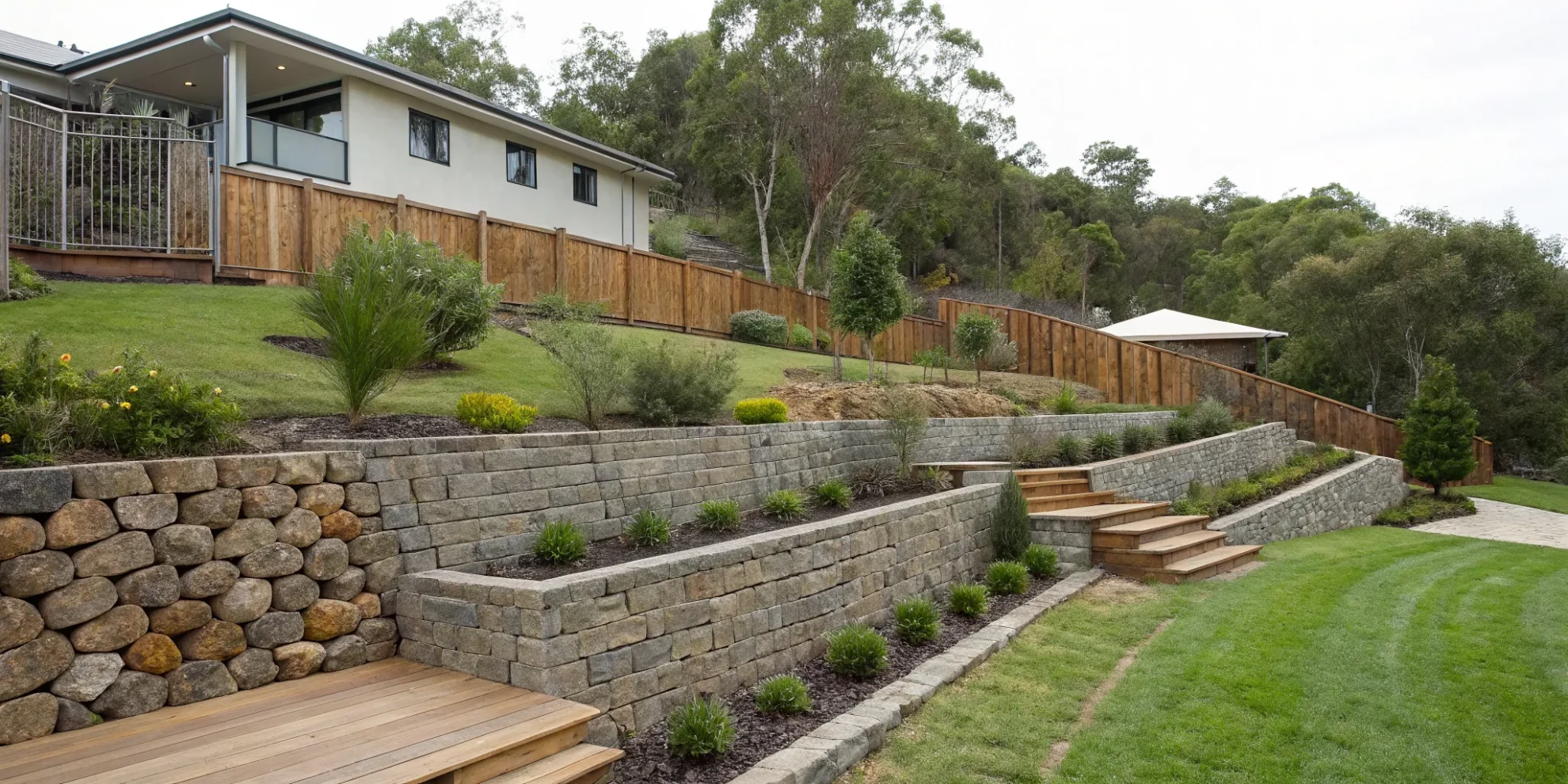
Use Tiers to Save on Materials
If you’re looking to terrace a steep slope, you don’t always have to build one massive wall. An excellent alternative is to create a series of shorter, tiered walls. This approach breaks up the slope into more manageable sections, and each smaller wall has to support far less soil pressure than one tall wall would.
Because shorter walls require less reinforcement and a simpler base, you can often use fewer materials overall. This makes tiered walls a great DIY-friendly option. Plus, the flat areas between the tiers create perfect planting beds for flowers, shrubs, or a vegetable garden. This strategy not only adds stability but also turns a plain slope into a stunning feature of your yard’s landscape design.
Creative Ideas for Your Budget Retaining Wall
Building a functional retaining wall doesn’t mean you have to settle for a plain design. With a little creativity, you can construct a beautiful and effective wall using resourceful materials. These ideas go beyond the standard concrete block, offering unique textures, styles, and even ecological benefits for your Central Florida landscape. Thinking outside the box can lead to a stunning feature that manages soil erosion while adding personality to your yard. Let’s explore some innovative approaches that can transform your property.
Upcycled Tire Walls
For an incredibly resourceful and eco-friendly option, consider building with upcycled tires. This method involves stacking recycled tires and packing them tightly with soil to create a sturdy, long-lasting structure. The result is a surprisingly effective wall for terracing slopes and creating garden beds. While it’s an unconventional look, you can get creative by planting trailing plants over the front to soften the appearance. It’s a fantastic way to reuse materials that would otherwise end up in a landfill, turning a potential waste product into a functional part of your landscape.
Corrugated Metal for a Modern Look
If you love a modern, industrial, or rustic-chic vibe, corrugated metal is an excellent choice. This material is surprisingly durable, lightweight, and relatively simple to install, making it a popular pick for contemporary landscapes. You can use sheets of galvanized or Corten steel (which develops a stable, rust-like patina) to create clean lines and a striking visual contrast against lush greenery. It’s perfect for defining garden beds or as a sleek backdrop in a minimalist yard. This approach gives your property a unique, architectural feel without requiring heavy, traditional materials.
Recycled Pallets for Rustic Charm
Salvaged wooden pallets can bring a wonderful rustic charm to your garden. By deconstructing pallets and using the wood planks, you can build a simple, low-height retaining wall that’s perfect for raised garden beds. This approach is all about embracing imperfections and creating a warm, weathered look. It’s important to source pallets that are safe for garden use, specifically looking for those stamped with “HT” for heat-treated, rather than those treated with chemicals. This ensures your soil and plants stay healthy while you add a touch of farmhouse style to your outdoor space.
Dry-Stacked Stone for a Natural Feel
There’s nothing quite like the timeless beauty of a dry-stacked stone wall. This method uses natural stones fitted together without mortar, relying on gravity and friction to hold everything in place. You can often source local fieldstone, which helps the wall blend seamlessly into the Central Florida environment. It creates a rustic, organic look that feels like it’s always been a part of the landscape. While it requires skill to fit the stones just right, the result is a durable and beautiful feature. For a flawless finish, professional retaining wall installation ensures your wall is both stunning and structurally sound.
Mix Materials for Visual Interest
Why stick to just one material? Combining different elements is a fantastic way to add character and visual interest to your retaining wall. Imagine a wall made primarily of concrete blocks with a top cap of beautiful wood, or sections of gabion baskets interspersed with stacked stone. This approach allows you to use more affordable materials for the bulk of the structure while adding stylish accents where they’ll have the most impact. It’s a great way to express your personal style and create a truly custom look. Thoughtful combinations are a key part of creating dynamic hardscaping services that make your property stand out.
Create a “Living” Wall with Plants
Transform your retaining wall into a vibrant, living feature by incorporating plants. Instead of a hard, bare surface, you can design terraced levels or build pockets into the wall specifically for planting. Choose deep-rooted native plants, which are excellent for helping to hold the soil in place. Trailing flowers, succulents, and ornamental grasses can cascade over the edges, softening the structure and adding color and texture throughout the seasons. This “living” wall not only looks beautiful but also supports local pollinators and creates a healthier ecosystem in your yard. It’s a brilliant way to merge function with thoughtful landscape design.
Common Mistakes That Bust Your Budget
Building a retaining wall can be an incredibly rewarding project, but a few common missteps can turn your weekend DIY into a long-term headache. The goal is to build a wall that not only looks great but also stands strong for years to come. Avoiding some frequent pitfalls is key to making sure your project is a success without requiring a complete do-over later. From the ground up, every step matters. Getting it right the first time saves you time, materials, and a lot of frustration.
Skipping Foundation Prep
A retaining wall is only as strong as its base. A critical error is failing to prepare the foundation with a level trench, compacted soil, and a crushed rock footing. This first step ensures the entire structure is stable and won’t lean or collapse over time. Proper excavation is non-negotiable for a wall that will last through Florida’s seasons and stand up to the elements.
Forgetting About Drainage
Water is the number one enemy of a retaining wall. When soil gets saturated, it creates immense pressure that can cause a wall to bulge or fail. That’s why incorporating proper drainage solutions is essential. A simple gravel backfill and a perforated drain pipe will channel water away safely, protecting your investment and preventing a major repair down the road.
Ignoring Local Permits
Before you break ground, check your local regulations. Many cities in Central Florida require a permit for retaining walls over a certain height, usually three or four feet. Building without one can lead to fines or even an order to tear the wall down. A quick call to your local planning department can clarify the rules and save you from a major headache later on.
Choosing Poor-Quality Materials
While this guide is about being resourceful, cutting corners on material quality is a mistake. Subpar blocks can crack under pressure, and untreated wood will quickly rot in Florida’s humidity, forcing you to rebuild. Choosing durable, appropriate materials is a cornerstone of successful hardscaping services. Your wall will not only look better but will also stand strong for years to come.
Rushing the Project
Patience is key when building a structure meant to last. Rushing often leads to mistakes like uneven layers or improper backfill, which compromise the wall’s integrity. If you feel overwhelmed, it’s better to pause than to push forward. For a project where precision is so important, trusting a professional with your retaining wall installation ensures the job is done right the first time.
Related Articles
- How to Build a Retaining Wall with Concrete Blocks
- How to Build a Retaining Wall on a Slope: A DIY Guide
Frequently Asked Questions
How high can I build a retaining wall on my own? As a general rule, DIY retaining walls should stay under four feet tall. Once a wall gets higher than that, the amount of soil pressure it needs to hold back increases dramatically. Taller walls require professional design, significant reinforcement, and a much more robust foundation to be safe and stable for the long term.
What’s the most beginner-friendly material for a DIY retaining wall? Pressure-treated wood timbers are often the most approachable material for a first-time builder. The wood is relatively lightweight, easy to cut to size with basic tools, and straightforward to assemble. While interlocking concrete blocks are also popular, they are much heavier and require more precision to keep everything perfectly level.
Why is drainage so important for a retaining wall? Proper drainage is the single most important factor in a retaining wall’s longevity. Without a way for water to escape, the soil behind the wall becomes saturated and heavy, creating immense pressure. This force, known as hydrostatic pressure, is what causes walls to lean, bulge, and eventually fail. A simple drainage system protects your wall from this constant stress.
Do I need a permit to build a retaining wall in Central Florida? It really depends on your specific location and the height of your planned wall. Many local governments require a permit for any wall over three or four feet tall. Before you start digging, it’s always a good idea to contact your local city or county planning department to understand the specific requirements for your property.
Can I use fewer materials by building several short walls instead of one tall one? Yes, this is a smart and effective strategy called terracing. Building a series of shorter, tiered walls to manage a slope is often a great alternative to one massive wall. Because each smaller wall supports less soil, it typically requires less reinforcement and a simpler foundation, which can make the project more manageable. Plus, it creates wonderful, level spaces for planting.