
What Happens to the Hole After Stump Grinding?
What Happens to the Hole After Stump Grinding?
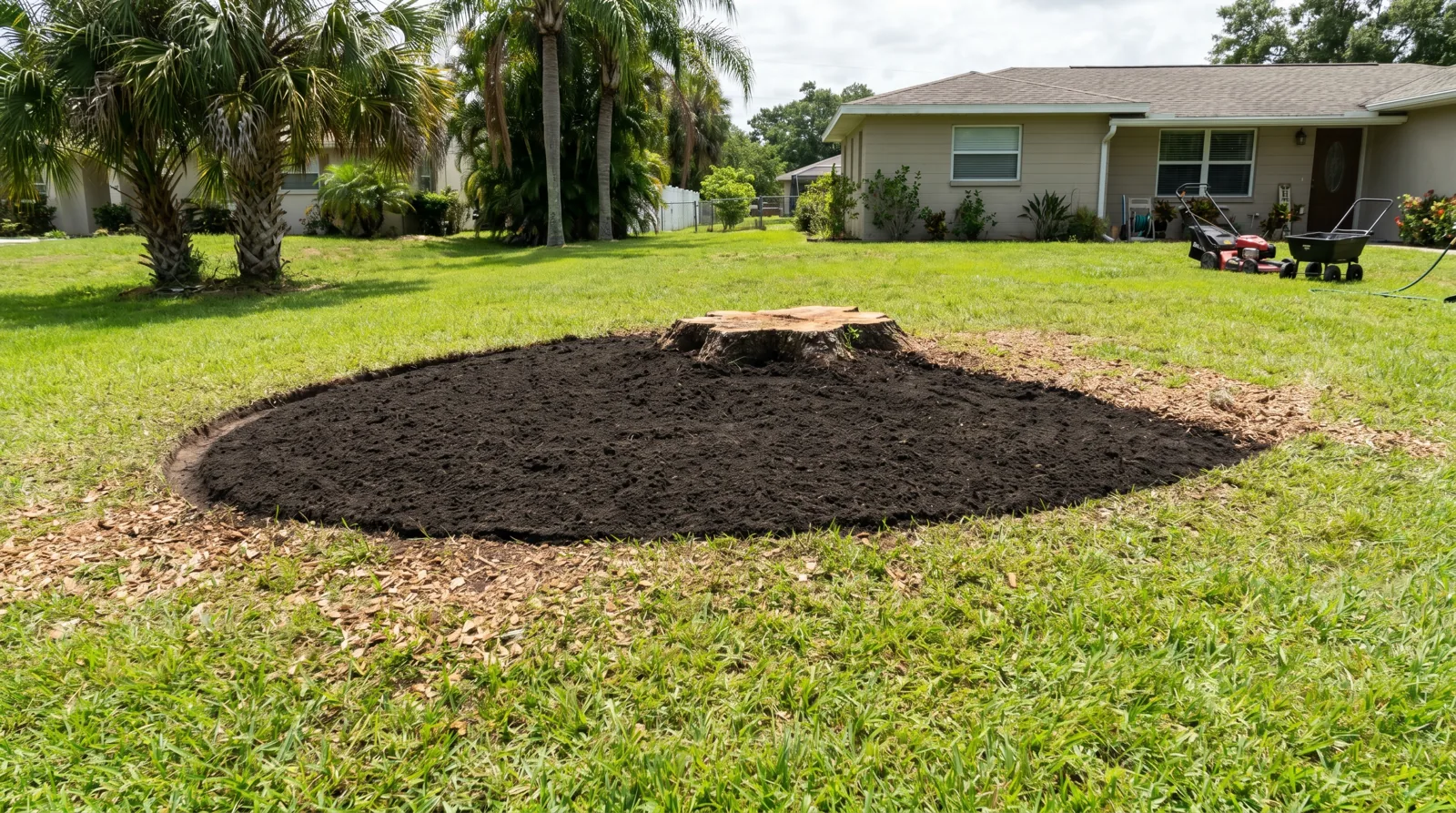
The hole after stump grinding is usually a shallow, mounded mix of wood chips and soil — not a deep pit — and it’s yours to keep, fill, or level however you like. When our crew grinds a stump, we chew the wood down to roughly 4 to 12 inches below grade and leave behind a pile of chips that sits a little proud of the surrounding lawn. That mound is normal, and it matters because it changes how you finish the spot.
The grinding leaves a low mound of chips and soil that will settle for months. Rake it level, top with clean topsoil, and you can sod or seed once it’s stable — just don’t plant a new tree right in the leftover chips.
We get this question on almost every job, from Winter Springs cul-de-sacs to Sanford backyards. Folks expect a clean patch of dirt and instead find a fluffy pile of shredded wood. Here in Central Florida, with our sandy soil and afternoon downpours, what you do with that spot decides whether you end up with a nice patch of St. Augustine or a sunken, weedy dip.

What the Hole After Stump Grinding Actually Looks Like
The cavity isn’t a clean cylinder of dirt. It’s a blend of shredded wood chips, native soil churned up by the grinder, and air pockets all through the pile. That’s why the spot mounds up above your lawn at first — a ground stump makes far more loose material than you’d expect. It looks like we left you extra dirt; we didn’t, and that volume disappears as the chips break down and the air pockets collapse.
How deep does grinding go? For a standard residential stump, we grind 4 to 8 inches below grade — enough to plant grass over and never see it again. If you want to replant a tree there or pour a footing for a fence post or shed, tell us up front and we’ll grind 12 inches or more and chase the major lateral roots.
Settling is guaranteed — the most important thing to understand about the spot. Those chips are mostly air and water. Over the next 6 to 12 months they compact under rain and foot traffic, and soil microbes decompose the wood, which loses a lot of volume. The result is a slow sink: a spot that mounds two inches high the day we leave can become a two- or three-inch depression by spring — and in our sandy Seminole and Volusia County soils, that settling can be even worse.
We recently ground out a big water oak stump off Tuskawilla Road in Winter Springs. The homeowner raked it flat and tossed grass seed right onto the chips — and by July the whole patch had caved into a shallow basin that held water after every storm and grew nothing but dollarweed. The seed was sitting on decomposing wood instead of soil. That spot is exactly why we walk every customer through the finishing steps.
Why not just leave the chips? Beyond the sinking, fresh wood chips cause trouble in a Florida yard: as fungi break them down they pull nitrogen from the soil, starving anything you plant; a damp pile of decomposing wood invites termites and fungus (keep it off the house and wood fences); and the chips sprout mushrooms and weeds after every rain. They’re great mulch for a bed elsewhere — just the wrong thing to leave in the hole if you want lawn there.
How to finish the spot the right way. Most homeowners can handle this:
- Rake out the excess chips. Pull most of the chips off and use them as free mulch around shrubs, palms, or trees — just keep them a few inches off any trunk. A thin layer mixed into the spot is fine; you just don’t want a pure mound of wood.
- Backfill with clean topsoil. Use screened topsoil (not cheap fill dirt that’s mostly sand), filling the cavity slightly above grade to leave room for settling. Mounding now saves a re-do later.
- Tamp and water it in. Lightly compact and soak the soil so the air pockets collapse on your schedule, not mid-summer. Check after a couple of heavy rains and top off low spots.
- Wait, then plant. Give it a few weeks to settle before laying sod or seeding. Fresh topsoil over the filled hole gives our sod installation crews a clean, level base. For a tree, plant a few feet to the side in undisturbed soil, or have us grind deeper and amend first — the UF/IFAS Extension guidance on planting trees and shrubs covers giving a new tree real soil to root into.
If you’d rather not chase topsoil all summer, we can fill, grade, and sod the spot as part of the job. When we grind a stump in Winter Springs or anywhere across Seminole, Volusia, and Orange counties, finishing the hole is a normal add-on — a flat, plantable patch instead of homework.
Quick Reference: Day One to New Lawn
The short version our crew gives at the truck: day one, expect a mound of chips, not a clean hole — that’s normal. First few weeks, rake off excess chips for mulch, backfill with topsoil mounded slightly high, and water it in. Months 1–12, the spot settles, so top off low areas after big storms. For sod or seed, lay it once the fill has stabilized at grade — over topsoil, never directly on chips. For a new tree, plant to the side, or have us grind deeper and amend so the roots get soil instead of decomposing wood.
Still deciding whether to grind at all? Our stump grinding versus stump removal guide breaks down which one fits your yard, your budget, and what you plan to do with the spot afterward.
Frequently Asked Questions
How long does it take for a stump grinding hole to settle?
Plan on 6 to 12 months for full settling here. The chips compact and decompose over time, and our sandy soil and heavy summer rains speed it up. That’s why we mound topsoil slightly above grade when we fill — so the spot levels out flush instead of sinking into a basin.
Can I use the leftover wood chips to fill the hole?
Mix a thin layer in, but don’t fill with pure chips. They lose a lot of volume as they break down, so the spot sinks, and decomposing wood pulls nitrogen from anything you plant. Use the chips as mulch around shrubs and trees, and backfill the hole with clean topsoil.
Can I plant grass over a ground stump right away?
Wait until the spot is filled with topsoil and has had a few weeks to stabilize. Sod or seed laid directly on fresh chips fails almost every time — the chips settle, hold water, and starve the grass of nitrogen. Topsoil first, then grass.
Can I plant a new tree where the old one was ground out?
Not directly in the leftover chips. For a new tree in the same area, plant a few feet to the side in undisturbed soil, or have us grind deeper and amend the hole with quality soil so the new roots have something real to grow into. Old roots and decomposing wood make a poor home for a young tree.
Do you fill the hole as part of stump grinding?
We can — filling, grading, and sodding the spot is a common add-on. Just ask when you book and we’ll bring topsoil and leave you a flat, plantable patch instead of a pile of chips.
Talk to a Local Stump Grinding Crew — Free Estimate
If you’ve got a stump to deal with — or a sunken, chip-filled spot from a grind that didn’t get finished right — our Central Florida crew can grind it, fill it, and leave it ready to plant. We’re veteran-owned, BBB A+ rated, Google Guaranteed, and 5.0-star rated across 211+ reviews from homeowners in Winter Springs, Lake Mary, Sanford, Deltona, Orlando, and across Seminole, Volusia, and Orange counties.
We also offer a 10% veteran discount on every service.
Call us at (386) 675-2303 or request a free estimate online. Tell us what you want the spot to become — a fresh patch of lawn, a planting bed, or a clean slate for a new tree — and we’ll finish it the right way.
About the Author
Mark DeAngelo is an ISA Certified Arborist and the founder of DeAngelo’s Land Services in Lake Mary, Florida. A USAF combat veteran, Mark leads a BBB A+ rated, Google Guaranteed crew trusted by hundreds of homeowners across Seminole, Volusia, and Orange counties for tree removal, stump grinding, and lawn restoration.