
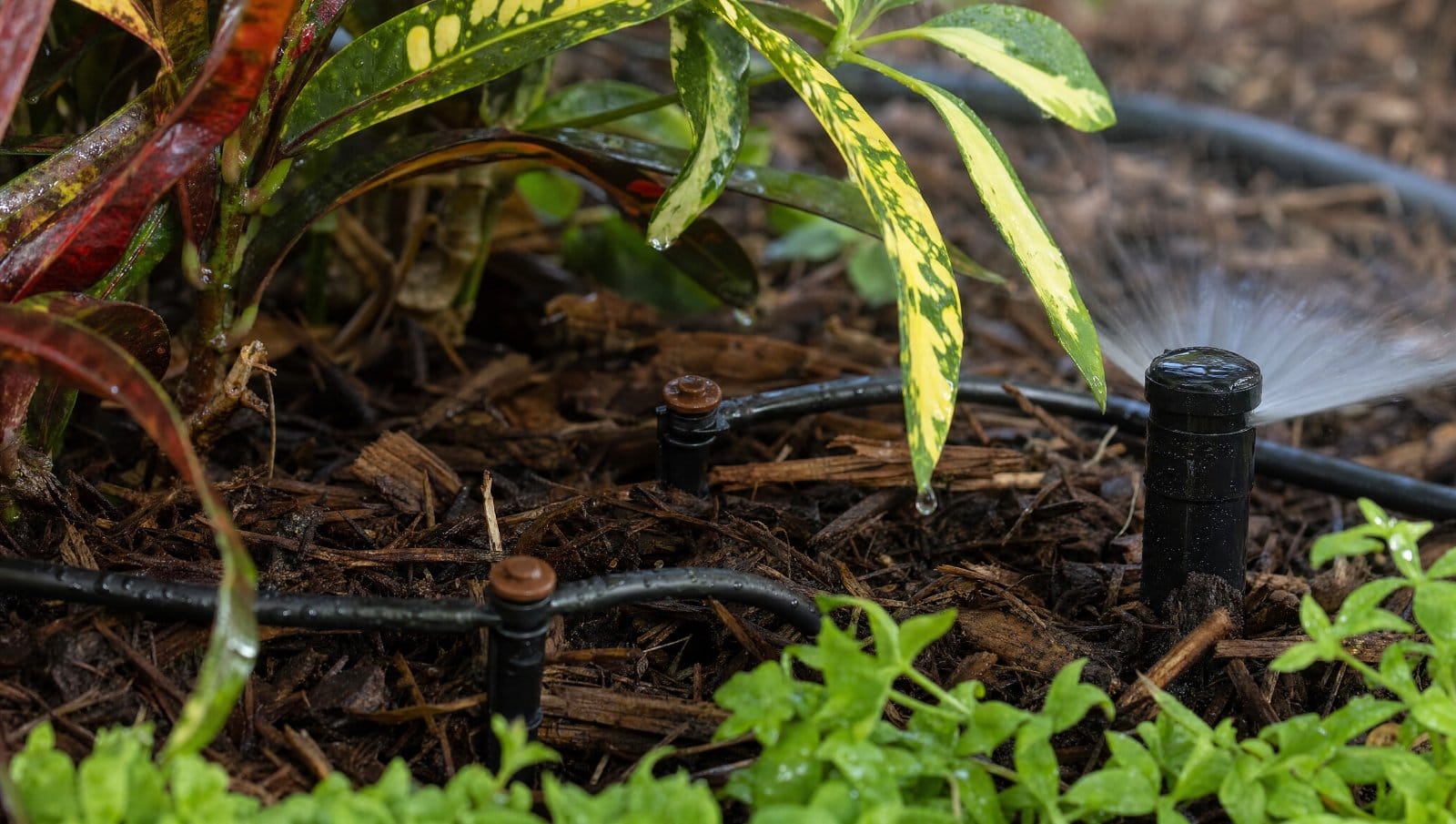
Drip targets roots; spray covers turf, each with trade-offs.
Micro-Irrigation vs Spray Heads: Smarter Watering for Central Florida Yards
If your water bill climbs every summer and parts of your beds still look thirsty, the problem usually is not how much you water. It is how the water gets delivered. When it comes to micro-irrigation Florida homeowners often have the most to gain, because our sandy soil and afternoon downpours punish inefficient systems. In this guide we break down micro-irrigation versus traditional spray heads, where each one belongs, and how to water a Central Florida yard the smart way.
Why Watering Method Matters in Central Florida
Most of inland Central Florida sits in USDA zone 9b, with fast-draining sandy soil, hot humid summers, and heavy rain from June through September. The USDA refreshed its Plant Hardiness Zone Map in 2023, and some coastal and urban pockets, including parts of Orlando proper, now trend toward zone 10a; for our inland service area around Orange City and DeLand, 9b is still the right planning baseline. Sand holds very little water. Pour a lot on at once and most of it sinks past the root zone before the plant can use it. That is why how and where you apply water often matters more than the total amount.
The two most common delivery systems are conventional spray heads (and rotors) that throw water across an area, and micro-irrigation, which delivers water slowly and directly to the soil near each plant. Both have a place. The trick is matching the method to the planting.
How Micro-Irrigation Works
Micro-irrigation is an umbrella term for drip tubing, inline emitters, micro-sprays, micro-jets, and bubblers. Instead of broadcasting water through the air, these emitters release small, measured amounts right at the base of shrubs, trees, and bedding plants. The water soaks straight into the root zone with very little lost to wind or evaporation.
- Drip and inline emitter tubing: ideal for hedges, foundation beds, and rows of shrubs.
- Micro-sprays and micro-jets: good for dense groundcover and mixed beds where you need a small fan of coverage.
- Bubblers: excellent at the base of newly planted trees and palms that need deep, slow watering.
Because the output is low and targeted, micro-irrigation pairs perfectly with sandy soil. You can run it longer at a gentle rate so water moves down to the roots instead of puddling and running off.
Where Spray Heads Still Make Sense
Spray heads and rotors are not the enemy. For an open lawn, they remain the practical choice. Turfgrass has shallow, uniform roots spread across a wide area, and you genuinely want even coverage over the whole zone. A well-designed rotor or spray zone, with matched-precipitation nozzles and proper head spacing, does that job well.
The trouble starts when spray heads are used in planting beds. There you get overspray onto driveways and walls, water lost to our hot afternoon wind, and runoff on slopes long before the soil is soaked. Mixing a thirsty new shrub bed onto the same spray zone as the lawn almost always leaves something either over- or under-watered.
A Simple Rule of Thumb
- Lawn and turf: spray heads or rotors.
- Shrub beds, hedges, foundation plantings, trees, and palms: micro-irrigation.
Splitting your system this way is one of the highest-value upgrades we make on older Central Florida properties, and it is something our team handles routinely as part of a sprinkler and irrigation system installation.
Florida Watering Rules Worth Knowing
Two local realities shape how you should set up and run any system here.
Shutoff technology is the law. Under Florida Statute 373.62, anyone operating an automatic irrigation system must install and maintain technology that shuts the system off during sufficient moisture. The statute allows a rain sensor, a soil-moisture sensor, or another approved shutoff device, so you have options for staying compliant. A working rain sensor or soil-moisture controller is not optional, and during our June-through-September wet season it saves a surprising amount of water by skipping cycles after a storm.
Day-of-week limits, and an exemption. Across the St. Johns River Water Management District, conventional irrigation follows an address-based watering schedule, and watering is generally not allowed between 10 a.m. and 4 p.m. Micro-irrigation gets a meaningful break here: hand-held hoses, micro-spray, micro-jet, drip, and bubbler systems are allowed any day. That flexibility is one more reason to put your beds on micro-irrigation rather than tying them to the lawn schedule.
Watering Smart in Sandy Soil
Whatever method feeds a given zone, a few habits make a real difference in zone 9b:
- Cycle and soak. Instead of one long run on the lawn, split it into shorter cycles so sand can absorb the water without runoff.
- Water early. Pre-dawn and early-morning watering means less evaporation and lets blades dry out, which discourages fungal disease in our humidity.
- Adjust by season. Dial back or pause irrigation during the rainy months and lean on the rain sensor to make the call.
- Check emitters and heads. Clogged drip emitters and tilted or broken spray heads quietly waste water and create dry spots.
Frequently Asked Questions
Is micro-irrigation worth it for an existing yard?
Often, yes. We can usually convert bed zones from spray to micro-irrigation by tapping the existing valves, which targets water where it counts and reduces overspray onto hardscape.
Does drip irrigation clog in Florida?
It can, mostly from sediment or hard-water minerals. A simple inline filter and pressure regulator, plus a yearly flush, keep emitters running cleanly.
Can I keep my spray heads for the lawn?
Absolutely. The best designs keep efficient spray or rotor zones on turf and use micro-irrigation only in the beds.
Not sure which zones are wasting water or whether your current setup meets Florida’s shutoff-device rule? We are happy to walk your property, check your existing zones, and show you exactly where a micro-irrigation upgrade would pay off. Reach out to LandTree for a free, no-pressure irrigation estimate and we will map out a watering plan built for your yard.