
Winter Park Tree Removal Permit: How to Check Protected Trees
If you own a home in Winter Park and you are looking at an oak, camphor, or laurel that needs to come down, the first question is almost never “who do I call to cut it?” It is “do I need a permit, and is this a protected tree?” Getting a Winter Park tree removal permit right matters, because Winter Park takes its tree canopy seriously and the rules here are stricter than in most of the surrounding Central Florida communities.
As a veteran-owned crew working across Seminole, Volusia, and Orange counties, we walk homeowners through this process regularly. Here is an honest, practical guide to checking whether your tree is protected and how to confirm what the city actually requires before any saw touches the trunk.
Why Winter Park Regulates Tree Removal So Closely
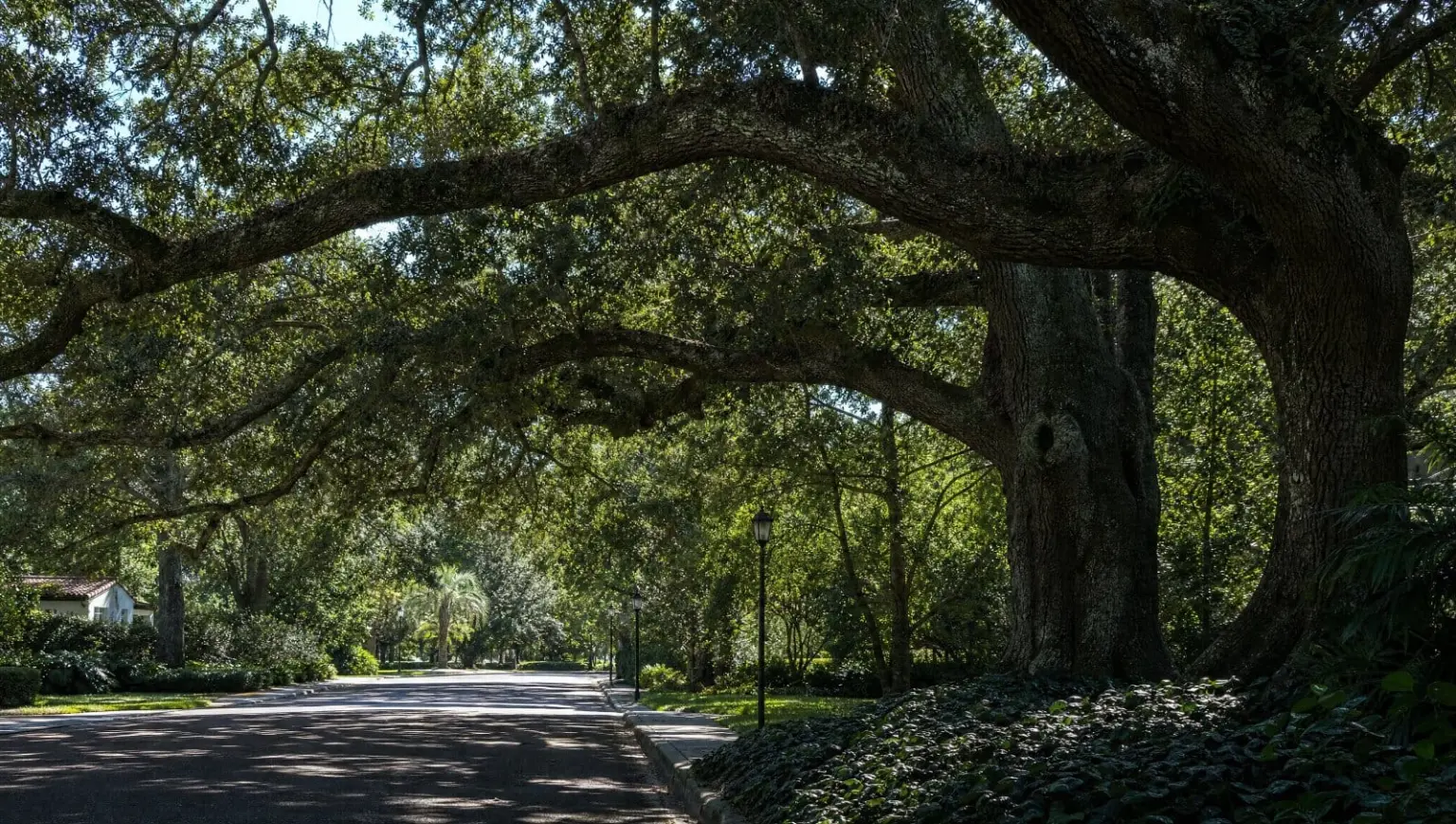
Winter Park runs a dedicated Urban Forestry Division inside its Parks & Recreation department. According to the division’s own Urban Forestry page, that division manages an urban forest of over 75,000 trees on private and public property, including over 25,000 trees in the city rights-of-way. That is a genuinely large canopy for a city this size, and it is the reason a Winter Park tree removal permit is generally required for most private-property removals of protected or regulated trees when many neighboring towns are more relaxed.
The governing rules live in the city’s Tree Preservation Ordinance, part of the Winter Park Code of Ordinances. That ordinance is the legal source of truth: it defines which trees are protected, the size thresholds that apply, and what the city requires before a removal. Because cities update these rules over time, the ordinance and the city’s own staff always override anything a contractor (including us) tells you from memory.
How to Check Whether Your Tree Is Protected
The honest answer is that you should not rely on a rule of thumb you read online, including ours. Winter Park classifies trees based on trunk diameter (measured as DBH, or diameter at breast height, about 4.5 feet up the trunk), and the safest way to confirm your specific tree is to go straight to the source. Here is the process we use:
- Start the Tree Removal Permit Application. Winter Park processes tree removal requests through the city. Begin at the city’s Tree Removal Permit Application page, which walks you through how to apply. After your request is received, city staff typically perform a field inspection and follow up by phone or email, which is where the protected status of your specific tree gets confirmed.
- Call Urban Forestry directly. Winter Park Urban Forestry can be reached at 407-599-3325. A quick call before you apply will tell you whether your tree is likely protected and what documentation to prepare.
- Read the Tree Preservation Ordinance. The ordinance is what separates an ordinary tree from a protected or regulated tree, and it is the authority that overrides anything a contractor tells you.
Specimen and Significant Trees
Winter Park gives special protection to larger and more significant trees, including categories the city treats as specimen or historic trees. The exact diameter thresholds that define each category, and the list of which species and sizes are protected, are set by the city and can change over time. Because those specific numbers are exactly the kind of thing you do not want to get wrong, do not guess from an online figure. Confirm the current definition for your specific tree through the city’s Tree Removal Permit Application page or by calling Urban Forestry at 407-599-3325.
Winter Park Permit Fees and Replacement Rules
Winter Park does charge an application fee for tree removal permits, and the amount depends on whether the property is residential or commercial. The city also typically requires that you either replant or contribute to a tree replacement (mitigation) fund when a protected tree is removed, and it sets standards for the size and grade of any replacement trees.
Here is the honest part: the exact fee amounts, the replacement ratios, and the mitigation math are all set by the city and are subject to change. We are deliberately not quoting a dollar figure or a specific ratio here, because publishing a number that has since changed would only mislead you. Instead, confirm the current fees and the exact mitigation owed for your tree directly with the city. The current, authoritative figures live on the city’s Tree Removal Permit Application page, and Urban Forestry staff at 407-599-3325 can confirm what applies to your specific removal during the permit review. Plan on some form of replanting or mitigation for a protected tree, and let the city tell you the precise requirement.
The Florida Hazard-Tree Exemption (Important Before Storm Season)
There is one statewide rule every Central Florida homeowner should know, especially heading into hurricane season. Under Florida Statute 163.045, a local government may not require a permit, fee, application, or mitigation to remove a tree on residential property if the owner has documentation that the tree poses an unacceptable risk to people or property.
The fine print matters, so here is what the statute actually says:
- The property must be a single-family, detached home actively used for single-family residential purposes.
- The documentation must be an onsite assessment performed under the ISA’s Best Management Practices for Tree Risk Assessment, Second Edition (2017), and signed by an ISA-certified arborist or a Florida licensed landscape architect.
- “Unacceptable risk” means removal is the only practical way to bring the tree’s risk below moderate.
- If the removal qualifies under this statute, the city may not force you to replant.
In plain terms: if a certified arborist documents that your leaning laurel oak or storm-damaged tree is a genuine hazard, that documentation can lawfully bypass the Winter Park permit. This is not a loophole for taking down a healthy shade tree you simply do not want; it requires a real, signed risk assessment. But for the truly dangerous trees that worry homeowners in zone 9b’s wet, windy summers, it is a legitimate and faster path.
Quick FAQ
Do I need a permit to trim my own tree in Winter Park?
Routine pruning is generally different from removal, but heavy work on protected trees can still be regulated. When in doubt, call Urban Forestry at 407-599-3325 before a major cut.
What if my tree falls or is damaged in a storm?
Naturally fallen or storm-damaged trees are typically treated differently than planned removals. Document the damage with photos and confirm the city’s current position before clearing a protected tree.
How long does the permit take?
After you submit your application, the city typically schedules a field inspection and follows up by phone or email, so plan for that review window rather than same-day approval.
Let LandTree Handle the Permit Legwork
Winter Park’s rules are manageable once you know where to look, but the paperwork, the field inspection, and the replacement math are exactly the kind of thing a busy homeowner does not want to learn by trial and error. As a local, veteran-owned crew, we help Winter Park homeowners verify protected status, gather arborist documentation when a hazard-tree exemption applies, and remove trees the right way. If you have a tree you are unsure about, reach out to LandTree for a free, no-pressure estimate and we will walk the property with you and tell you honestly what the city will require.