
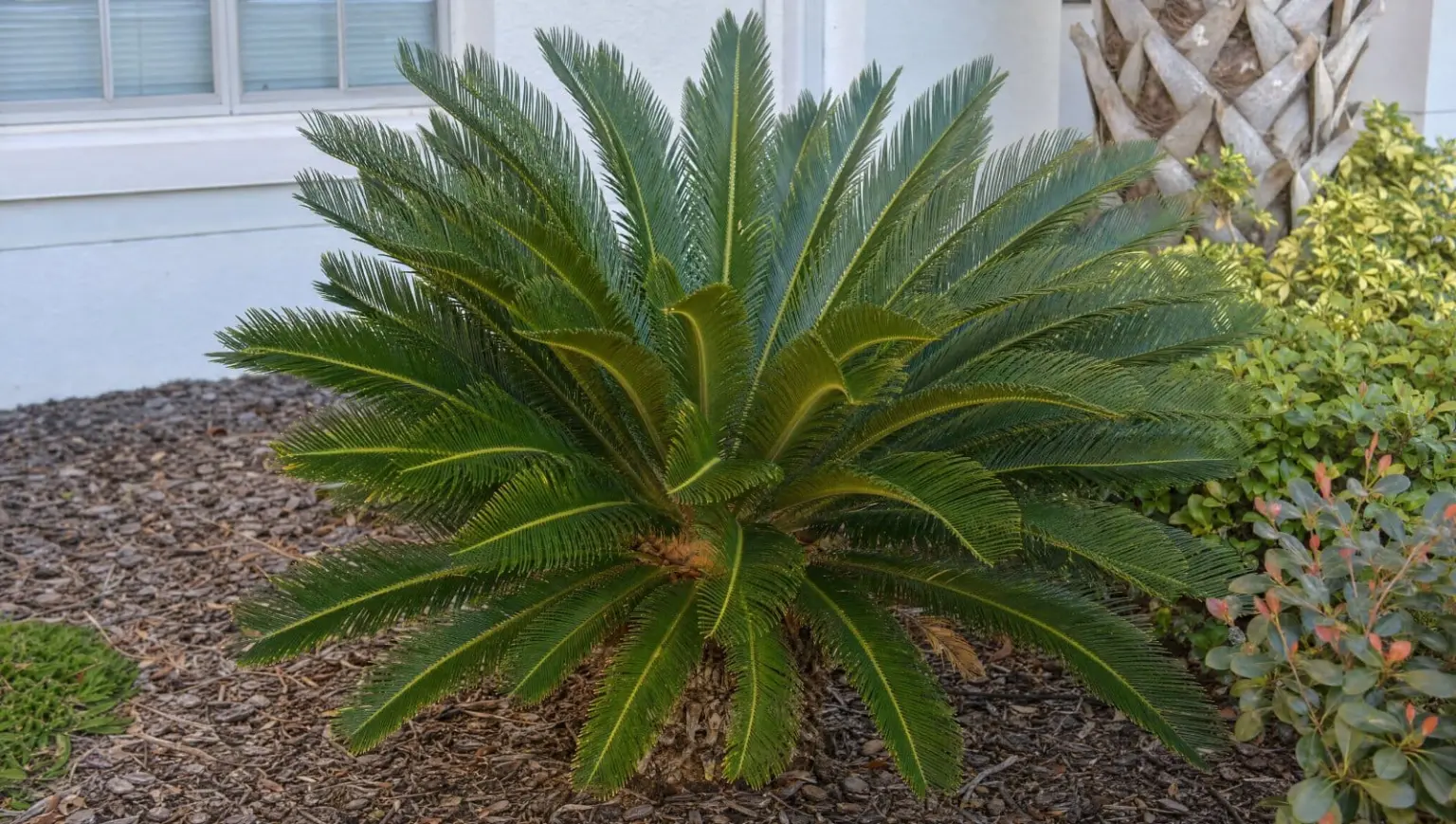
Sago Palm Care & Pet Safety: What Florida Owners Must Know
The sago “palm” is one of the most popular landscape plants across Central Florida, and you’ll find it in yards from Sanford to Apopka to Oviedo. It’s hardy, drought-tolerant once established, and adds a tropical, prehistoric look that thrives in our zone 9b heat. But good sago palm care starts with two facts most homeowners don’t know: it isn’t actually a palm at all, and every part of it is toxic to dogs, cats, and people if eaten. If you have pets or kids, that combination is worth understanding before you plant or prune one.
As a local crew that installs, trims, and removes these plants regularly, here’s the honest, practical rundown on keeping a sago healthy and your household safe.
Sago palm care basics for Florida yards
The sago (Cycas revoluta) is a cycad, an ancient plant group more closely related to conifers than to true palms. That botanical detail actually matters, because cycads have their own needs and their own pest. Here’s what keeps them thriving in our climate.
Light, soil, and water
- Light: Sagos do best in full sun to light shade. Too much deep shade produces stretched, floppy fronds.
- Soil: Our sandy soil is nearly ideal because sagos demand excellent drainage. They will rot in soggy ground, so avoid low spots that stay wet through the summer rainy season.
- Water: Once established, sagos are very drought-tolerant. Water deeply but infrequently, and let the soil dry between waterings. Overwatering kills far more sagos here than drought does.
Feeding and the dreaded “frizzle top”
One of the most common problems we see on Central Florida sagos is manganese deficiency, often called “frizzle top.” New fronds emerge yellow, stunted, and frizzled, and in bad cases the whole flush dies. It’s a manganese problem — not magnesium — and it’s common in our sandy, sometimes alkaline soils that don’t hold the nutrient well.
To prevent and correct it:
- Feed a couple of times a year with a quality palm-and-cycad fertilizer that includes micronutrients.
- For active frizzle top, apply manganese sulfate (not magnesium sulfate) to the root zone per label rates.
- Don’t expect already-damaged fronds to recover — the goal is healthy new growth on the next flush.
Watch for cycad scale
The cycad aulacaspis scale is the single biggest threat to sagos in Florida. It shows up as a white, crusty coating that spreads across fronds and even down onto the roots, and a heavy infestation can kill an otherwise healthy plant. Catch it early:
- Inspect the undersides of fronds regularly for white specks or crust.
- Prune off and bag heavily infested fronds — don’t compost them.
- Treat with horticultural oil, repeating as directed, to smother the scale.
One important caveat: because this scale colonizes the root zone in heavy infestations, horticultural oil alone often can’t reach the scale below ground. If a sago keeps reinfesting after repeated oil treatments, a severe case may need a systemic insecticide — and at that point it’s worth getting professional advice rather than assuming the oil solved a deep problem.
The part of sago palm care nobody warns you about: pet safety
This is the most important thing to know, stated plainly and without drama: sago palms are poisonous to pets. According to the ASPCA and University of Florida/IFAS, all parts of the plant are toxic to dogs and cats, and the seeds — the bright orange-red ones in the center of female plants — are the most dangerous. The toxin, cycasin, can cause serious liver damage.
We’re not telling you this to scare you. We’re telling you because it’s easy to manage once you know, and dogs in particular are drawn to chewing the seeds and lower fronds.
What this means for pet owners
- Placement matters most. If you have a dog that chews, keep sagos out of the play yard, or fence them off. A sago in a front bed your pet never reaches is a very different situation than one beside the back patio.
- Remove the seeds. On female plants, the showy seeds are the most toxic and the most tempting. Carefully remove and bag them, and rake up any that drop.
- Clean up after pruning. Bag all trimmings promptly so curious pets can’t get to fallen fronds.
- Know the signs. If you suspect your pet ate any part of a sago — vomiting, lethargy, or loss of appetite — call your veterinarian or the ASPCA Animal Poison Control Center (888-426-4435) right away. Early treatment makes a real difference.
Pet-safe alternatives that give a similar look
If you decide a sago isn’t worth the risk in your yard, the good news is there are genuinely pet-safe choices that still read tropical. A quick but important warning first: don’t swap a sago for a cardboard palm or a coontie — those are also cycads and also toxic, so they don’t actually solve the problem. Instead, the ASPCA lists several true palms as non-toxic to dogs and cats, including:
- Areca (golden cane) palm — a full, feathery clumping palm that loves our climate.
- Parlor palm — a smaller, shade-tolerant option for tighter beds and patios.
- Lady palm — an elegant, fan-leaved clumping palm that handles partial shade well.
- Ponytail palm — drought-tolerant and sculptural, with a sago-like presence and no cycad toxicity.
Handle it yourself, or have it removed
Some of our clients love their sagos and simply relocate them, fence them, or commit to removing the seeds each season. Others decide that with a young dog or small children, the simplest peace of mind is replacing the sago with one of the pet-safe alternatives above. Both are reasonable decisions. The right one depends on your yard and your household, not on fear.
One safety note for removal: cycad sap can irritate skin, so wear gloves and long sleeves, and never burn sago debris.
Frequently asked questions
Is a sago palm actually a palm?
No. Despite the name, a sago is a cycad (Cycas revoluta), an ancient plant group separate from true palms. It looks palm-like but has different care needs and a different signature pest.
How poisonous are sago palms to dogs?
Very. All parts are toxic, and the seeds are the most dangerous. Ingestion can cause severe liver damage, so prompt veterinary care is essential if your dog eats any part of the plant.
Why are my sago’s new leaves yellow and frizzled?
That’s usually manganese deficiency, or “frizzle top,” common in our sandy soil. It’s treated with manganese sulfate and prevented with a micronutrient-rich palm-and-cycad fertilizer.
Can I keep a sago palm if I have pets?
Yes, with sensible placement. Keep it out of areas your pet uses, remove the seeds, and clean up trimmings. If that isn’t practical for your household, a pet-safe replacement such as an areca, parlor, lady, or ponytail palm is an easy alternative.
Whether you want help keeping a healthy sago thriving, treating frizzle top or cycad scale, or safely removing one to protect a curious dog, contact LandTree for a free, no-pressure estimate. We’re a veteran-owned, local team, and we’ll give you honest guidance for your specific yard — pets, kids, and all.