
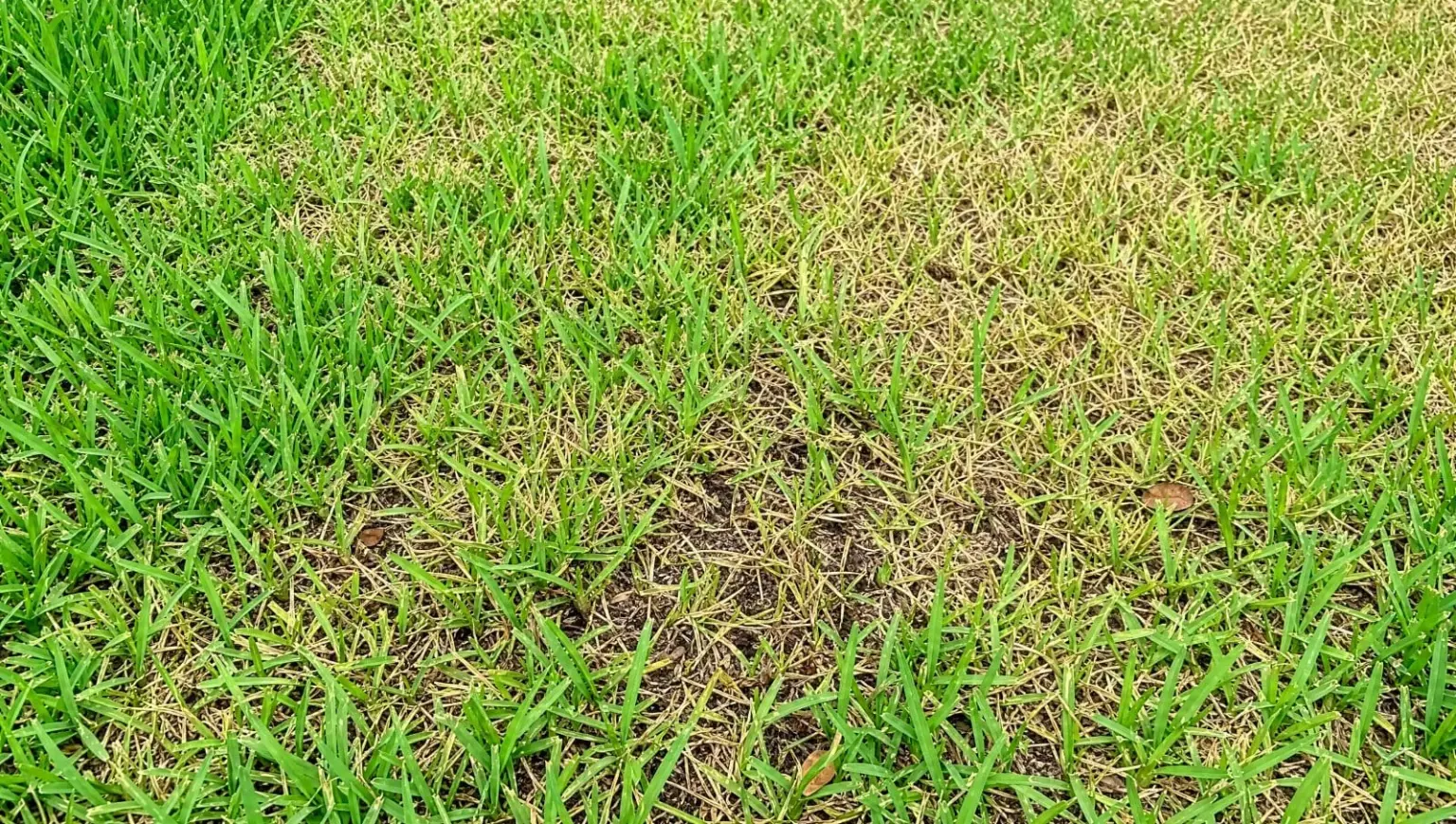
Take-All Root Rot: What Central Florida St. Augustine Owners Should Know
If you have a St. Augustine lawn in Central Florida and you are watching irregular yellow patches spread through it during the rainy season, there is a good chance you are dealing with take-all root rot. It is one of the most misdiagnosed turf problems we see across Orange City, DeLand, Sanford, and the greater Orlando metro, mostly because the damage you notice on top of the soil is the last symptom to appear, not the first. By the time the blades look bad, the trouble has been brewing underground for weeks.
This post walks through what the disease actually is, why our zone 9b conditions make St. Augustine especially vulnerable, how to tell it apart from look-alike problems, and what genuinely works to bring a lawn back. No scare tactics here, just the straight story from crews who treat this every summer.
What take-all root rot actually is
Take-all root rot is a fungal disease caused by Gaeumannomyces, a soilborne pathogen that lives in the root zone. Unlike many lawn fungi that attack the leaf blades, this one goes after the roots, rhizomes, and stolons. That is the key thing to understand: the grass you see turning yellow is starving because its root system has been compromised, not because the blades themselves are infected first.
The fungus is present in many Florida soils at low levels and usually causes no problems. It becomes destructive only when the grass is already stressed and conditions tip in the pathogen’s favor. In other words, take-all root rot is largely an opportunist. Healthy, well-rooted turf shrugs it off; weakened turf gets overwhelmed.
Why St. Augustine in zone 9b is a prime target
Central Florida hands this disease almost everything it wants:
- High summer rainfall: Our June-through-September pattern of daily storms keeps soil saturated for long stretches, and consistently wet roots are exactly what the fungus needs to spread.
- Warm soil temperatures: Zone 9b soils stay warm enough through much of the year to keep the pathogen active well beyond a single short window.
- Sandy soil that leaches nutrients: Our soils drain fast and hold little, so grass is frequently a little hungry and a little stressed, which lowers its defenses.
- Soil pH on the high side: Many local lawns, especially those near concrete, fill dirt, or irrigated with hard water, run alkaline, and elevated pH favors this disease.
St. Augustine is the dominant turf in our region precisely because it loves heat and humidity, but those same conditions are what make it the favorite host for this particular fungus.
How to recognize it
Symptoms usually show up during or just after the heavy summer rains, though damage can linger into fall. Watch for:
- Irregular yellow or light-green patches that slowly enlarge and merge, rather than the neat circles you might associate with other diseases.
- Thinning that does not bounce back after you water or fertilize, because the roots can no longer take up what you are applying.
- Easy tug test: grab a handful of affected grass and pull. Healthy St. Augustine resists; turf with this disease often lifts away because the roots are short, dark, and rotted instead of white and fibrous. Keep in mind that loosely rooted turf can also point to other root problems, grub damage, or even fresh sod that has not knit in yet, so treat the tug test as one clue and read it alongside the overall pattern of symptoms rather than as proof on its own.
- Stolons (runners) that look bare or rotted at the nodes where roots should be anchoring.
What it is not
Plenty of things mimic these symptoms, and treating the wrong problem wastes money and time. Chinch bug damage tends to start in the hottest, driest, sun-baked edges and the grass feels crispy. Drought stress shows up fast and recovers fast once you water. Iron or nitrogen deficiency yellows the blades but the roots stay white and healthy on the tug test. Because several of these problems can loosen roots, the tug test is most reliable when you pair it with where and how the damage is spreading.
How to fix it the right way
This is where a lot of well-meaning lawn owners go wrong. They reach straight for a fungicide, see a little improvement, then watch the patches return next rainy season. A fungicide can suppress the pathogen, but it does nothing about the underlying stress that let the disease take hold. The lasting fix is cultural, with chemistry as a supporting player.
1. Stop overwatering
With our summer rain, most lawns are getting far more water than they need. Saturated roots are the disease’s best friend. Let the soil dry between waterings and shut the irrigation off during rainy stretches. A simple rain sensor or smart controller pays for itself here.
2. Address soil pH
Because high pH favors the disease, lowering it back toward a slightly acidic range can make a real difference. This is best done after a soil test so you are not guessing. According to UF/IFAS Extension guidance on take-all root rot of turfgrass, keeping soil pH in a slightly acidic range and using acidifying nitrogen sources can help suppress the disease, so the right products applied gradually can nudge pH in the right direction.
3. Feed for roots, not just color
Avoid heavy quick-release nitrogen during an active outbreak, which pushes lush top growth on a damaged root system. Lean on balanced, slow-release feeding and adequate potassium, which UF/IFAS Extension notes supports root strength and overall stress tolerance. One local note: many Central Florida jurisdictions, including parts of Orange and Seminole counties and the City of Orlando, restrict nitrogen fertilizer during the summer rainy season, so check your local rules before applying nitrogen in those months and time your feeding accordingly.
4. Raise the mowing height and keep blades sharp
Taller St. Augustine grows deeper roots and shades the soil. Mow high, never scalp, and keep the mower blade sharp so you are cutting cleanly rather than tearing.
5. Use fungicide as support, not a cure
When the disease is active, a properly timed fungicide can buy the grass room to recover while the cultural fixes do the real work. Timing and product rotation matter, so this is one area where a professional assessment usually pays off.
Frequently asked questions
Will my lawn recover on its own?
Sometimes mild cases improve once the rainy season ends and the soil dries, but the disease typically returns the following summer unless you correct the underlying stress, especially overwatering and soil pH.
How long does recovery take?
Because roots have to regrow, recovery is measured in months, not days. With the right cultural changes, you will usually see the lawn stabilize first, then slowly fill back in over the following growing season.
Should I just replace the sod?
Re-sodding into the same conditions usually leads to the same outcome. Fix the soil and watering first, and you protect both the existing turf and any new sod you lay later.
If your St. Augustine lawn is thinning in patches and you are not sure whether it is take-all root rot, chinch bugs, or simple summer stress, we are glad to take a look. LandTree, a veteran-owned Central Florida company, offers a free, no-pressure lawn assessment where we run the root test, check your watering and pH, and lay out a realistic plan. Reach out anytime to schedule your free estimate.