
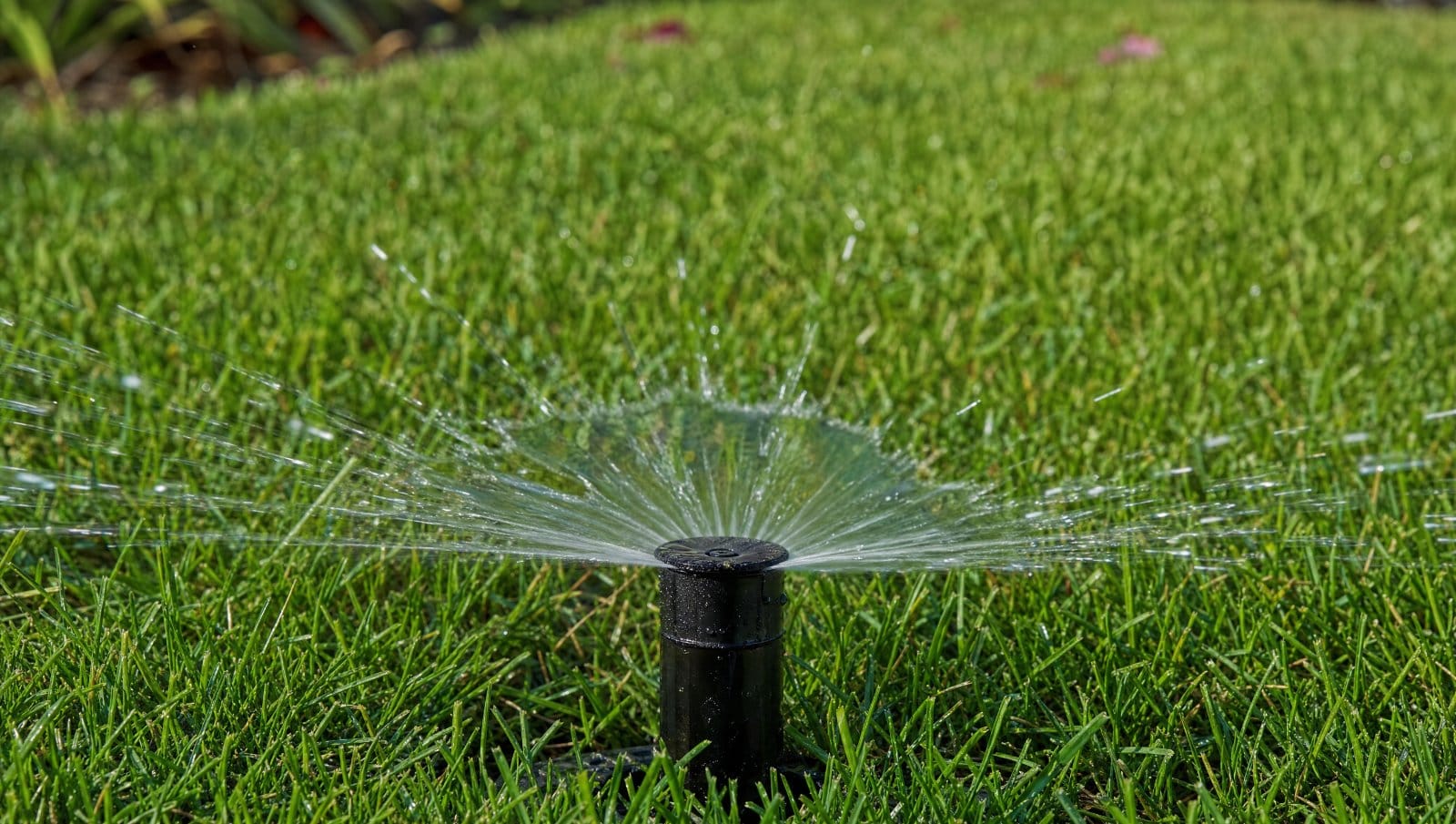
A pop-up emitter gives a French drain a clean exit.
Pop-Up Drain Emitters: Where Your French Drain Should Actually End
You spent good money on a French drain, the contractor buried a perforated pipe, the trench got backfilled — and now the only question that matters is the one nobody talked about: where does all that water come out? In Central Florida, the answer is almost always a pop-up drain emitter, and getting that one little fitting right is the difference between a drain that works for years and one that backs up by the second rainy season.
At LandTree, we install and repair drainage across Orange City, DeLand, Sanford, and the greater Orlando metro, and the emitter is where we see the most avoidable failures. Here is exactly what a pop-up drain emitter is, why your French drain needs a smart exit, and how we place ours so they keep flowing in zone 9b conditions.
What a pop-up drain emitter is
A pop-up drain emitter is a spring-loaded or buoyancy-driven cap that sits flush with your lawn at the end of a drain line. When water pressure builds in the pipe — say, during one of our July downpours — the cap pops open and releases the water onto the surface. When the flow stops, the cap settles back down, sitting nearly flush so you can mow right over it.
It is the termination point: the deliberate, designed place where buried water finally returns to daylight. Every French drain, downspout line, or catch basin pipe has to end somewhere, and a pop-up emitter is the cleanest way to do it when you cannot run the pipe to a ditch or storm drain.
Why your French drain needs a real exit
A French drain only does its job if water can leave the pipe as fast as it enters. The collection end gets all the attention; the discharge end is where systems quietly fail.
- A pipe with no proper outlet simply fills, backs up, and the drain stops draining.
- An open pipe end left exposed invites frogs, mud, mulch, and grass clippings straight into the line.
- A daylighted end on a flat lot often has nowhere lower to go, so water just sits at the opening.
This is why the exit matters as much as the trench. On our flat Central Florida lots, you frequently cannot find enough natural grade to daylight a pipe at a ditch, and that is precisely the situation a pop-up emitter is built for.
Emitter vs. daylight vs. dry well: choosing the exit
There are three common ways to end a drain line, and the right one depends on your grade and where the water can legally and safely go.
Daylight the pipe
If your lot slopes to a swale, retention pond edge, or roadside ditch, running the pipe to that lower point — “daylighting” it — is the simplest exit. The catch is grade. Many local yards are too flat to find a lower spot, which rules this out.
Pop-up emitter
When you have only a little fall to work with, the emitter is the answer. It stays sealed against pests and debris between storms, then opens under pressure to release water at the surface. It is the most common French drain termination we install in this region. The next section covers exactly where that discharge should land.
Dry well
Where surface discharge is not an option, we tie the line into a buried dry well — a gravel-filled chamber that lets water percolate down. Our sandy soil makes dry wells genuinely effective here, often paired with an emitter as an overflow.
Where a pop-up drain emitter should actually end
This is where experience pays off. The emitter has to discharge somewhere that water will move away on its own, or you have just relocated your puddle.
Find the fall
The emitter should sit lower than the drain it serves, with the pipe maintaining a steady downhill slope — we aim for at least an inch of drop per ten feet. Even on flat lots there is usually a little grade to exploit if you measure carefully.
Aim for a place water can leave
- Toward a swale or natural low channel that already moves water
- Onto a rock splash pad that spreads flow and prevents erosion in our loose soil — sometimes the head of a decorative dry creek bed
- Toward the street or a drainage easement — never onto a neighbor’s property
- Well away from the foundation, the septic drain field, and any patio slab
Mind the distance
An emitter placed a few feet from the house just sends water back toward the slab. We position the exit far enough out — often 10 feet or more — that the released water has room to soak in or run off without returning to the structure.
Installation details that keep emitters working
A pop-up drain emitter is a simple part, but a few details decide whether it lasts.
- Set it flush. The cap should sit at lawn level so mowers pass over it and the spring can seat fully.
- Use a debris-free line. The whole point is keeping junk out, so the upstream pipe should be solid (not perforated) on the final run to the emitter.
- Add a splash pad. A small bed of river rock at the outlet stops the discharge from carving a hole in sandy soil.
- Keep the right slope. Without continuous fall, the cap may not build enough pressure to pop reliably.
Maintenance and common problems
Emitters are low-maintenance, but they are not no-maintenance. Knowing the failure modes helps you spot trouble early.
The cap won’t open
Usually dirt or grass has packed around the hinge, or the line is partially clogged upstream. A quick clean, or flushing the line with a hose, normally restores it.
The cap won’t close
Debris under the seal or a worn spring holds it open, which lets pests in. The cap assembly is inexpensive to swap.
Water pools at the emitter
This means the exit point is not low enough or the surrounding ground cannot accept the flow — a sign the discharge location needs to be moved or paired with a dry well or rock pad.
Frequently asked questions
Do pop-up emitters clog in Florida?
They can if the line is run incorrectly or no splash pad is used, but a properly installed emitter on a solid final run stays clear for years with only occasional rinsing.
Can I mow over a pop-up drain emitter?
Yes. A correctly set emitter sits flush with the turf so your mower passes right over it without contact.
How many emitters does one drain need?
Often just one at the end of the line, but long systems or large roof catchments may use more than one outlet to handle peak storm volume.
Get your drainage exit done right
A French drain is only as good as the place it ends. If your existing line backs up, your emitter has stopped popping, or you are planning a new system and want it built to survive a real Central Florida summer, that is our wheelhouse. We are a veteran-owned crew that knows these flat, sandy lots firsthand. Request a free drainage assessment and we will trace your water, check your grade, and confirm the exit truly works — serving Orange City, DeLand, Lake Mary, Sanford, Oviedo, Apopka, and the greater Orlando area.