Geotextile Fabric for French Drain: A Pro’s Guide
A French drain can feel like a magic trick for a soggy yard, channeling excess water away and leaving you with usable space. But if it’s not built correctly, that magic disappears fast. The most common point of failure isn’t the pipe or the gravel—it’s the liner. Many people mistakenly grab standard weed barrier, not realizing it will suffocate the system by blocking water flow. For a drain to last, you need a specific material: a non-woven geotextile fabric for a French drain. This special textile is engineered to filter sediment out while letting water rush in, preventing the clogs that cause so many systems to fail prematurely.
Key Takeaways
- Always Choose Non-Woven Fabric: This is the single most critical material choice for a French drain. Unlike landscape fabric that blocks water, non-woven geotextile acts as a filter, letting water in while keeping out the fine soil and silt that cause clogs and system failure.
- Proper Installation is Everything: The fabric must completely encase the gravel and pipe in a “burrito wrap” to be effective. Ensure you have at least 12 inches of overlap at all seams to create a seamless barrier against soil intrusion.
- Check the Specs for Quality: Don’t just grab any roll; look for professional-grade indicators like a DOT (Department of Transportation) rating and a high water flow rate. These details ensure the fabric is durable enough to last for decades underground.
What is Geotextile Fabric (And Why Does Your French Drain Need It)?
If you’re looking into French drains to solve water problems on your property, you’ve probably heard the term “geotextile fabric.” Think of it as the unsung hero of any effective drainage system. It’s a special permeable textile designed for geotechnical projects, and it’s absolutely essential for making sure your French drain works for years to come, not just a few seasons. Without it, your investment in a new drain could be short-lived, as mud and debris will inevitably find their way into the system.
The key is using the right kind of fabric. For a French drain, you specifically need a non-woven geotextile fabric. Unlike the woven landscape fabric you might find at a big-box store for your garden bed, this material is engineered to let water filter through freely while blocking the fine particles of soil, silt, and sand that would otherwise clog your system. It essentially wraps your entire drain trench—the perforated pipe and the gravel—in a protective layer. This simple addition is what separates a professional, long-lasting installation from a DIY project that fails within a year. Getting this detail right is a core part of our approach to providing lasting drainage solutions for Florida properties.
How Geotextile Fabric Protects Your Drain
The main job of geotextile fabric in a French drain is to act as a filter. Imagine pouring muddy water through a coffee filter—the water goes through, but the coffee grounds stay behind. Geotextile fabric does the same thing for your drain. As water from your yard seeps into the trench, the fabric allows it to pass through to the gravel and pipe, but it stops soil particles from coming along for the ride. This is why non-woven fabric is the best choice for drainage projects. Its felt-like structure has tiny, random openings that are perfect for letting water flow through easily while trapping sediment. Without this protective layer, your gravel aggregate would quickly fill with mud, turning your carefully constructed drain into a useless underground trench of sludge.
Preventing Clogs and Extending Drain Life
Beyond just filtering soil, geotextile fabric is your best defense against long-term clogs that can kill a drainage system. One of the biggest culprits in Florida is invasive tree roots, which are naturally drawn to the water source a French drain provides. The fabric acts as a tough physical barrier, stopping roots from working their way into the pipe and choking off the water flow. Over time, a properly installed fabric does something amazing: it helps create a natural “soil filter zone” in the surrounding earth. As water and tiny particles press against the fabric, a stable bridge of soil forms, which actually improves the drain’s filtration efficiency year after year. This means your French drain can work even better as it ages, preventing clogs and ensuring your yard stays dry.
Choosing the Right Geotextile Fabric for Your French Drain
The geotextile fabric is the unsung hero of a French drain. It’s the protective layer that wraps around the gravel and pipe, preventing soil, silt, and roots from clogging the system. Think of it as a high-tech filter that lets water in but keeps debris out. Choosing the right fabric is one of the most critical decisions you’ll make for the longevity and effectiveness of your drain, especially here in Central Florida where sandy soil can easily infiltrate and clog unprotected systems. A quality fabric ensures your drain works efficiently for years, while the wrong material can lead to premature failure and costly repairs. This single component can be the difference between a drainage solution that lasts for decades and one that needs to be dug up and replaced in just a few years. It’s not just about picking any fabric; it’s about selecting the correct type for your specific soil and water conditions. This ensures that water can freely enter the drainpipe while the surrounding soil stays put, maintaining the drain’s capacity and preventing sinkholes or blockages. Making the right choice from the start saves you a lot of time, money, and headaches down the road.
Woven vs. Non-Woven: What’s the Difference?
When you start looking at geotextile fabrics, you’ll see two main categories: woven and non-woven. Woven fabric is made by interlacing threads, much like a tarp or burlap sack. This process makes it incredibly strong and durable, which is great for stabilization projects like building a retaining wall. However, that tight weave doesn’t allow water to pass through very quickly.
Non-woven fabric, on the other hand, is created by pressing fibers together, resulting in a felt-like material. Its structure is more random and porous, which is exactly what you want for a French drain. It allows water to flow through freely while still being tough enough to block sediment.
Why We Recommend Non-Woven Fabric
For any French drain or drainage project, we always recommend using non-woven geotextile fabric. Its superior permeability is the key reason. The entire point of a French drain is to collect and channel water away, and non-woven fabric excels at letting water pass through into your gravel trench. It effectively filters out the fine sand and silt that would otherwise wash into your drain and clog it over time.
A common mistake is using standard landscape or weed barrier fabric. These materials are designed to block everything—including water—and they break down quickly underground. Using them in a French drain is a recipe for failure. Professional landscape drainage contractors will always use the correct non-woven geotextile to ensure your system lasts.
What to Look for in Fabric Material
Once you’ve settled on non-woven fabric, there are a couple of key specs to consider. First is the fabric weight, measured in ounces. For areas with high water flow, a lighter 4-ounce fabric is often ideal because it lets water through very quickly. In areas with slower drainage or finer soil, a heavier 8-ounce fabric can provide better filtration and durability.
Another feature to look for is a “double-punched” design. This means the fabric has been punctured with needles from both sides during manufacturing, creating more pathways for water to flow through. This enhances its drainage capability while ensuring it still blocks fine particles. These details ensure you get a material perfectly suited for your property’s specific drainage needs.
Key Geotextile Specs to Check
When you’re standing in the aisle or browsing online, the rolls of geotextile fabric can start to look the same. But the technical specifications printed on the label are what separate a high-performance fabric from one that will fail in a few years. Getting this right is the key to a French drain that works for the long haul. Think of it like buying a raincoat—you wouldn’t just grab the first one you see. You’d check if it’s truly waterproof, breathable, and tough enough for a storm. The same logic applies here. Paying attention to a few key numbers will ensure you get a material that can handle your property’s specific needs, from soil type to water volume. These specs aren’t just industry jargon; they directly impact how well your drain will perform and how long it will last. Choosing a fabric based on price alone is a common mistake that can lead to clogs and costly repairs down the road. Instead, by understanding what terms like fabric weight, flow rate, and puncture resistance mean, you can make an informed choice that protects your investment and your landscape. Let’s break down exactly what you should be looking for.
Fabric Weight: Is 4 oz or 8 oz Better?
Fabric weight, measured in ounces per square yard, tells you how thick and dense the material is. It’s not just about durability; it’s about matching the fabric to your water flow. For most residential French drains dealing with significant water, a 4-ounce non-woven fabric is the sweet spot. It’s robust enough to last but light enough to let water pass through quickly. If you’re dealing with slower, more consistent seepage rather than heavy runoff, a heavier 8-ounce fabric might be a better fit. It offers more strength for situations where water moves less aggressively. The goal is to find the right balance for your specific drainage challenge.
Water Flow Rate and Permeability
Permeability is just a technical term for how quickly water can pass through the fabric. This is a critical spec because a slow fabric can cause water to back up, defeating the purpose of your drain. Look for a water flow rate on the product label, often measured in gallons per minute per square foot. A quality non-woven geotextile can have a flow rate of 140 gallons per minute or more. This high-flow capacity ensures that even during a classic Florida downpour, water moves freely into your drain system instead of pooling on the surface. This is a core principle behind effective drainage solutions that protect your property.
Durability and Puncture Resistance
Your geotextile fabric will be buried in a trench, surrounded by gravel and soil, so it needs to be tough. Puncture resistance is its ability to withstand sharp rocks and the pressure of the surrounding earth without tearing. A small tear can compromise the entire system by letting in silt and clay. Generally, heavier non-woven fabrics offer better puncture resistance. This durability is crucial during the excavation and installation process, when the fabric is most vulnerable to damage from tools or sharp aggregate. Investing in a durable fabric from the start saves you from having to dig up and replace a failed drain later.
Matching the Fabric to Your Soil Type
Florida soils can range from sand to heavy clay, and your fabric needs to be compatible with what’s in your yard. The main job of the geotextile is to act as a filter, letting water in while keeping soil particles out. Non-woven geotextile fabric is the go-to choice for drainage because its random, fibrous structure is excellent at this. It has tiny openings that are large enough for water to pass through but small enough to block the fine silt and clay particles that would otherwise clog your gravel and pipe. This ensures your French drain remains effective, regardless of your specific soil composition.
Our Top Geotextile Fabric Picks
When you’re ready to buy geotextile fabric, the number of options can feel overwhelming. To make it easier, we’ve put together our professional recommendations based on years of experience designing and installing effective drainage solutions for properties across Central Florida. The right fabric is the key to a French drain that lasts for decades, so it’s worth choosing a high-quality material from the start.
Professional-Grade Fabric Recommendations
For any drainage project, our rule is simple: always use a non-woven geotextile fabric. This is the industry standard for French drains, retaining walls, and erosion control because of its unique properties. Unlike woven fabrics, which can clog over time, non-woven material has a felt-like texture with tiny, random pores. This structure allows water to pass through freely while effectively blocking silt, sand, and soil particles from entering your drain pipe. This filtering action is what prevents clogs and keeps your system running smoothly for years. When you choose a fabric, make sure it’s specifically rated for drainage and filtration.
A Closer Look at FDM Non-Woven Fabric
One brand that consistently meets professional standards is French Drain Man (FDM). Their non-woven geotextile fabric is “double punched,” a manufacturing process that creates superior water flow. This means that as water moves through the fabric, it helps flush out fine particles, continuously improving the drainage performance over time. This is a significant advantage over standard landscape fabrics, which are designed to block everything (including water) and can quickly lead to a failed drainage system. For a French drain, you need a material that filters, not blocks, and a double-punched fabric is engineered to do exactly that.
Understanding DOT Ratings and Quality
A simple way to identify a high-quality fabric is to look for a DOT rating. This means the material is certified by the Department of Transportation for use in civil projects like roads and public works. These fabrics are designed to withstand heavy loads, resist tearing, and perform under challenging soil conditions. For your French drain, you should always select a fabric that is DOT-certified, non-woven, and double-punched. This ensures you’re getting a durable product that won’t break down a few years after installation. It’s the same quality of material we use in our professional excavation and drainage projects.
What to Expect for Pricing and Where to Find It
The cost of professional-grade geotextile fabric is a smart investment in protecting your property. Generally, you can expect the price for the fabric to range from around $35 to over $225, depending on the weight and the size of the roll you need. You can find these materials at specialty landscape supply stores or through online retailers that cater to contractors. While the upfront cost is higher than for basic landscape fabric from a big-box store, the longevity and performance are worlds apart. Using the right material from the start saves you from the much greater expense of digging up and replacing a failed system later on.
How to Install Geotextile Fabric Correctly
Choosing the right geotextile fabric is half the battle; installing it correctly is what wins the war against water damage. Even the highest-quality material will fail if it’s not placed properly, leading to the very clogs and system failures you’re trying to prevent. A successful installation ensures every part of your French drain works together to protect your property for years to come.
The goal is to create a complete, protective barrier around your drainage pipe and gravel. This isn’t just about laying a sheet in a trench—it’s about carefully lining, wrapping, and securing the fabric to keep soil and silt out while letting water in. Taking the time to get these steps right from the start saves you from the headache and expense of digging up a failed drain later. If you’re feeling unsure about tackling this yourself, working with professionals can guarantee your system is built for longevity and performance. Our team specializes in creating effective drainage solutions that stand up to Florida’s heavy rains.
A Step-by-Step Installation Guide
Once your trench is dug, the installation process is straightforward. Following these steps will help you create a durable and effective French drain system.
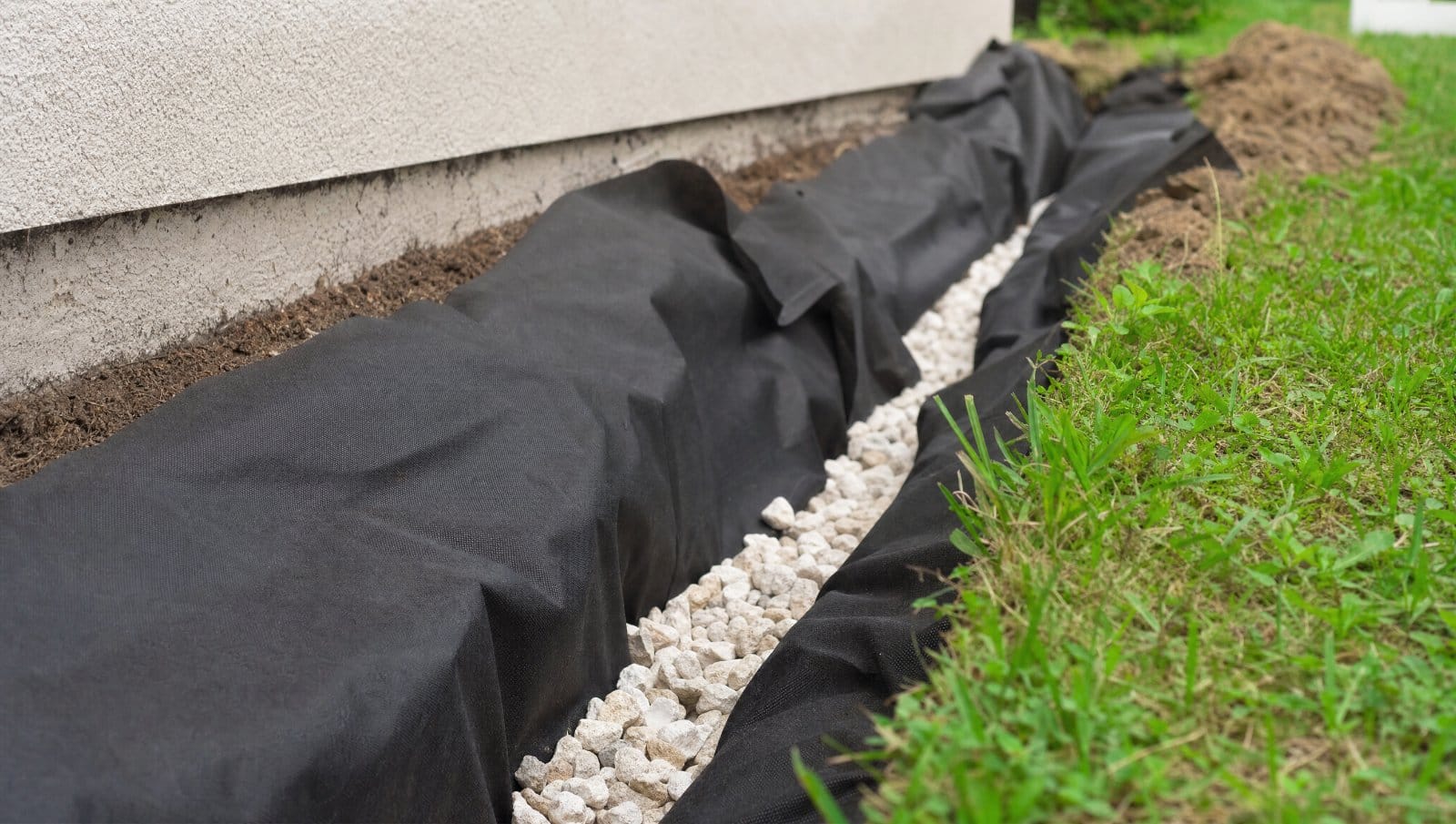
- Line the Trench: Lay the geotextile fabric inside the trench, pressing it down so it conforms to the bottom and sides. Be sure to leave at least 10-12 inches of excess fabric on both sides of the trench.
- Add Pipe and Gravel: Place your perforated drain pipe in the center of the fabric-lined trench. Next, add your drainage gravel, filling it around and on top of the pipe until it’s a few inches from the surface.
- Wrap It Up: Fold the excess fabric from one side over the top of the gravel. Then, fold the other side over it, creating a “burrito” that completely encases the gravel and pipe.
- Cover and Finish: Cover the wrapped fabric with topsoil or your chosen ground cover to finish the installation.
Getting the Overlap and Seams Right
If you need to use multiple pieces of fabric to line a long trench, how you handle the seams is critical. A common mistake is not overlapping the edges enough, which creates a gap where soil can easily wash into your gravel. This small oversight can compromise the entire system over time.
To prevent this, make sure the edges of your fabric overlap by at least 12 inches. When you lay the next roll of fabric, place it over the end of the previous one, ensuring a generous seam. This creates a continuous, secure barrier that soil can’t penetrate, keeping your drainage aggregate clean and your system flowing freely. It’s a simple step that makes a world of difference in the longevity of your French drain.
How to Position and Layer the Fabric
Properly positioning your geotextile fabric is all about creating a complete envelope around your drainage medium. The fabric should act as a total separator between the surrounding soil and the gravel inside your trench. Think of it as a filter that lines the entire trench—bottom and sides—before anything else goes in.
After you’ve placed the pipe and filled the trench with gravel, the fabric you left hanging over the edges is folded over the top. This layering technique ensures that soil can’t enter from the top, sides, or bottom. Water can still pass through the permeable fabric from every direction, but silt, clay, and other fine particles are held back. This complete separation is the key to preventing clogs and ensuring your French drain works efficiently for years.
Common Installation Mistakes to Avoid
Installing a French drain is a significant investment in protecting your property from water damage. After carefully selecting the right materials, the last thing you want is for the system to fail due to a simple installation error. Unfortunately, we see it happen all the time. A small misstep during the installation process can lead to clogs, slow drainage, and eventually, a complete system failure that requires digging everything up and starting over. This not only wastes your initial investment but also means more disruption to your landscape and additional costs.
Getting the installation right from the start is the only way to ensure your French drain will function effectively for years to come. It’s about more than just digging a trench and filling it with rock. Proper technique, attention to detail, and using the right amount of high-quality material are non-negotiable. By understanding the most common mistakes, you can make sure your project is a success. Let’s walk through the critical errors to sidestep so your drainage solution stands the test of time.
Choosing the Wrong Type of Fabric
One of the most frequent and damaging mistakes is using the wrong kind of geotextile fabric. Many people grab standard weed barrier or a woven fabric, thinking it will do the job. However, these materials are not designed for drainage and will quickly clog with silt and fine soil particles, effectively suffocating your French drain. For a French drain to work, you need a non-woven geotextile fabric, typically between 4 and 6 ounces. This specific type of fabric has the ideal permeability to let water pass through freely while blocking the sediment that would otherwise fill your drain pipe and gravel.
Forgetting to Prep the Trench
Even with the perfect fabric, your drain will fail if the trench isn’t prepared correctly. A successful installation starts with a clean, properly graded trench that directs water away from your property. Before any fabric goes in, the trench should be smooth and free of large rocks, roots, or sharp objects that could puncture the material. A common shortcut is to lay the fabric in without care, leaving gaps or failing to line the entire trench. The fabric must cover the bottom and sides completely before you add any gravel, acting as a protective barrier between the native soil and your drainage system.
Not Using Enough Fabric
Skimping on fabric is a classic case of being penny-wise and pound-foolish. To save a few feet of material, some installers won’t use enough fabric to fully envelop the gravel and pipe. This leaves the top of the drain exposed, allowing soil and debris to wash down from the surface and clog the system within just a year or two. You need enough fabric to line the trench and then fold back over the top of the gravel, creating a complete “burrito” wrap. Make sure you have generous overlaps at any seams to ensure there are no entry points for silt.
Buying Low-Quality Materials
When you’re standing in the aisle of a home improvement store, it can be tempting to reach for the cheapest roll of landscape fabric. But this is not the place to cut corners. Low-quality, flimsy materials can easily tear during installation when you’re backfilling with heavy gravel. These inferior fabrics also break down much faster underground. Investing in a high-quality, durable geotextile fabric from a reputable supplier ensures your French drain has the strength to withstand soil pressure and last for decades. Professional arborist services and drainage experts always use professional-grade materials because they know it’s the only way to guarantee a long-lasting result.
Maintaining Your French Drain and Geotextile Fabric
Installing a French drain is a fantastic step toward a drier, more usable yard, but the work doesn’t stop once the trench is filled. To keep your system working effectively, your drain and its geotextile fabric lining need a bit of attention over time. Think of it as simple preventative care for your property. A little maintenance ensures your investment continues to protect your home and landscape from water issues for years to come. By staying ahead of potential problems, you can avoid clogs and keep water flowing freely away from your foundation.
How Often to Inspect Your System
We recommend having your French drain system professionally inspected every three to five years. During an inspection, a specialist will check for common issues like sediment buildup, invasive tree roots, or damage to the fabric liner that could obstruct water flow. Catching these problems early is the best way to prevent a small issue from becoming a major, costly repair. A quick check-up can save you from a complete system failure and the soggy yard that comes with it. If you’re not sure what to look for, our team can handle it as part of our comprehensive drainage solutions.
Warning Signs of a Failing System
Your yard will usually give you clear signals if your French drain is struggling. The most obvious sign is standing water or persistently soggy patches in areas that used to drain well. You might also notice that water disappears much more slowly after a heavy rain. Another tell-tale clue is seeing silt or mud collecting near the drain’s outlet point, which indicates that soil is getting past the fabric filter. These are all symptoms of a clog or a bigger system issue. If you spot any of these signs, it’s time to act before it leads to more serious water damage.
Adjusting Maintenance for Your Soil
The type of soil on your property plays a big role in how often your drain needs maintenance. Here in Central Florida, we work with a variety of soil conditions. If your yard has heavy, clay-based soil, you’ll want to schedule more frequent inspections. Tiny clay particles can easily work their way into the geotextile fabric over time, leading to clogs. On the other hand, if you have sandy soil, you’re in a better position. Sand drains efficiently and is less likely to cause blockages, so you can likely stick to a less frequent inspection schedule. Understanding your soil is fundamental to any successful landscaping project.
How Long Does Geotextile Fabric Last?
When you invest in a French drain, you want it to be a long-term solution, not a temporary fix. The good news is that geotextile fabric is designed for incredible durability. When installed correctly and protected from the sun, high-quality fabric can last for 50 years or even longer. The key is making sure it’s properly buried beneath at least a few inches of gravel, soil, or mulch. If the fabric is left exposed to sunlight, its lifespan shrinks dramatically to about a year due to UV degradation.
Ultimately, the longevity of the fabric is directly tied to the health of your entire drainage system. It acts as the gatekeeper, preventing the soil and sediment that would otherwise clog your drain pipe. A well-protected fabric means a clear, functional drain for decades. That’s why professional drainage solutions are so critical—the initial installation determines whether your system will stand the test of time or fail prematurely. Getting it right from the start saves you from costly repairs and headaches down the road.
What to Expect for Your System’s Lifespan
With the right materials and proper installation, you can expect your French drain to work effectively for many years. When a quality non-woven geotextile fabric is used, it keeps the surrounding gravel and pipe clean from the fine particles in Florida soil. In fact, studies have shown that correctly installed systems remain clear and fully functional even after a decade of use, with no signs of dirt getting through the fabric barrier. This means you won’t have to worry about your yard turning into a swamp every time it rains. The fabric is what ensures your entire system has a long and effective life.
Factors That Impact Longevity
The biggest factor influencing how long your geotextile fabric lasts is the quality of the installation. It’s not just about laying the fabric in the trench; it’s about doing it correctly. This includes choosing the right type of fabric for your specific soil conditions, which is especially important in areas with heavy clay. You also need to ensure the fabric edges are overlapped properly to create a complete barrier against sediment. If there are gaps, soil will find its way in and clog the system. Finally, protecting the fabric from direct sunlight is non-negotiable. UV exposure will break down the material and lead to premature failure, compromising your entire drain.
Knowing When It’s Time for a Replacement
Even the best systems can eventually face issues. Keep an eye out for warning signs that your French drain isn’t performing as it should. If you notice water pooling on the surface above the drain line or if areas of your yard remain soggy long after a storm, it could mean trouble. These are often symptoms of a clog. Sometimes, the issue is that the wrong type of fabric was used and it’s not allowing water to pass through efficiently. If a system is installed incorrectly, it can fail in as little as one or two years, so if you see these signs, it’s time to have a professional inspect your system.
Related Articles
Frequently Asked Questions
Can I just use the black landscape fabric from a home improvement store? That’s one of the most common mistakes we see, and it’s a costly one. Standard landscape or weed barrier fabric is designed to block everything, including water. Using it in a French drain will essentially suffocate your system, preventing water from ever reaching the pipe. You specifically need a non-woven geotextile fabric, which is engineered to let water pass through freely while filtering out the soil and silt that would otherwise clog your drain.
How do I choose between 4 oz and 8 oz fabric? Think about the type of water problem you’re trying to solve. A lighter 4-ounce fabric is generally best for most residential projects because it allows water to flow through very quickly, which is perfect for handling heavy Florida downpours. If you’re dealing with slower, more consistent seepage or need extra durability against sharp rocks, a heavier 8-ounce fabric can provide better filtration and strength.
What are the signs that my existing French drain’s fabric has failed? Your yard will give you some clear clues. The most obvious sign is the return of soggy spots or standing water directly over the drain line, especially after a storm. You might also notice that water drains much more slowly than it used to. If you can see the outlet of your drain, look for any mud or silt coming out with the water—that’s a sure sign that the fabric barrier has been compromised and soil is getting into your system.
Does Florida’s sandy soil really require this fabric? Yes, absolutely. In fact, our sandy soil is precisely why the right fabric is so critical. Fine sand particles move very easily with water and will quickly wash into your gravel and pipe without a proper filter. The geotextile fabric acts as a stable barrier that stops this from happening, preventing your drain from turning into a useless, sand-filled trench within a year or two.
Is it really necessary to wrap the entire trench like a burrito? It is completely necessary and non-negotiable for a long-lasting drain. Wrapping the gravel and pipe on all sides, including folding the fabric over the top, creates a complete envelope that protects the system from soil intrusion. If you leave the top open, topsoil and silt will inevitably wash down from the surface and clog your drain from above. This single step is what separates a professional installation from one that is guaranteed to fail.