
Crape Myrtle Pruning in Central Florida: How to Avoid “Crape Murder”
If you drive through any neighborhood in Orange City, DeLand, or Sanford in late winter, you’ll see them: crape myrtles chopped down to thick, knuckled stubs. It’s so common that arborists gave it a name — crape murder. The good news is that proper crape myrtle pruning is simple, takes less time than the hack-job version, and rewards you with a graceful tree that blooms hard all summer. This is one of the most misunderstood jobs in the Central Florida landscape, so let’s walk through how we actually do it.
Crape myrtles love it here. They thrive in our USDA zone 9b heat, shrug off sandy soil, and put on their best show during the hot, humid stretch from June through September. A well-shaped crape myrtle is one of the most rewarding trees you can own. The trick is to work with its natural form instead of fighting it.
What “Crape Murder” Is and Why Crape Myrtle Pruning Gone Wrong Hurts the Tree
Crape murder is the practice of topping a crape myrtle — cutting every branch back to the same height, usually three to five feet off the ground, leaving fat stubs. People do it because they think it forces more blooms or keeps the tree small. It does neither in a healthy way.
Here’s what actually happens when you top a crape myrtle:
- Weak, whippy regrowth. The tree responds to topping by shooting out dozens of thin, fast-growing sprouts from each stub. These shoots are poorly attached and snap easily, an obvious problem during our summer thunderstorms and hurricane season.
- Floppy blooms. Those weak branches can’t hold the heavy flower clusters, so the canopy sags and the blooms end up on the ground after a rain.
- Ugly knuckles. Repeated topping creates swollen, gnarled knobs at the cut points that never go away.
- Delayed and shortened bloom. The tree spends its energy rebuilding lost wood instead of flowering, so blooms often come later and don’t last as long.
- Decay entry points. Large stub cuts heal slowly and invite rot, especially in our humid climate.
A topped crape myrtle never reaches its natural beauty. And here’s the part most people miss: topping doesn’t even keep the tree small for long. It comes roaring back taller and messier every single year.
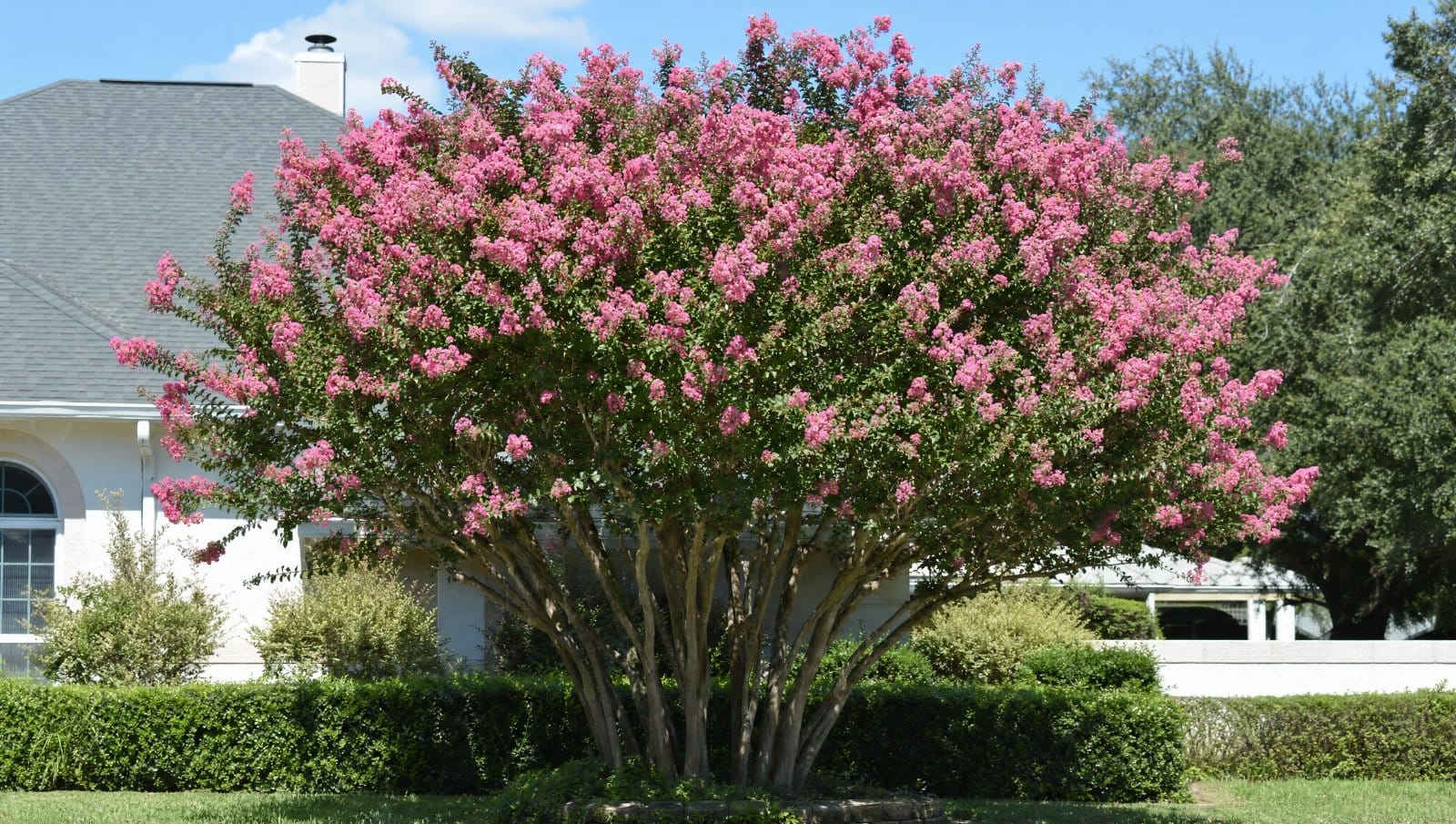
When to Prune Crape Myrtles in Central Florida
Timing matters. UF-IFAS recommends pruning during the dormant season, and the best window for crape myrtle pruning here is late winter, roughly January through mid-February, while the tree is dormant and before new growth pushes out. The branches are bare, so you can see the structure clearly, and the tree has the whole spring to recover before our summer bloom season.
A few timing notes specific to our area:
- Avoid heavy pruning in fall. Cutting late in the year can trigger tender new growth that gets nipped on the rare cold night Volusia and Seminole counties still get.
- Light cleanup is fine almost anytime. You can snip off spent seed heads or remove a broken branch in summer without harming the tree.
- Don’t panic if you miss the winter window. A skipped year of pruning is far better than a bad pruning. Crape myrtles bloom on new growth, so even an unpruned tree will flower.
How to Prune a Crape Myrtle the Right Way
The goal of good crape myrtle pruning is to enhance the tree’s natural vase shape, open up the canopy to light and air, and remove anything that’s dead, crossing, or crowded. Think of it as editing, not amputating.
Step 1: Remove suckers and ground sprouts
Crape myrtles send up thin shoots from the base. Cut these off at ground level. They steal energy and clutter the trunk line.
Step 2: Limb up the lower trunks
Remove the lowest side branches to expose the smooth, beautiful bark and the elegant structure of the main trunks. Work your way up gradually, taking the lower side branches off cleanly at the trunk. Don’t strip it bare — lifting the canopy to roughly the lower third of the tree is the goal, leaving the upper crown intact.
Step 3: Thin the canopy
Reach into the crown and remove branches that cross, rub, or grow inward toward the center. This is also where the pencil rule comes in: up in the canopy, focus on removing twiggy growth thinner than a pencil that clutters the interior. Opening the canopy improves airflow, which is a real benefit in our humid summers because it helps the leaves dry quickly and discourages sooty mold and powdery mildew.
Step 4: Make smart cuts
When you remove a branch, cut it back to where it joins a larger limb or the trunk — don’t leave stubs. The only rule worth tattooing on your hand: never cut a healthy branch thicker than your thumb unless you’re removing it entirely at its base. If you find yourself reaching for a chainsaw to lop off the top, stop. That’s crape murder.
Step 5: Remove old seed heads (optional)
Snipping off last year’s dried seed clusters tidies up the tree and can encourage a tidier flush, but it’s cosmetic. Skip it on a large tree — it’s not worth a ladder.
The Real Fix: Right Plant, Right Place
Most crape murder happens because someone planted a large variety in a small spot and now battles its size every year. If your crape myrtle is constantly outgrowing its space, the long-term answer isn’t harder pruning — it’s the right cultivar.
Crape myrtles come in sizes from three-foot dwarfs to thirty-foot trees. There’s a variety to fit almost any Central Florida yard, whether you need a low foundation shrub or a shade-casting specimen. Choosing the correct mature size up front means almost no pruning for the life of the plant.
Frequently Asked Questions
Will my crape myrtle die if it was topped?
No. Crape myrtles are tough and rarely die from topping. But the damage is cosmetic and structural, and it compounds over time. The good news is that a topped tree can often be gradually restored over a few seasons by selectively thinning the new sprouts down to one or two strong shoots per cut.
Can I fix a tree that’s already been crape murdered?
Often, yes. We thin the cluster of weak sprouts at each old cut, keeping only the strongest one or two, and let the tree slowly rebuild a natural-looking canopy. It takes patience, usually two to three seasons, but it beats starting over.
How short can I keep a crape myrtle?
Rather than fighting size with the saw, match the variety to the space. If a tree is simply in the wrong spot, relocating a young one or replacing it with a dwarf cultivar is healthier than annual topping.
Do crape myrtles bloom more if you prune them hard?
This is the myth behind crape murder. Hard pruning produces a few big blooms on weak wood, but proper thinning produces more blooms spread across a stronger, fuller canopy. Light, smart pruning wins.
Let LandTree Take a Look
Good crape myrtle pruning is part craft, part restraint — and it’s easy to get right once you know what you’re aiming for. If you’ve got a crape myrtle that’s been topped in the past, one that’s outgrowing its spot, or you’d simply rather hand the ladder work to someone who does this every week, we’re happy to help. LandTree (DeAngelo’s Land Services) is a veteran-owned crew serving Orange City, DeLand, Lake Mary, Sanford, Oviedo, Apopka, and the greater Orlando area. Reach out for a free, no-pressure estimate and we’ll give you an honest assessment of your trees and a plan to keep them healthy and blooming for years.