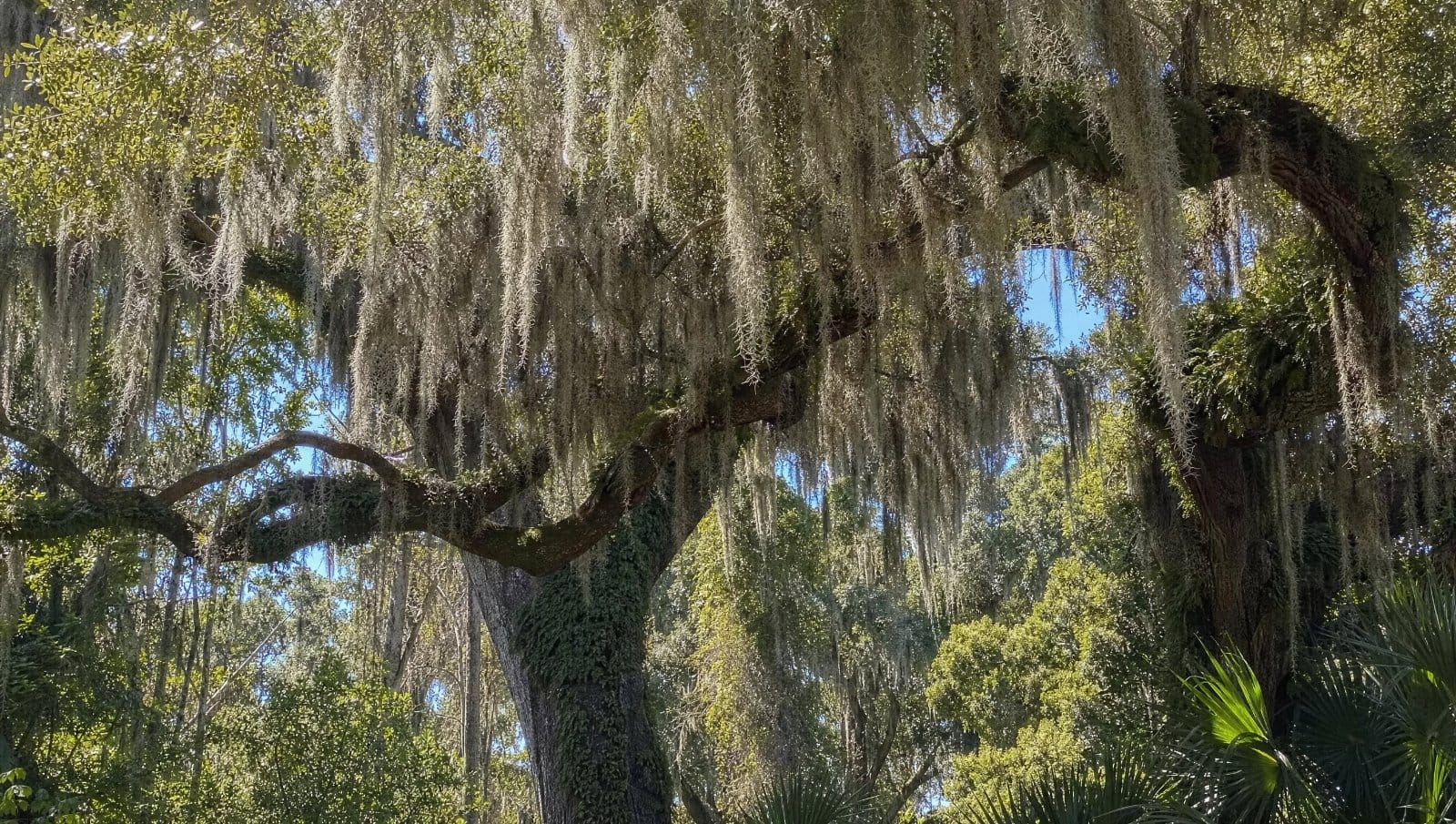
Spanish moss is mostly harmless; it lives on air, not your tree.
Spanish Moss on Your Trees: Harmful or Harmless in Florida?
Few things say “Old Florida” like Spanish moss swaying from a grand live oak. It drapes the oaks and cypress all across Central Florida, from the historic streets of DeLand to the shady neighborhoods of Sanford and Oviedo. But almost every homeowner eventually asks the same question: is all that Spanish moss on trees actually hurting them? It’s a fair worry, and the honest answer is reassuring. Let’s clear up the myth and give you the real story from a local arborist’s point of view.
What Spanish Moss Actually Is
First, a surprise that throws most people: Spanish moss isn’t moss at all. It’s a flowering plant called Tillandsia usneoides, a member of the bromeliad family, the same family as the pineapple and the air plants you see in garden centers. It’s a true Florida native and a beloved part of our landscape.
The key fact for any homeowner is this: Spanish moss is an epiphyte, also known as an air plant. It is not a parasite. It doesn’t sink roots into the tree, and it doesn’t tap into the tree for water or nutrients. It simply uses branches as a place to perch while it pulls moisture and nutrients straight out of our humid Central Florida air and rainfall. According to UF/IFAS Gardening Solutions, this is exactly why it does no harm to the host tree.
Why It Thrives Here
Spanish moss loves exactly the conditions we have in abundance:
- High humidity — our muggy zone 9b air feeds it all year.
- Heavy summer rain — the June-through-September wet season keeps it lush.
- Large, spreading shade trees — live oaks, bald cypress, pecans, and other big-canopy hardwoods give it plenty of horizontal branches to hang from.
That’s why you’ll see it most heavily on mature oaks and cypress. The tree isn’t sick because it has moss, the moss is there because the tree is big, established, and growing in a damp, shady spot.
Is Spanish Moss on Trees Harmful or Harmless?
Here’s the straight answer most homeowners are looking for: in the vast majority of cases, Spanish moss on trees is harmless. A healthy live oak can carry a heavy beard of moss for decades without any ill effect. It’s not stealing the tree’s food, and a thriving tree and its moss have coexisted in Florida forever.
That said, an honest contractor won’t tell you it’s never worth a second look. There are a couple of narrow, real situations where moss is worth managing, not because it’s a villain, but because of indirect effects.
When Spanish Moss Can Be Worth Managing
- Heavy shading of weak or declining trees. If a tree is already struggling, a thick blanket of moss can shade out the inner leaves and slow the tree’s recovery. The moss isn’t the cause of the decline, but thinning it can help a stressed tree get more light.
- Added weight on already-weak limbs. Dry moss is light, but soaked with rain after a summer storm it gets heavy. On a limb that’s already dead or cracked, that extra load can be the last straw. The real fix here is removing the bad limb, not the moss.
- It’s a sign, not a cause. Sometimes a tree is heavy with moss simply because it has thinned out and dropped leaves on its own. People see the moss and blame it, when the moss is just more visible on a sparse canopy. A good arborist reads the moss as a clue and looks at why the canopy thinned in the first place.
Notice the pattern: in each case the moss is a passenger, not the driver. In our own experience, when a homeowner calls worried that moss is “killing” an oak, the inspection almost always turns up the real culprit elsewhere — girdling roots, prior trunk damage, or storm-cracked limbs — not the moss at all. The tree’s underlying health is what actually matters.
The Good Things Spanish Moss Does
Before you reach for a rake, it’s worth knowing that Spanish moss earns its place in our ecosystem. It provides:
- Habitat and shelter for birds, including warblers and the occasional bat, plus nesting material many species rely on.
- Cover for beneficial insects and spiders that help keep pest populations in check.
- That irreplaceable Southern character that makes a mature Central Florida oak canopy so striking.
One small heads-up: chiggers can sometimes live in moss that has fallen to the ground, so wear gloves if you’re handling fallen clumps. UF/IFAS notes that the moss still hanging up in the tree is generally not a chigger concern — it’s the fallen, ground-contact clumps to be careful with.
Should You Remove It? An Honest Take
For most healthy trees, removal is purely cosmetic, it’s a matter of taste, not tree health. If you love the look, leave it. If you’d prefer a cleaner canopy, that’s a perfectly valid choice too.
If You Do Want It Thinned
- Hand or pole removal is the safest approach for reachable moss. It’s tedious but harmless to the tree.
- For tall oaks, leave it to a pro. Climbing a mature oak or working off a ladder to pull moss is exactly the kind of task that lands homeowners in the emergency room. Proper equipment and training matter.
- Be cautious with chemical sprays. Some products marketed for moss can stress or damage the tree itself, and they’re rarely worth it for a harmless plant. We generally steer folks away from them.
- Combine it with real care. The best time to thin moss is during a routine pruning, when we can also remove dead limbs and check the tree’s overall health in one visit.
Frequently Asked Questions
Does Spanish moss kill trees?
No. As an air plant, it doesn’t feed off the tree. Healthy Florida oaks live long, full lives covered in moss. When a moss-covered tree declines, the cause is almost always something else, age, root issues, disease, or storm damage.
Why does my dying tree have so much moss?
It’s usually the other way around. As a tree thins out and loses leaves, the moss simply becomes more visible against the sparse branches. The moss is a symptom of a thinning canopy, not the cause. That’s a good reason to have the tree inspected.
Is Spanish moss bad after a hurricane?
The moss itself isn’t the danger. What matters before storm season is the structural health of your tree, dead limbs, cracks, and weak unions. Addressing those is far more valuable than worrying about the moss.
Can I just leave it alone?
Yes, and for a healthy tree that’s often the best choice. It’s native, beneficial to wildlife, and part of what makes Central Florida beautiful.
Not Sure What Your Tree Needs? Let’s Take a Look
If you’re wondering whether the Spanish moss on your trees is harmless or a sign of something worth checking, the smartest move is a real inspection by someone who knows Central Florida trees. As a veteran-owned local company serving Orange City, DeLand, Lake Mary, Sanford, and the greater Orlando area, LandTree will give you the honest assessment, whether that’s “your oak is in great shape, enjoy the moss” or a plan to address a limb that needs attention. Reach out anytime for a free, no-pressure estimate. We’re glad to help you keep your trees healthy and your yard looking its best.