
Brown Patch in a Florida Lawn: Why Summer Rain Causes It
Brown Patch in a Florida Lawn: Why Summer Rain Causes It
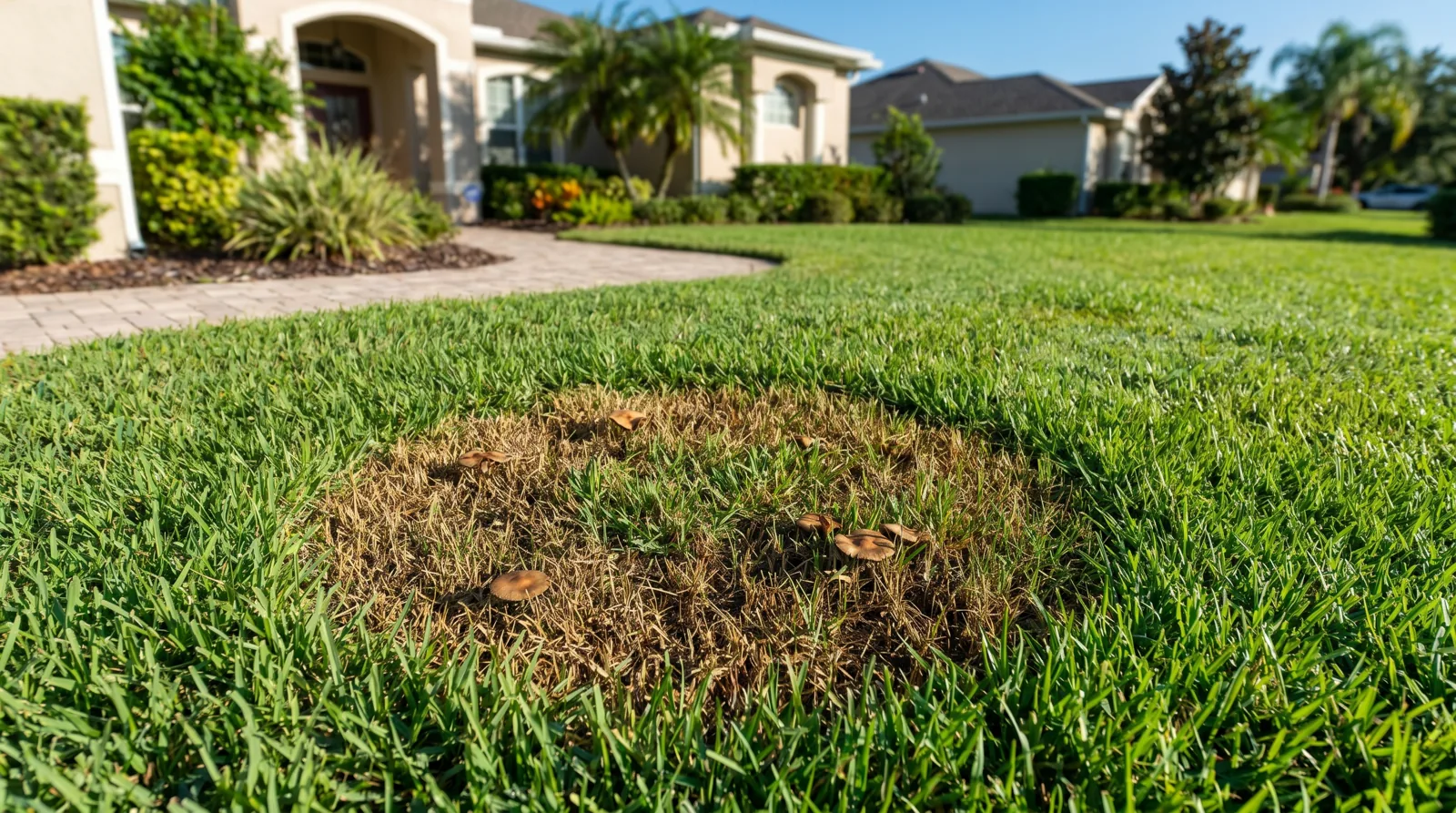
Brown patch in a Florida lawn is a fungal disease — usually large patch (Rhizoctonia) — that shows up as roughly circular brown rings in your turf, and our daily summer rains are exactly what trigger it. Warm, soggy conditions plus grass that stays wet for hours is the perfect storm for the fungus, which is why so many Central Florida lawns suddenly develop brown circles in June, July, and August.
The short version: Brown patch is a wet-weather fungus, not a watering problem you fix by adding more water. Circular brown rings in summer usually mean fungus; treat with a fungicide, water only in the early morning, and the grass can recover from the roots out.
We see this on St. Augustine and Floratam lawns all over Seminole, Volusia, and Orange counties every rainy season. Below is how to identify it correctly, fix it, and keep it from coming back — and how to tell it apart from the bug that gets blamed for it most often.

What Brown Patch Is and Why Florida Summers Trigger It
Brown patch (technically “large patch” on warm-season grasses like St. Augustine) is caused by a soil-borne fungus already present in almost every Florida lawn. It sits dormant most of the year. What wakes it up is moisture and warmth — and Central Florida summers deliver both on a daily schedule.
Here’s the cycle that drives it: an afternoon thunderstorm soaks the lawn, humidity keeps the blades from drying, and the grass sits wet overnight. That extended leaf wetness is the fungus’s invitation. Over a few days the disease spreads outward from a center point — which is why the classic symptom is a circular or arc-shaped patch, often with a darker “smoke ring” edge of dying grass and a greener center.
A few things make a lawn more vulnerable:
- Watering in the evening or at night — the single biggest mistake, because it leaves grass wet through the danger window.
- Overwatering on top of the rain we’re already getting.
- Too much fast-release nitrogen fertilizer in summer, which pushes soft, disease-prone growth.
- Poor drainage that keeps low spots soggy. If your yard holds water after storms, you’ll fight fungus all summer — a drainage problem feeding a disease problem.
For the science behind it, the UF/IFAS guidance on large patch in Florida lawns is the authority we point homeowners to. It confirms what we see in the field: this is a wet-weather disease, and managing water is half the battle.
Is It Fungus or Chinch Bugs? How to Tell
This is the question that trips up almost everyone, because both leave brown areas in St. Augustine — but they call for completely different treatments, and guessing wrong wastes your money.
Brown patch (fungus) looks like:
– Circular or ring-shaped patches, often with a darker outer edge.
– Worst in the rainy, humid stretches and in shady, damp, poorly drained areas.
– Grass blades pull away easily at the base, and the lower stem may be dark and rotted.
– Tends to appear after wet weather.
Chinch bug damage looks like:
– Irregular, expanding patches — not neat circles — usually in the hottest, sunniest, driest parts of the lawn.
– Worst during hot, dry stretches, the opposite of fungus weather.
– Grass turns yellow then straw-brown and the area keeps spreading outward.
– You can sometimes find the tiny black-and-white insects at the green edge of the damage.
A quick field check: brown patch’s tell is the circular shape and easy-pull blades in wet, shady spots; chinch bugs love dry, sunny, open turf and irregular shapes. We break down the insect side in our guide to chinch bugs in St. Augustine grass — if your damage is in full sun during a dry spell, start there.
How to Fix and Prevent Lawn Fungus
Good news: brown patch usually kills the leaf blades but not the roots, so an affected lawn can recover with the right moves. Here’s the playbook we use.
- Fix your watering first. Water only in the early morning so the sun dries the blades quickly — never in the evening. During the rainy season you may not need to irrigate at all; let the storms do the work and supplement only in a dry gap.
- Apply a fungicide. A lawn fungicide labeled for large patch, applied per the label and often again two to four weeks later, stops the spread. Timing matters more than brand.
- Ease off the nitrogen. Hold heavy, fast-release fertilizer until the disease is under control. Soft summer growth feeds the fungus.
- Improve drainage. If the same low spots fungus up every year, the root cause is standing water. Correcting grading or adding drainage breaks the cycle — see our landscaping services for that work.
- Mow correctly. Keep St. Augustine on the taller side, mow with a sharp blade, and never scalp it. Clean equipment between lawns so you’re not spreading spores.
We recently worked a Lake Mary backyard where the homeowner had been watering every evening to “fix” the brown spots — which was actually feeding the fungus. We switched them to pre-dawn watering, treated with a fungicide, and corrected a soggy low corner. The rings stopped spreading within a couple weeks and the turf filled back in.
When to resod: If the fungus killed large areas down to bare ground, or you’ve fought it for seasons because of a deeper drainage issue, fresh sod over a corrected base is sometimes the cleaner reset. We cover the process on our sod installation page, and our guide to new sod summer care in Florida covers protecting that grass through the rainy season.
Frequently Asked Questions
Will brown patch kill my whole lawn?
Usually not. Brown patch damages the leaf blades but typically spares the roots, so the grass can recover once you correct watering and apply a fungicide. Only severe, untreated cases or areas with a deeper drainage problem need resodding.
How do I know if it’s fungus or chinch bugs?
Look at the shape and the conditions. Fungus makes circular patches in wet, shady, poorly drained spots and the blades pull out easily. Chinch bugs make irregular patches in hot, dry, sunny areas and keep spreading during dry spells. When in doubt, have it diagnosed before treating.
Why did brown patch appear right after all the rain?
Because it’s a wet-weather disease. Our daily summer storms leave grass wet for hours, especially if it also gets watered in the evening, and that prolonged moisture is exactly what activates the fungus. Managing leaf wetness is the key to stopping it.
Should I water more to fix brown spots in summer?
No — that often makes fungus worse. If the brown is from disease, more water feeds it. Switch to early-morning watering only, and during the rainy season you may not need to irrigate at all.
Can I prevent brown patch from coming back next summer?
Largely, yes. Water only in the early morning, avoid heavy summer nitrogen, keep drainage and low spots corrected, mow at the right height with a sharp blade, and treat preventively if your lawn has a history of it.
Got Brown Spots in Your Florida Lawn? Call (386) 675-2303
DeAngelo’s Land Services is a veteran-owned, BBB A+ rated, Google Guaranteed crew with an ISA Certified Arborist on staff and a 5.0-star rating across 211+ reviews from homeowners across Central Florida. Whether your lawn needs a diagnosis, a drainage fix, or fresh sod over a corrected base, we’ll get to the real cause — not just the symptom.
Don’t keep watering a fungus problem worse. Let us take a look and put your lawn on the right track.
Call us at (386) 675-2303 or request a free estimate online. Ask about our 10% veteran discount.
About the Author
Mark DeAngelo is an ISA Certified Arborist and the founder of DeAngelo’s Land Services in Lake Mary, Florida. A USAF combat veteran, Mark leads a BBB A+ rated, Google Guaranteed crew trusted by homeowners across Seminole, Volusia, and Orange counties for lawns, trees, drainage, and sod.