
Chinch Bugs in St. Augustine Grass: Signs & Fixes
Chinch Bugs in St. Augustine Grass: Signs, Damage & Treatment
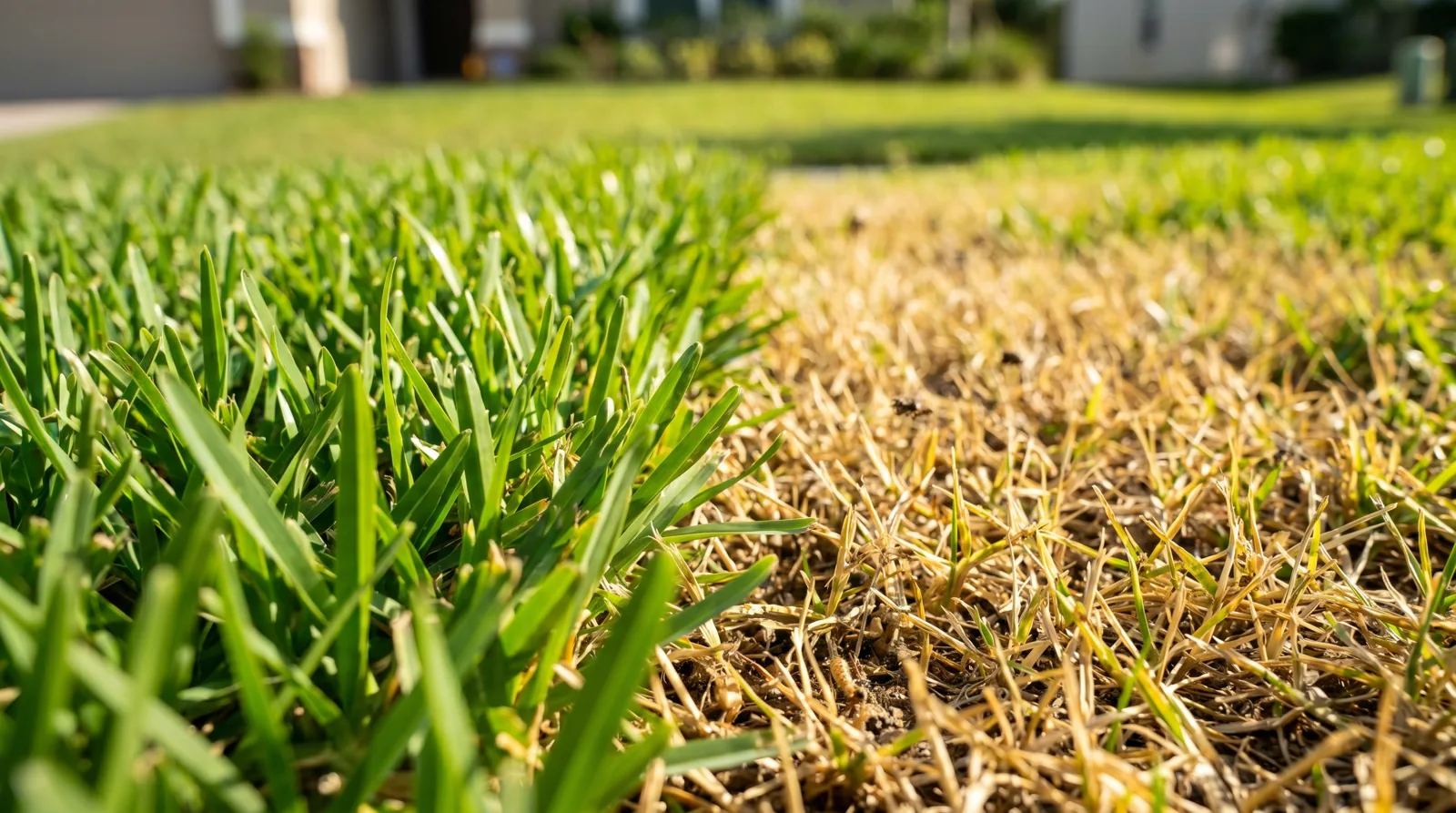
If you’ve got irregular yellow-to-brown patches spreading across the sunny parts of your St. Augustine lawn in the middle of a Central Florida summer, chinch bugs in St. Augustine grass are the first thing we check for. They’re the number-one insect pest of Floratam down here, and by the time most homeowners call us, the bugs have already been working for a couple of weeks.
The fast answer: chinch bugs kill St. Augustine from the hottest, driest, sunniest part of the yard outward — and the damage spreads, doesn’t bounce back with water, and usually shows up June through September.
Here’s how we tell chinch-bug damage apart from drought and fungus, how to confirm it in your own yard, and what it actually takes to get the lawn back.
How to Spot Chinch Bugs in St. Augustine Grass
Chinch bugs are tiny — adults are only about an eighth of an inch — but they do outsized damage. They use a needle-like mouthpart to suck the juices from grass blades and inject a toxin that clogs the plant’s plumbing. The result is grass that yellows, turns straw-brown, then dies.
A few patterns give them away around here:
- They start in the sun and the heat. Look at the edge of the driveway, along the sidewalk, against a south-facing wall, or any open spot that bakes all afternoon. Chinch bugs love hot, dry, sunny turf. Shady areas under a live oak are usually the last to go.
- The patches spread outward. A chinch-bug spot doesn’t stay put. It expands a little more every few days as the colony marches into healthy grass at the edges.
- Water doesn’t fix it. Drought-stressed grass greens back up a day or two after a good soaking. Chinch-bug damage does not — the grass is already dead or dying at the roots.
- It hits in summer. Our worst calls come in the June-to-September heat. That’s also when our summer rains trigger brown patch fungus, which is exactly why people mix the two up.
On a Heathrow lawn last August, the homeowner had been watering twice as much trying to “save” a brown spot — and that extra water was actually feeding a separate fungus problem while the chinch bugs kept eating the dry edge. Two different problems, two different fixes. That’s why correct ID matters before you spend a dime on product.
The Drink Test: Confirm It Yourself
Before treating, you want to actually see the bugs. The classic UF/IFAS method is the float test, and the easiest backyard version is the drink test (also called the coffee-can or flotation test):
- Cut the top and bottom out of a coffee can or a wide section of PVC.
- Push it a couple inches into the soil right at the edge of a damaged patch — where dying grass meets green grass, because that’s where the live bugs are. Don’t sample dead center; the bugs have already moved on from there.
- Fill the can with water and keep it topped up for five to ten minutes.
- Watch the surface. If you have chinch bugs, you’ll see small black-and-white insects float up and scramble around on the water.
Six or more bugs in a single sample is generally enough to call it and treat. For the full identification and threshold details, UF/IFAS publishes an excellent free guide on southern chinch bug management that’s worth bookmarking.
Chinch Bugs vs. Fungus vs. Drought
| Clue | Chinch Bugs | Brown Patch / Large Patch | Drought |
|---|---|---|---|
| Where it starts | Hot, sunny, dry edges | Low, wet, shady areas | Anywhere dry, high spots first |
| Shape | Irregular, expanding blobs | Roughly circular rings | Footprints/wilt, follows mower |
| Recovers with water? | No | No (water makes it worse) | Yes, fast |
| Season | Hot summer (Jun–Sep) | Warm + wet (rainy season) | Any dry spell |
| Bugs visible? | Yes, on the drink test | No | No |
Treating Chinch Bugs and Repairing the Lawn
Once you’ve confirmed chinch bugs, treatment is straightforward but has to be done right. A targeted lawn insecticide labeled for chinch bugs — applied to the damaged area plus a buffer of healthy grass around it — knocks down the active population. The buffer matters because the bugs are always migrating outward into green turf.
A few things we’ve learned doing this across Seminole and Volusia counties:
- Treat the edges, not just the dead center. The living bugs are at the advancing front. Spraying brown, dead grass accomplishes nothing.
- Water it in per the label, but check your local watering restrictions first — many treatments qualify for a use exemption.
- Mind the thatch. Over-fertilized Floratam builds a thick thatch layer that’s prime chinch-bug habitat, so heavy summer nitrogen makes the problem worse.
- Rotate, don’t repeat. Southern chinch bugs have developed resistance to certain insecticide classes from decades of overuse, so hammering them with the same active ingredient just breeds tougher bugs.
If the infestation is widespread or you’ve fought it for two summers running, treatment is only half the job. The other half is getting living grass back where the dead grass was.
When It’s Time to Resod
Chinch bugs don’t just brown the grass — they kill the crowns and roots, so those patches won’t recover even after the bugs are gone. If you’ve lost more than a small area, the fix is fresh sod, not more spraying.
We handle that side too. When we install new St. Augustine sod over a chinch-damaged area, we treat the active population, strip the dead turf and infested thatch, prep the soil, and lay fresh Floratam — then set you up with the right summer watering and care plan for new sod so it establishes before the bugs find it again.
Frequently Asked Questions
What does chinch bug damage look like in St. Augustine grass?
Irregular yellow-to-brown patches that start in the hottest, sunniest, driest parts of the lawn and slowly spread outward. The grass looks drought-stressed but doesn’t green back up when you water it, because the bugs have already killed the roots. You’ll typically see it in the June-through-September heat.
How do I know if it’s chinch bugs or just dry grass?
Do the drink test: push a bottomless can into the soil at the edge of a dying patch, fill it with water, and watch for small black-and-white bugs floating to the surface within ten minutes. The other tell is recovery — dry grass greens up after a good watering, while chinch-bug damage does not.
Will chinch bug damage grow back on its own?
No. Once chinch bugs kill the crowns and roots, that grass is dead and won’t regrow. You can stop the spread with treatment, but the bare or brown areas left behind need to be re-sodded to bring the lawn back.
When are chinch bugs worst in Central Florida?
Late spring through early fall — roughly May to September — with the heaviest pressure in the hottest months. Warm soil speeds up their breeding, so a single summer can produce several overlapping generations in an untreated lawn.
Can I prevent chinch bugs?
You can reduce the risk. Avoid heavy summer nitrogen fertilizing (it builds the thatch they hide in), keep your mowing height correct for St. Augustine, water deeply but not constantly, and scout the sunny edges of your yard every couple of weeks during summer so you catch them early.
Stop Chinch Bugs From Taking Your Lawn — Call DeAngelo’s
At DeAngelo’s Land Services, we’ve diagnosed and repaired more chinch-bug-damaged St. Augustine lawns across Lake Mary, Sanford, Longwood, Heathrow, Deltona, and the rest of Central Florida than we can count. We’re a veteran-owned, BBB A+ rated, Google Guaranteed team carrying a 5.0-star rating across 211+ reviews, and we offer a 10% veteran discount on every job.
If your St. Augustine grass is browning in the summer heat and you’re not sure whether it’s bugs, fungus, or drought, let us take a look before you waste money on the wrong fix. Call us today at (386) 675-2303 for a free, no-pressure estimate — we’ll walk your yard, confirm what’s actually killing the grass, and give you an honest plan to bring it back.
About the Author: Mark DeAngelo is an ISA Certified Arborist and the founder of DeAngelo’s Land Services, a veteran-owned company serving Lake Mary, Sanford, and the greater Central Florida area. His team is BBB A+ rated, Google Guaranteed, and proud to offer a 10% veteran discount on every job.