
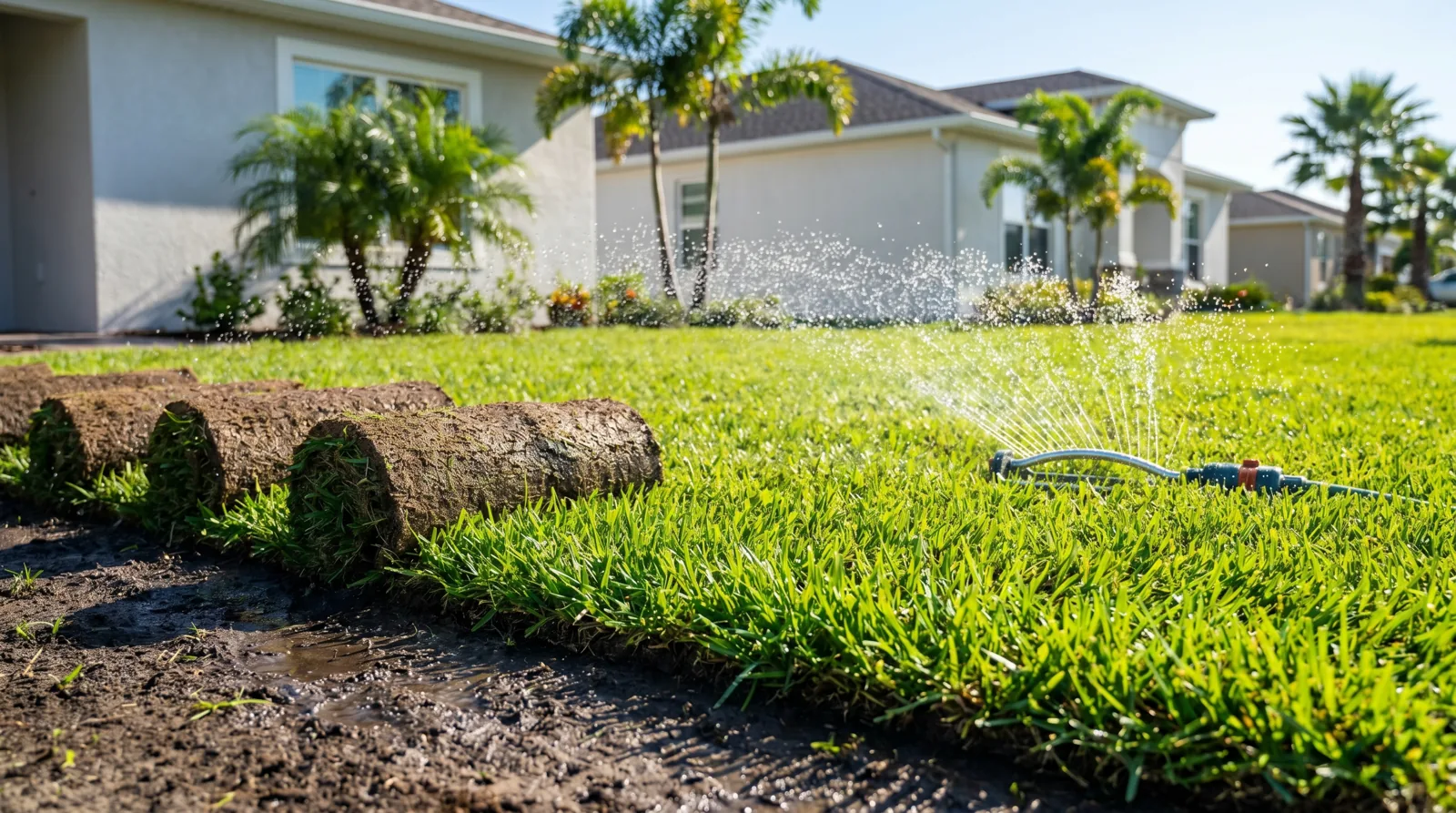
New Sod Summer Care in Florida: Watering Guide
New Sod Summer Care in Florida: Is Your Lawn Surviving?
New sod summer care in Florida comes down to one thing above all: water — the right amount, at the right time, for the first few weeks. Fresh sod laid in June, July, or August has zero established roots and is sitting on top of hot sand under brutal sun, so it can dry out and die in a single afternoon if you miss a watering. Get the schedule right, though, and summer heat actually roots new sod faster than any other season.
The rule of thumb: water new sod multiple times a day for the first week, then taper off over the next two to three weeks as the roots grab hold. Underwater and it crisps; overwater and it rots.
Here’s the exact watering and care plan we hand every customer when we lay fresh St. Augustine, Zoysia, or Bahia in the summer heat.
The First 14 Days: Your New Sod Watering Schedule
The goal in week one is simple — never let the sod or the soil beneath it dry out. Sod roots can’t pull moisture from the ground yet, so the only water it gets is what you put on top.
Days 1–7 (rooting begins):
Water two to four times a day, enough to keep the sod and the top inch of soil consistently moist. In peak Florida summer heat, that often means a deep morning soak, a midday top-up, and an afternoon watering. Pull back a corner of a sod piece on day three — the soil underneath should be wet, not bone-dry and not standing in mud.
Days 8–14 (roots reaching down):
Cut back to once or twice a day, but water a little longer each time so the moisture goes deeper. You want the roots chasing the water down into the soil instead of staying shallow at the surface. By the end of week two, gently tug a corner — if it resists, roots are taking hold.
Days 15–30 (establishment):
Taper to every other day, then a couple of times a week. You’re transitioning the lawn onto a normal, deep-and-infrequent schedule. By day 30 your sod should be knitting into the soil and ready to settle into the standard Central Florida watering restrictions — which, importantly, grant new sod an exemption during this establishment window so you can water as often as the grass needs.
A couple of Florida-specific notes:
- Time it for early morning. Watering at sunrise gives the sod a full reservoir before the heat hits and lets the blades dry by evening, which cuts down on fungus.
- Our afternoon storms count — sometimes. A genuine soaking thunderstorm can replace a watering. A ten-minute sprinkle that barely wets the surface does not. Check by pulling a corner.
- Watch the edges and the sun. The pieces along driveways, sidewalks, and south-facing walls dry out first. Those edges are where new sod fails, so give them extra attention.
Reading the Signs: Over-Watering vs. Under-Watering
Most new-sod failures we get called to fix are watering problems in one direction or the other. Here’s how to tell them apart before it’s too late.
| What you see | Likely cause | Fix |
|---|---|---|
| Edges curling, gaps opening between pieces, gray-green color | Under-watered / drying out | More frequent watering, focus on edges |
| Crispy, straw-brown, crunchy underfoot | Severely under-watered | Soak deeply now; some pieces may be lost |
| Spongy, mushy, foul smell, slimy | Over-watered / rotting | Cut back watering, improve drainage |
| Yellowing with dark patches in low spots | Fungus from staying too wet | Reduce watering frequency, water at dawn only |
| Pieces shifting or floating | Way over-watered, soil saturated | Stop watering until soil firms up |
The trickiest one is new sod turning brown. A little browning at the very tips in the first week is normal transplant shock and usually recovers. Whole pieces going brown and crispy means under-watering. Brown that’s soft, smelly, and spreading from the low spots means the opposite — too much water and possibly a drainage problem in the yard that needs addressing before the lawn will ever thrive.
When in doubt, the corner-pull test settles it: lift a corner and feel the soil. Dry and dusty means water more. Soggy and sour means water less.
New Sod Summer Care in Florida: Mowing, Fertilizing & First-Month Tasks
Watering is most of the battle, but timing the other tasks right protects your investment.
- Don’t mow too early. Wait until the sod is rooted enough that pieces don’t lift when you tug them — usually around two to three weeks. Mowing sooner can pull pieces up or tear roots that are just getting started. When you do mow, keep St. Augustine on the tall side (around 3.5 to 4 inches) and never cut more than a third of the blade at once.
- Hold off on fertilizer. Most sod is grown with enough nutrients to establish, and a shot of nitrogen on un-rooted sod just stresses it in the heat. Wait until the lawn is rooted and growing — generally about 30 days — before the first light feeding. UF/IFAS has a free walkthrough on establishing and maintaining a new lawn if you want the agronomy behind the timing.
- Stay off it. Keep foot traffic, pets, and play to a minimum for the first couple of weeks. Compaction and shifting break the soil-to-root contact the sod needs.
- Scout for pests. Newly establishing St. Augustine is vulnerable, and a stressed summer lawn can attract trouble fast — keep an eye out for the early signs of chinch bugs in St. Augustine grass along the hot, sunny edges.
We laid a full St. Augustine lawn in Lake Mary last July where the homeowner followed the first-14-day schedule to the letter, and by mid-August you couldn’t find a seam. A neighbor who sodded the same week but watered “when he remembered” lost about a quarter of his pallets. Same heat, same soil — the difference was entirely the watering routine.
Frequently Asked Questions
How often should I water new sod in the Florida summer?
Two to four times a day for the first week to keep the sod and topsoil constantly moist, then taper to once or twice a day in week two, every other day in week three, and a deep weekly soak by the end of the first month. Always water in the early morning when you can.
Why is my new sod turning brown?
Most often it’s under-watering — the pieces dry out, especially along driveways and sunny edges, and turn crispy brown. If the brown areas are instead soft, smelly, and in low spots, that’s over-watering or poor drainage causing rot. Pull a corner and feel the soil to tell which one you’ve got.
Can I water new sod even with watering restrictions in place?
Yes. New sod qualifies for an establishment exemption — generally up to 30 days — so you can water as often as the grass needs while it roots. Keep a record of your install date in case a code officer asks.
When can I mow newly laid sod?
Wait until the sod has rooted enough that the pieces don’t lift when you tug a corner, usually two to three weeks. Mow with a sharp blade, keep St. Augustine tall (3.5–4 inches), and never remove more than a third of the blade height in one pass.
When should I first fertilize new sod?
Hold off for about 30 days, until the sod is rooted and actively growing. New sod typically comes with enough nutrients to establish, and fertilizing too early just stresses un-rooted grass in the summer heat.
Let Us Lay It — and Set It Up to Thrive
At DeAngelo’s Land Services, we don’t just drop pallets and drive off. Every sod installation we do in Lake Mary, Sanford, Longwood, Heathrow, and across Central Florida comes with a soil-prepped base and a clear summer watering plan so your new lawn actually survives its first brutal Florida summer. We’re veteran-owned, BBB A+ rated, Google Guaranteed, carry a 5.0-star rating across 211+ reviews, and offer a 10% veteran discount on every job.
Call us today at (386) 675-2303 for a free estimate. Whether you need a fresh lawn installed or want a pro to look at sod that’s struggling, we’ll walk your property and give you an honest, no-pressure plan.
About the Author: Mark DeAngelo is an ISA Certified Arborist and the founder of DeAngelo’s Land Services, a veteran-owned company serving Lake Mary, Sanford, and the greater Central Florida area. His team is BBB A+ rated, Google Guaranteed, and proud to offer a 10% veteran discount on every job.