
Paver Sealing in Florida: Why Humidity Changes Timing
Paver Sealing in Florida: Why Humidity Changes Timing
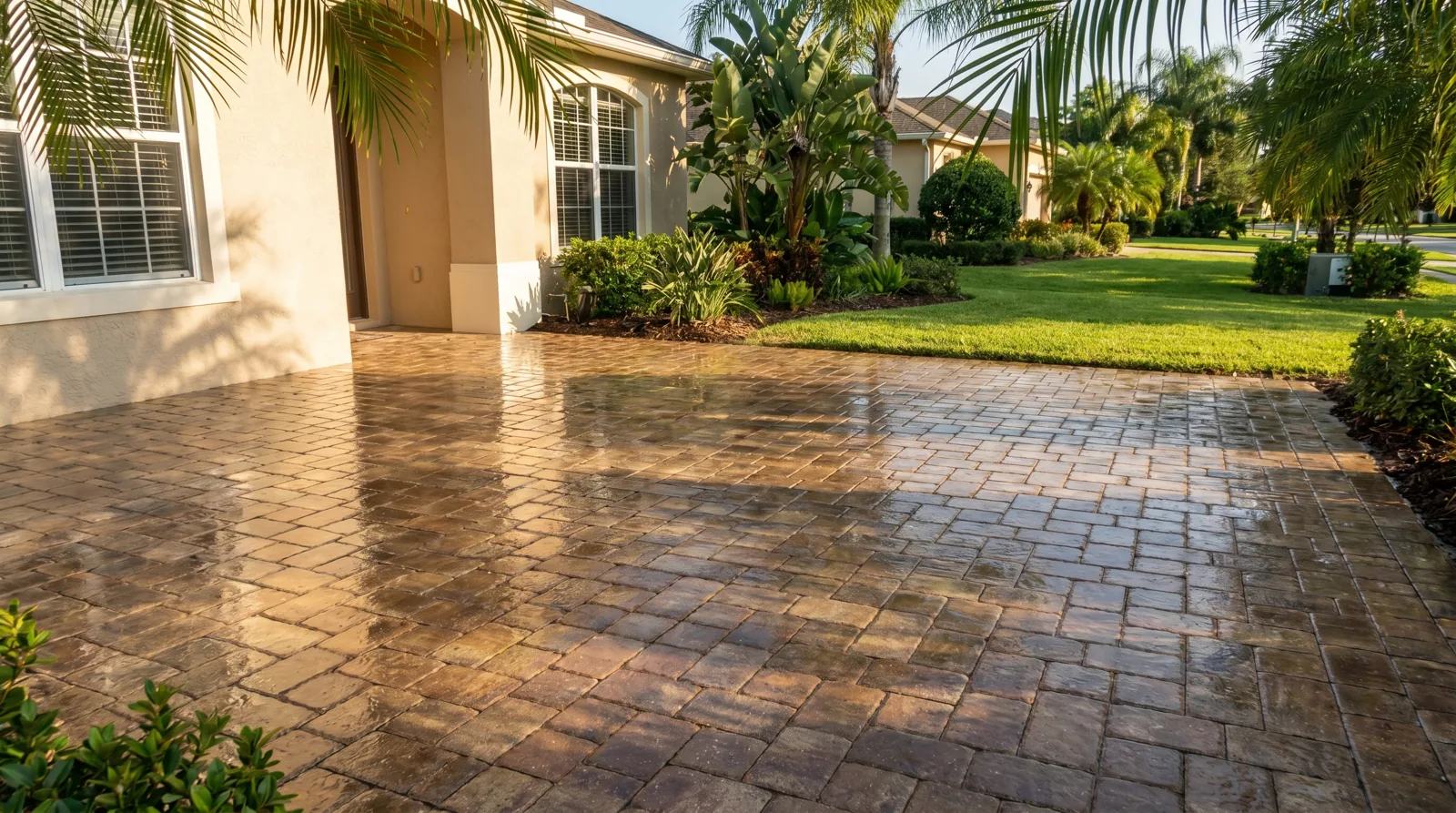
Paver sealing in Florida is all about timing — the pavers have to be fully dry, the forecast has to give you a clear dry window, and the humidity has to be low enough for the sealer to cure, which is why our afternoon-thunderstorm summers make timing trickier here than almost anywhere else. Seal at the wrong moment and you don’t get a glossy, protected patio; you get a cloudy, hazy, peeling mess that has to be stripped and redone. Get it right and the seal locks out weeds, ants, stains, and fading for years. Around Lake Mary and across Central Florida, the difference is entirely the weather.
Don’t seal pavers when rain is in the forecast or the surface is damp. Wait for new pavers to dry and efflorescence to clear, pick a stretch of dry, lower-humidity days, and give the sealer time to cure before the next storm rolls in.
If you’ve invested in a paver patio, driveway, or pool deck, sealing protects that investment — but only if you respect the weather. We’ve watched homeowners seal on a “nice morning” only to have a 3 p.m. downpour ruin the cure. Here’s how the timing actually works in our climate, and why patience beats a rushed weekend.

Paver Sealing in Florida: Why Humidity Drives the Timing
Sealer is a coating that has to bond to a dry surface and then cure — harden and set — before it gets wet. Both steps fight against a Central Florida summer, which is why the “when” matters more than the “how.”
Moisture trapped under the sealer turns it cloudy. Seal pavers that are even slightly damp — from rain, dew, irrigation, or moisture wicking up from the sandy base — and that water gets trapped beneath the coating. As it tries to escape, it clouds the sealer into a white, hazy fog (blushing). On our high-water-table lots, where moisture rises through the base, this is the most common failure we see, and the fix is ugly: strip the sealer and start over.
A surprise storm during cure ruins the job. Most sealers need a stretch of dry weather to cure — hours to a day or more, depending on the product — before they can take rain. June through September, an afternoon thunderstorm rolls in almost daily with little warning. Seal in the morning, get hit at 4 p.m., and the rain can wash out, streak, or blotch a coating that hadn’t set. The forecast isn’t a suggestion here; it’s the whole plan.
High humidity slows the cure. Even without rain, summer humidity stretches cure times. Solvent- and water-based sealers both rely on evaporation to set, and when the air is already saturated, that evaporation crawls — a sealer that “dries in two hours” on a dry day can stay tacky far longer at 90% humidity, leaving it vulnerable to dew, traffic, and the next storm. The Interlocking Concrete Pavement Institute’s guidance on caring for pavers underscores how much surface and weather conditions drive a successful application.
So when should you seal pavers in Florida? The rules that keep you out of trouble:
- Surface bone-dry. No rain for at least 24 to 48 hours beforehand (longer after a heavy soaking), no morning dew still sitting, irrigation off. The pavers and the joints both need to be dry.
- A clear dry window in the forecast. You want enough rain-free, lower-humidity hours to apply and let it cure. That often means picking your day carefully in summer — or favoring our drier, cooler stretches in late fall through spring, when stable dry windows are easier to find.
- Right time of day. Avoid sealing in the blazing midday sun, which can flash the sealer off too fast, and avoid late-day applications that won’t cure before evening dew and storms.
This is exactly why we plan paver sealing around the radar, not the calendar. A good landscape contractor watches the forecast and books the job into a real dry window instead of forcing it onto a Saturday that happens to be free. If you’re still in the planning stage, it’s also worth weighing drainage-friendly options like permeable pavers for Florida yards before you pour.
New pavers need to wait — and let efflorescence clear. This trips up a lot of homeowners eager to seal a brand-new patio. Two reasons to wait:
- Curing and drying. Fresh pavers and the new base need time to release construction moisture. Sealing too soon traps it and clouds the coating.
- Efflorescence. New concrete pavers commonly develop a white, chalky haze as natural salts migrate to the surface and evaporate out over the first weeks to months. If you seal over active efflorescence, you lock that white haze in permanently. The standard move is to let new pavers weather and let the efflorescence work itself out — often a month or two, sometimes longer — and only then clean, let dry, and seal.
We’d rather tell you to wait than seal early and have you call us back to strip a hazed patio.
Why seal at all? When the timing’s right, sealing earns its keep here: it locks out weeds and ants by stabilizing the joint sand so it doesn’t wash out into a seedbed or an ant highway; it resists stains from oil, leaves, fertilizer, and the organic gunk our humid climate grows by making the surface less porous; it slows fading from our intense UV; and it hardens the joints so the pavers stay locked together and the patio or driveway holds its shape. Like any hardscape, the work is only as good as how it’s maintained.
Frequently Asked Questions
Can you seal pavers in the Florida summer?
Yes, but you have to be choosy about the day. Summer’s daily thunderstorms and high humidity shrink your safe dry window, so you seal only when the surface is fully dry and the forecast gives you enough rain-free, lower-humidity hours to apply and cure. Many homeowners find it easier to seal in our drier fall-through-spring months when stable dry windows are more common.
How long should I wait to seal new pavers in Florida?
Generally wait until the pavers have dried out and any efflorescence — the white, chalky haze from natural salts — has weathered off, often a month or two and sometimes longer. Sealing too soon traps moisture and locks in the haze, both of which mean stripping and redoing the job.
What happens if it rains after you seal pavers?
If rain hits before the sealer has cured, it can streak, blotch, wash out, or cloud the coating, and the fix is to strip and reseal. That’s why we plan around the radar and only seal when there’s a reliable dry window. Once a sealer is fully cured, normal rain is no problem — that’s the whole point of the seal.
Why did my sealed pavers turn white or cloudy?
Almost always trapped moisture or sealing over efflorescence. If the pavers were damp, dew was present, moisture was wicking up from the base, or salts hadn’t finished migrating out, the sealer hazes white. On Florida’s high-water-table lots this is the most common failure. It’s correctable, but it means removing the bad coating and resealing on a properly dry surface.
How often do pavers need to be resealed in Florida?
It varies with the sealer, the traffic, and the sun exposure, but Florida’s intense UV and heavy rain are hard on coatings, so resealing every few years is typical to keep the protection and color up. We can assess your existing pavers and tell you honestly whether they’re due rather than upselling a reseal you don’t need yet.
Get Your Pavers Sealed at the Right Time — Free Estimate
If you’ve got a paver patio, driveway, or pool deck in Lake Mary, Heathrow, Sanford, Winter Springs, or anywhere across Central Florida, let us seal it the right way — on a properly dry surface, in a real dry window, so it cures clean and protects for years. We’re veteran-owned, BBB A+ rated, Google Guaranteed, and 5.0-star rated across 211+ reviews from homeowners throughout Seminole, Volusia, and Orange counties.
We also offer a 10% veteran discount on every service.
Call us at (386) 675-2303 or request a free estimate online. We’ll check your pavers, read the forecast with you, and book the seal for a day that gives it the best chance to last.
About the Author
Mark DeAngelo is an ISA Certified Arborist and the founder of DeAngelo’s Land Services in Lake Mary, Florida. A USAF combat veteran, Mark leads a BBB A+ rated, Google Guaranteed crew handling hardscaping, paver sealing, tree care, and landscaping across Seminole, Volusia, and Orange counties.