Emergency Tree Removal After a Storm: What to Do First
Emergency Tree Removal After a Storm: What to Do First in Central FL
When a tree comes down on your house, your car, or across your driveway in the middle of a Central Florida storm, you need emergency tree removal — but the very first thing to do isn’t to call anyone. It’s to make sure everyone is safe and clear of the danger zone. Storms here move fast, and the hour right after one is when most avoidable injuries happen, usually from people walking under hanging limbs or near downed power lines they assumed were dead.
Quick takeaway: Get everyone away from the tree and any downed lines, call your power company if lines are involved, photograph everything for insurance, then call a professional crew. Do not start cutting anything yourself.
We run storm calls all summer across Lake Mary, Sanford, Longwood, and the rest of Seminole and Volusia counties, and the homeowners who come through it best follow a calm, simple sequence. Here’s exactly what to do.
What Should You Do in the First Hour After a Tree Falls?
The first hour is about safety and documentation — not cleanup. Work through these steps in order.
1. Get everyone clear and account for people and pets. A tree that already fell can still shift, and damaged limbs overhead can let go. Keep everyone a tree-length away from the trunk and out from under any leaning branches.
2. Treat every downed line as live. If a tree took down power lines — or you’re not sure — assume the lines are energized and deadly. Stay at least 30 feet back, keep others away, and call your utility immediately. Duke Energy serves most of our area; their downed power line safety guidance is worth knowing before you ever need it. Power restoration and line safety are the utility’s job, not a tree crew’s.
3. Check for gas, water, and structural damage. If a tree punched into your roof or wall, look for sagging ceilings, leaking water, or the smell of gas. If anything seems unsafe inside, get out and call 911 or your gas company.
4. Document everything for your claim. Before anyone touches the tree, take wide shots and close-ups from several angles — the tree, the damage to the structure, and any belongings affected. Time-stamped photos and a quick video make a huge difference when you file. This matters because whether your insurance covers the tree removal often hinges on showing the tree hit a covered structure.
5. Make safe, temporary protections only if you can do so safely. A tarp over an exposed roof section or moving a car out of the way is reasonable. Climbing onto a damaged roof or near the tree is not.
6. Call a professional emergency crew. Once people are safe and you’ve documented the scene, call us at (386) 675-2303. The faster a trained crew gets there, the sooner the hazard is gone and the cleaner your cleanup goes.
What NOT to Do After a Storm
Some of the worst outcomes we see come from well-meaning homeowners trying to handle it themselves. Avoid these:
- Don’t run a chainsaw on a fallen tree. Storm-felled trees are under tremendous, hidden tension. A trunk pinned across a fence or roofline can spring or roll the instant you cut it, and that’s how people lose fingers — or worse. Trained crews release that tension in a controlled sequence with the right rigging.
- Don’t go near downed lines, ever. Not to move a branch, not to get a photo. Electricity travels through wet ground, water, and the tree itself.
- Don’t climb a damaged tree or get on a compromised roof. If the structure is hit, the roof may not hold your weight.
- Don’t let the cleanup destroy your insurance evidence. Photograph first, cut later.
- Don’t sign with a storm-chaser door-knocker on the spot. After big storms, out-of-state crews flood in. Use a licensed, insured, local company you can verify.
How Our Emergency Crew Responds
When you call, we want to know three things fast: is anyone hurt, are power lines involved, and did the tree hit a structure. That tells us how to prioritize and what gear to roll out with. For the serious calls — a tree on a house, a limb through a roof, a trunk blocking the only way out — we bring a bucket truck, rigging, and a crew trained to take the weight down piece by piece without adding to the damage.
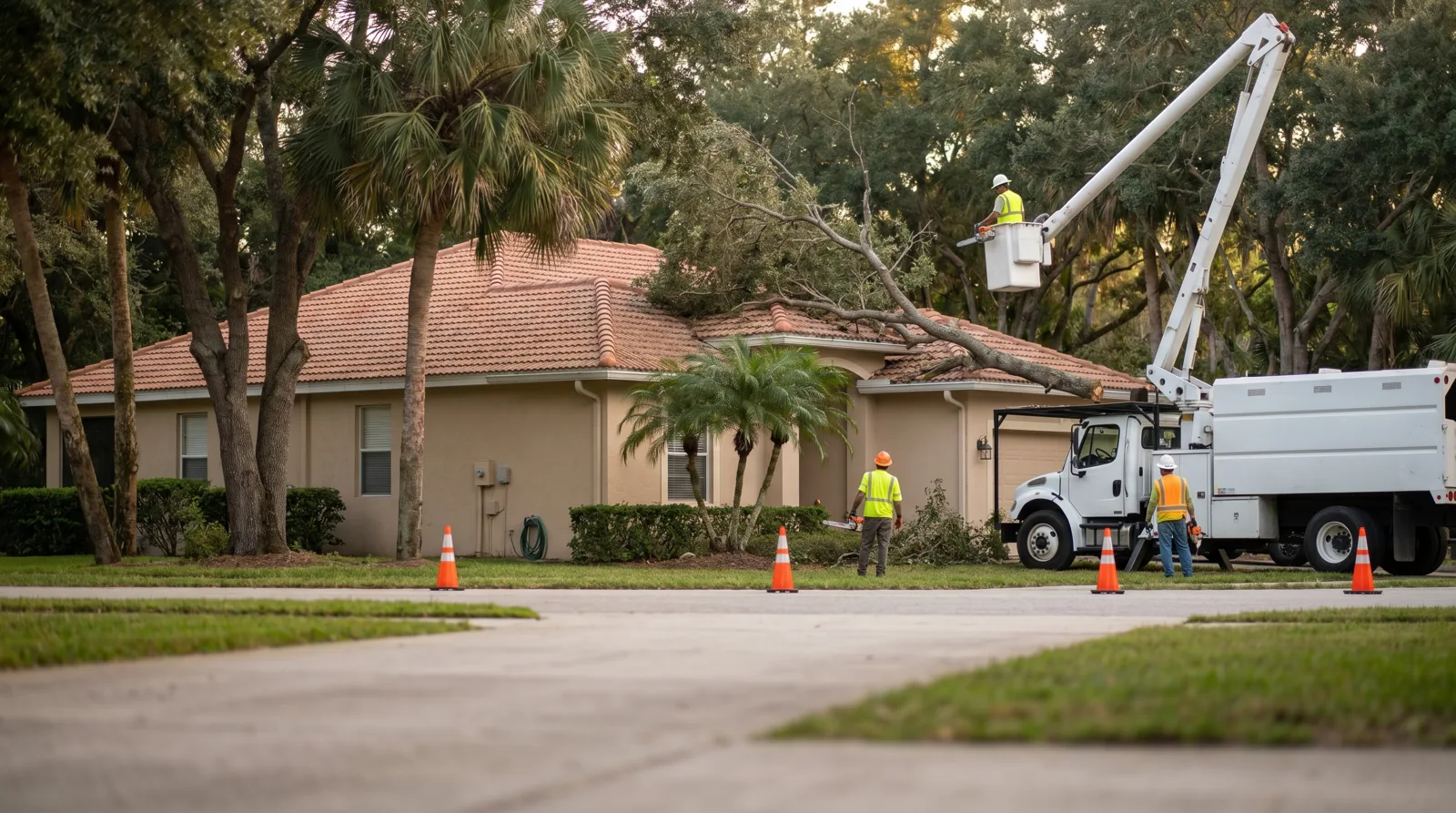
We cut the immediate hazard back first to make the property safe, then handle the full removal and storm cleanup across Central Florida — including hauling the debris so you’re not left with a yard full of logs. We document the damage as we go, which helps your insurance claim. We recently lifted a water oak off a screened lanai in Sanford at dusk after a line of storms, working under lights with cones out, and had the family’s back door clear before midnight.
What Drives the Cost of Emergency Tree Removal?
Emergency work costs more than a scheduled job, and it’s fair to know why before you call. The biggest cost drivers are:
- Risk and complexity. A tree on a structure or near power lines needs careful rigging and more crew — that’s the single biggest factor.
- Size and species. A large laurel oak takes far more labor and equipment than a snapped queen palm.
- Access. A tree in an open front yard is quick; one wedged between two houses or behind a pool cage needs specialized rigging.
- Time and conditions. After-hours, overnight, and active-weather calls carry a premium for the added risk to the crew.
- Cleanup and hauling. Whether you want everything gone or just the hazard cleared changes the scope.
We don’t quote a hard number sight-unseen because every storm scene is different — but we’ll give you an honest, itemized estimate before any work starts, and we’ll tell you straight if part of it can safely wait for a non-emergency rate. If you’re not even sure the tree has to come down, our guide on whether a storm-damaged tree can be saved walks through the warning signs.
Frequently Asked Questions
Do you offer 24/7 emergency tree service?
We prioritize emergency storm calls and respond as fast as conditions safely allow across Seminole, Volusia, and Orange counties. Call (386) 675-2303 and tell the team it’s an emergency — especially if a tree is on a structure or tangled in lines.
Who do I call first — the tree company or my insurance?
Safety first, then your power company if lines are down, then document the scene. You can call your insurer and a tree crew in either order, but get the photos before anyone cuts.
Will insurance pay for the removal?
If the tree hit a covered structure like your house, garage, or fence, it’s often covered, though the details depend on your policy and deductible. A tree that simply fell in the yard usually isn’t.
Can you remove a tree that’s on a power line?
Lines are the utility’s responsibility. We coordinate with Duke Energy and wait until the line is confirmed de-energized before we touch anything near it. Never try to clear that yourself.
How fast can you get here?
We move emergency calls to the front of the line and aim for same-day response. The sooner you reach us, the sooner we can slot you in.
Need a Tree Removed Now? Call (386) 675-2303
When a storm drops a tree on your property, you want a crew that’s calm, fast, and local — not a stranger who showed up after the storm and disappears after the check clears. DeAngelo’s Land Services is veteran-owned, BBB A+ rated, fully insured, and holds a 5.0-star rating across 211+ reviews because we treat your emergency like it’s our own.
Call us right now at (386) 675-2303 for emergency tree removal and storm cleanup. We serve Lake Mary and all of Central Florida, we’ll give you a free, honest estimate, and we offer a 10% veteran discount on every job.
About the Author: Mark DeAngelo is the owner of DeAngelo’s Land Services and an ISA Certified Arborist serving Central Florida. His veteran-owned team is BBB A+ rated, Google Guaranteed, and holds a 5.0-star rating across 211+ reviews.