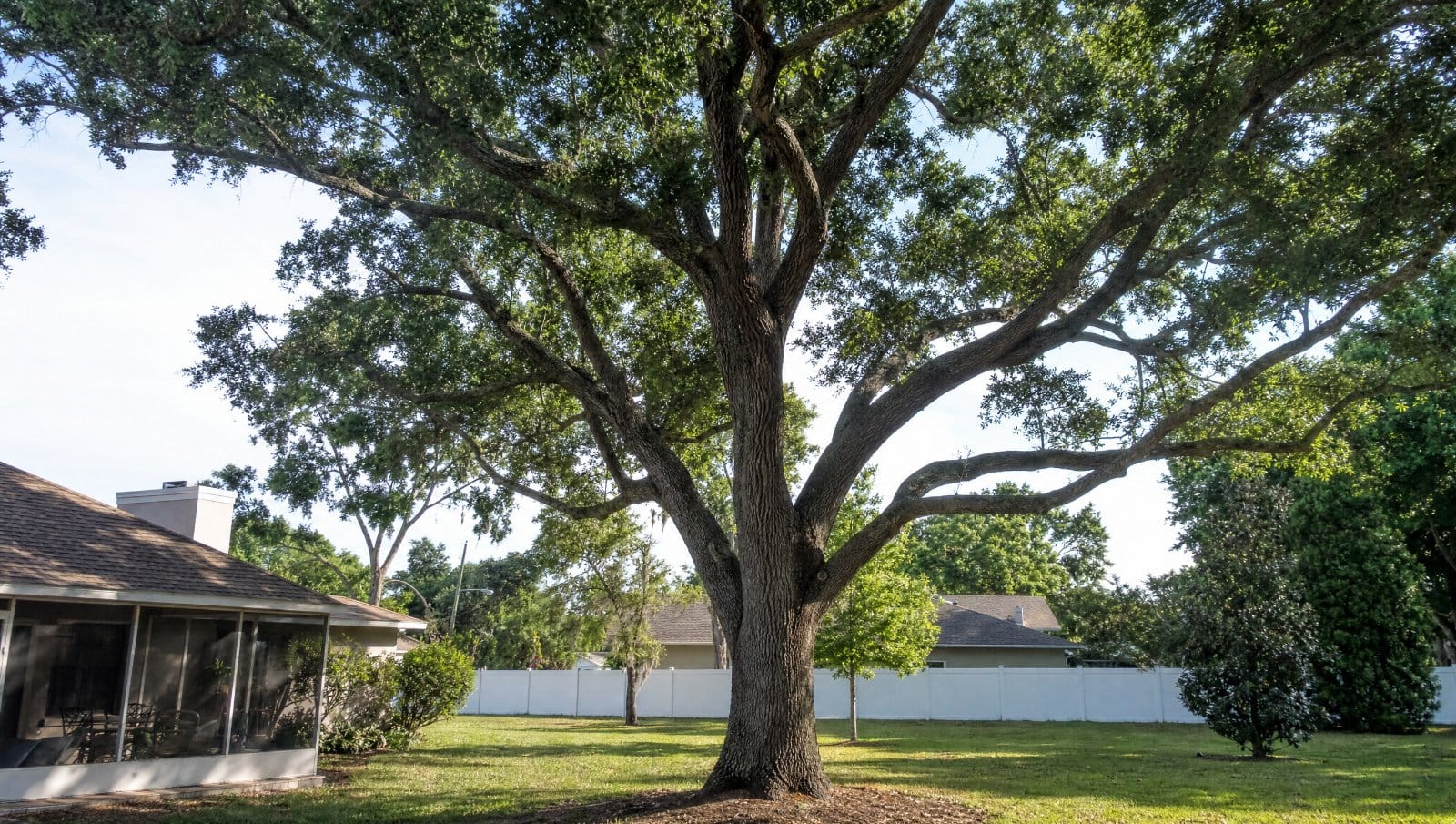
Apopka has specific rules for removing residential trees.
Apopka Tree Removal Permit Guide: What Homeowners Need to Know
If you own a home in Apopka and you’re staring at a big laurel oak or a leaning slash pine, the first question is almost always the same: do I need an apopka tree removal permit before it comes down? The honest answer is “it depends” — on the tree, the property, and whether the city’s Land Development Code protects that particular trunk. As a veteran-owned crew that works across the Orlando metro every week, we’d rather you understand the rules up front than get a surprise after the fact. Here’s a clear, no-pressure walkthrough of how tree permitting actually works in the City of Apopka.
Who regulates an Apopka tree removal permit
Tree removal inside the city limits is handled by the City of Apopka Community Development Services department, located at 120 E. Main Street, 2nd Floor. The general Community Development line is 407-703-1700, and the city’s published direct number for the Building-Safety / permitting desk is 407-703-1713 — that’s the team that processes permit applications and can route you to the right person for tree and arbor work. The same office runs the Building-Safety and Planning & Zoning divisions and administers the city’s tree rules through its Land Development Code. You can review records and apply online through the city’s OpenGov permitting portal, which the city set up so homeowners and contractors can file and track permits in one place.
One important boundary first: if your address is inside incorporated Apopka, the City’s code applies — not Orange County’s. Some online summaries quote Orange County’s tree ordinance, which is a different rulebook. Always confirm which jurisdiction your parcel falls under before you rely on any number.
What the city code actually protects
Apopka’s tree rules live in the Land Development Code under Section 5.3, Tree Protection Standards (Part III, Article 5). You can read the current version on the Apopka Municode Library. Section 5.3 sets out the city’s purpose, applicability, and — importantly — subsection 5.3.3, Arbor Permit Required, which establishes when an arbor (tree) permit is needed before work begins, along with standards for retaining existing canopy and specimen trees. That subsection is the one hard anchor worth bookmarking: it is the part of the code that decides whether your specific removal needs a permit at all.
Because exact diameter thresholds, replacement ratios, and fees can change as the code is amended (the version we reviewed was current as of January 2026), we won’t quote a specific protected-tree size or dollar figure here that we couldn’t confirm against a live city source. Instead, the reliable move is to call the permitting desk at 407-703-1713 (or the general Community Development line at 407-703-1700) and ask two direct questions:
- “Does my specific tree and property type require an arbor/tree removal permit?”
- “If so, what is the current fee and what do I need to submit?”
That five-minute call gives you the authoritative answer for your exact lot, which beats any blog estimate — including ours.
A note on specimen and canopy trees
Section 5.3 includes provisions for retention of existing canopy and retention of specimen trees. In plain terms, larger, healthier, native-canopy trees generally get more protection than small or invasive ones. In our Central Florida service area that usually means the big live oaks, laurel oaks, and bald cypress get a closer look from the city, while nuisance and invasive species typically don’t. The city office can tell you which category your tree lands in.
The Florida hazard-tree exception every homeowner should know
Here’s a statewide rule that often surprises Apopka homeowners. Under Florida Statute 163.045 (read the official text at the Florida Senate), a local government “may not require a notice, application, approval, permit, fee, or mitigation for the pruning, trimming, or removal of a tree on a residential property if the property owner possesses documentation” that the tree “poses an unacceptable risk to persons or property.”
This is not a blanket right to remove any tree, though. The statute is specific:
- It applies only to “residential property” — a single-family, detached home actively used as such.
- You must already have documentation in hand — an on-site assessment by an ISA-certified arborist or a Florida-licensed landscape architect, signed, following the industry’s Best Management Practices – Tree Risk Assessment, Second Edition (2017).
- The tree must pose an “unacceptable risk,” meaning removal is the only practical way to bring its risk below moderate.
If you meet all three, the city can’t require a permit, fee, or replanting for that removal. If you don’t have the signed arborist documentation, the city’s normal permit process still applies. We mention this because well-meaning neighbors sometimes assume the statute lets them cut anything — and it doesn’t.
How removal works on the ground in zone 9b
Apopka sits in USDA zone 9b with sandy soil, hot humid summers, and a real Atlantic hurricane season from June through November. That climate shapes which trees become genuine hazards:
- Laurel oaks are fast-growing and common here, but they tend to decline and shed limbs after about 40-60 years — a frequent removal candidate.
- Water-stressed slash and sand pines in sandy soil can be prone to bark beetle and root issues that lead to whole-tree failure.
- Trees with root flare buried by old fill or sod are surprisingly common in established Apopka neighborhoods and can be structurally compromised.
If you’re weighing removal before storm season, the smart sequence is: confirm the permit question with the city, get a qualified assessment of whether the tree is actually a risk, and only then schedule the work. Plenty of trees that look scary are perfectly sound and just need pruning — and a good crew will tell you that honestly rather than talk you into a removal you don’t need. If it does need to come down, that’s exactly the kind of job our tree removal service handles every week across the Orlando metro.
Frequently asked questions
Do I always need an Apopka tree removal permit for my own yard?
Not necessarily. It depends on the tree’s size and species, your property type, and whether it qualifies for protection under Land Development Code Section 5.3 — or whether the Florida Statute 163.045 hazard exception applies. Call the permitting desk at 407-703-1713 to confirm for your specific tree.
What happens if I remove a protected tree without a permit?
The city can pursue code enforcement and require mitigation or replacement for protected trees removed without authorization. The exact penalties are set by the code, so verify with the city before any work — it’s far cheaper than fixing a violation afterward.
Does a hurricane change the rules?
Genuinely hazardous, failing, or fallen trees after a storm are treated differently than healthy ones. If you have a tree down or imminently failing, document it with photos and contact the city; emergency situations are handled separately from routine removals.
Let’s figure out your tree the right way
Every Apopka property is a little different, and the permit answer really does come down to your specific tree and lot. If you’d like a hand, LandTree (DeAngelo’s Land Services) offers a free, no-pressure estimate where we’ll look at your tree, give you an honest read on whether it needs to come down or just needs care, and help you understand the permit step for your address. See our Apopka tree services page or reach out for your free consultation and we’ll walk it with you.