
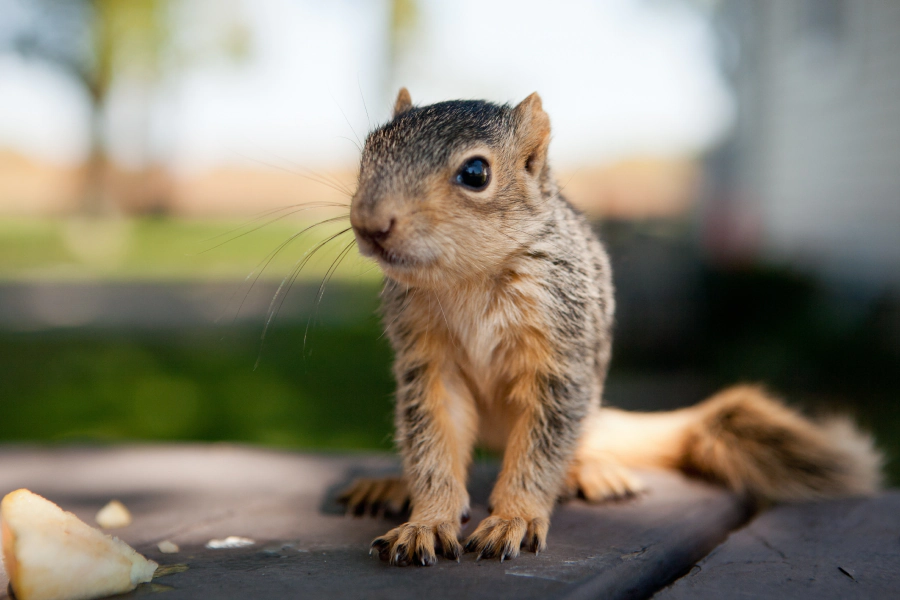
What to Do If You Find a Baby Squirrel
What to Do If You Find a Baby Squirrel
Finding a baby squirrel on the ground can be an emotional experience, especially if it appears to be vulnerable. Whether it fell due to a storm, a predator attack, or a nest failure, knowing the proper steps to take can make all the difference in its survival. Here is a detailed guide to help you care for a baby squirrel and ensure it receives the help it needs.
Step 1: Assess the Situation
- Observe the Baby Squirrel:
- Is the baby warm or cold to the touch? A cold baby has been separated from its mother for too long and requires immediate attention.
- Are there visible injuries? If so, contact a wildlife rehabilitator immediately.
- Look for the Nest and Mother:
- Check for a squirrel’s nest, which resembles a large, irregular bunch of packed leaves, pine straw, Spanish moss, or palm fibers in the treetops.
- If the nest has fallen, leave the babies in the nest at the base of the tree, ensuring the area is safe for the mother to return.
- Monitor the Area:
- Parent squirrels often reclaim their babies once it is safe. Stay at a distance to avoid frightening the mother, and observe for one to two hours. If the mother does not return, it is time to intervene.
Step 2: Emergency Stabilization
If the baby squirrel is cold, weak, or abandoned, follow these steps:
- Prepare a Warm and Secure Environment:
- Use a plastic or cardboard box with air holes in the lid.
- Line the box with non-terry cloth cotton materials like a white t-shirt, baby blanket, or flannel.
- Provide a heat source:
- Use a heating pad on low placed under half the box.
- Alternatively, use a rice sock (a cotton sock filled with uncooked rice, microwaved for 1.5-2 minutes) or a bottle/jar filled with warm water wrapped in cloth.
- Ensure there is a layer of material between the heat source and the baby.
- Hydrate the Squirrel:
- Hydration is critical before feeding. Use an unflavored oral electrolyte solution (like Pedialyte©).
- Administer small amounts with a 1 cc syringe, feeding the squirrel on its stomach to prevent aspiration.
- Monitor urine color—hydrated squirrels will produce clear urine.
- Feeding:
- Use only specialized formulas such as Esbilac powdered milk replacer, Zoologic milk 33/40, or Fox Valley DayOne 32/40 (mixed at 1.5 parts powder to 2 parts distilled water).
- Never use human or pet formulas as they can cause bloat, diarrhea, or digestive shutdown, leading to death.
- Feed the squirrel using a 1 cc syringe held horizontally. Avoid larger syringes, eyedroppers, or nurser bottles.
- Stimulate the squirrel to urinate after feeding by gently rubbing its genital area with a warm, wet cotton ball or cloth.
Step 3: Long-Term Care Considerations
If you decide to raise the baby squirrel or participate in a foster program, here are the key considerations:
- Socialization:
- Squirrels must be raised with a sibling for proper social development.
- Feeding Schedule:
- Very young squirrels need feeding every two hours, including through the night.
- Gradually transition to formula mixed with electrolyte solutions, and continue formula feeding until 3.5-4 months old.
- Diet:
- Provide a balanced diet, not just seeds and nuts.
- Environment:
- Maintain a quiet and safe environment away from pets, TVs, and high human activity.
- Use a minimum 4’x4’x6’ cage with ½” hardware cloth for housing. Release squirrels no earlier than six months old.
Key Guidelines to Avoid Harm
- Never feed a cold or dehydrated squirrel.
- Never overfeed; it can be fatal.
- Do not use syringes larger than 1 cc per feeding.
- Avoid creating stress for the mother by lingering near the baby squirrel.
Materials You May Need:
- Box with perforated lid (plastic or cardboard)
- White t-shirt or baby blankets
- Heating pad, rice sock, or other heat sources
- Oral electrolyte solution (e.g., Pedialyte©)
- 1 cc syringe
- Specialized milk replacer formula (Esbilac, Zoologic, or Fox Valley)
When to Call for Help
If you’re unsure or unable to care for the squirrel properly, contact a licensed wildlife rehabilitator immediately. Florida Wildlife Care (352-371-4400) offers support, medical evaluations, and even foster programs for those willing to care for baby squirrels long-term.
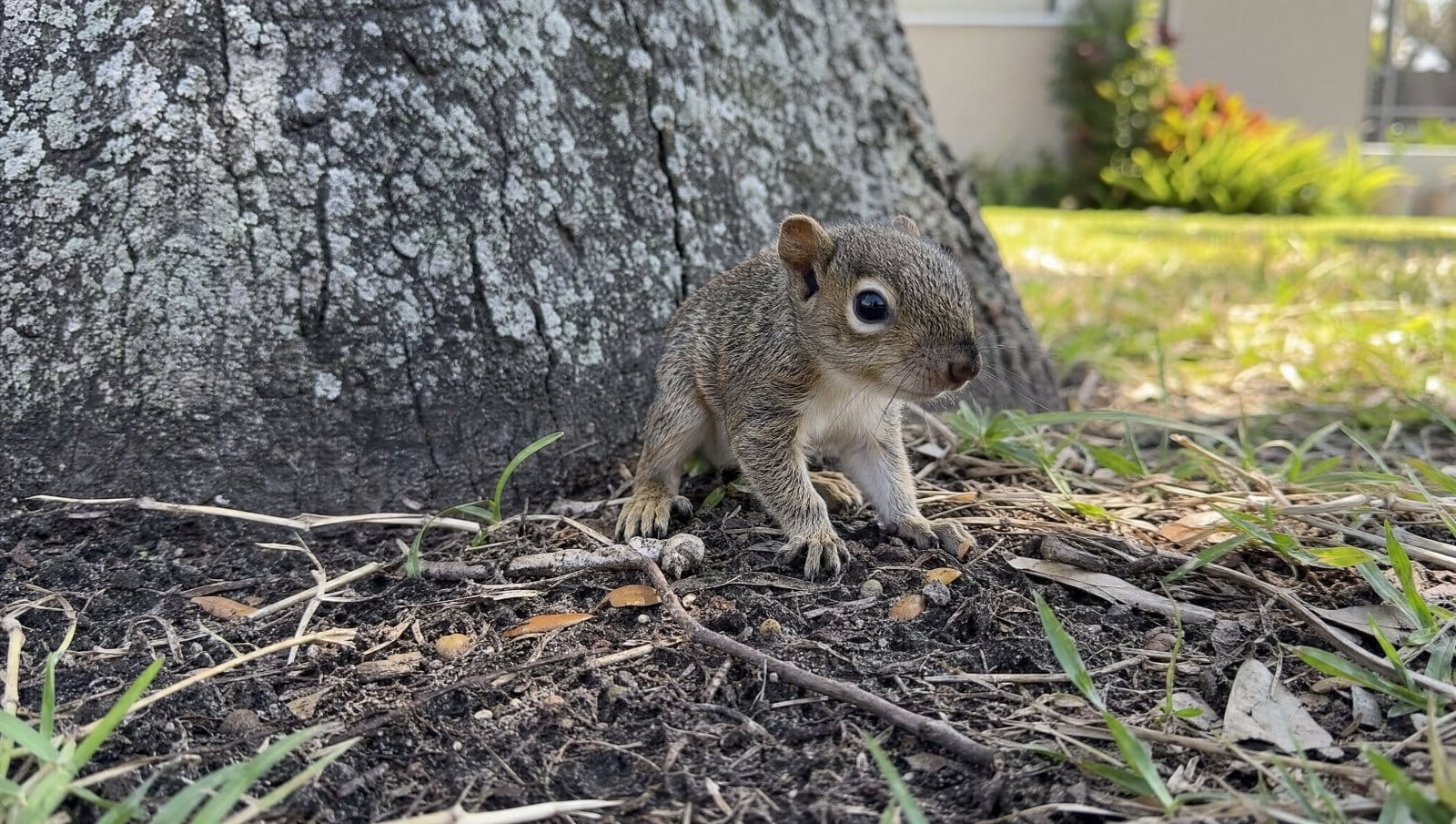
Caring for a baby squirrel is a time-consuming but rewarding experience. By following these guidelines, you can ensure the best possible outcome for the animal. Remember, your intervention can be a vital step in giving the squirrel a second chance at life in the wild.