Mulch Types for Central Florida: What Survives the Heat and Rain
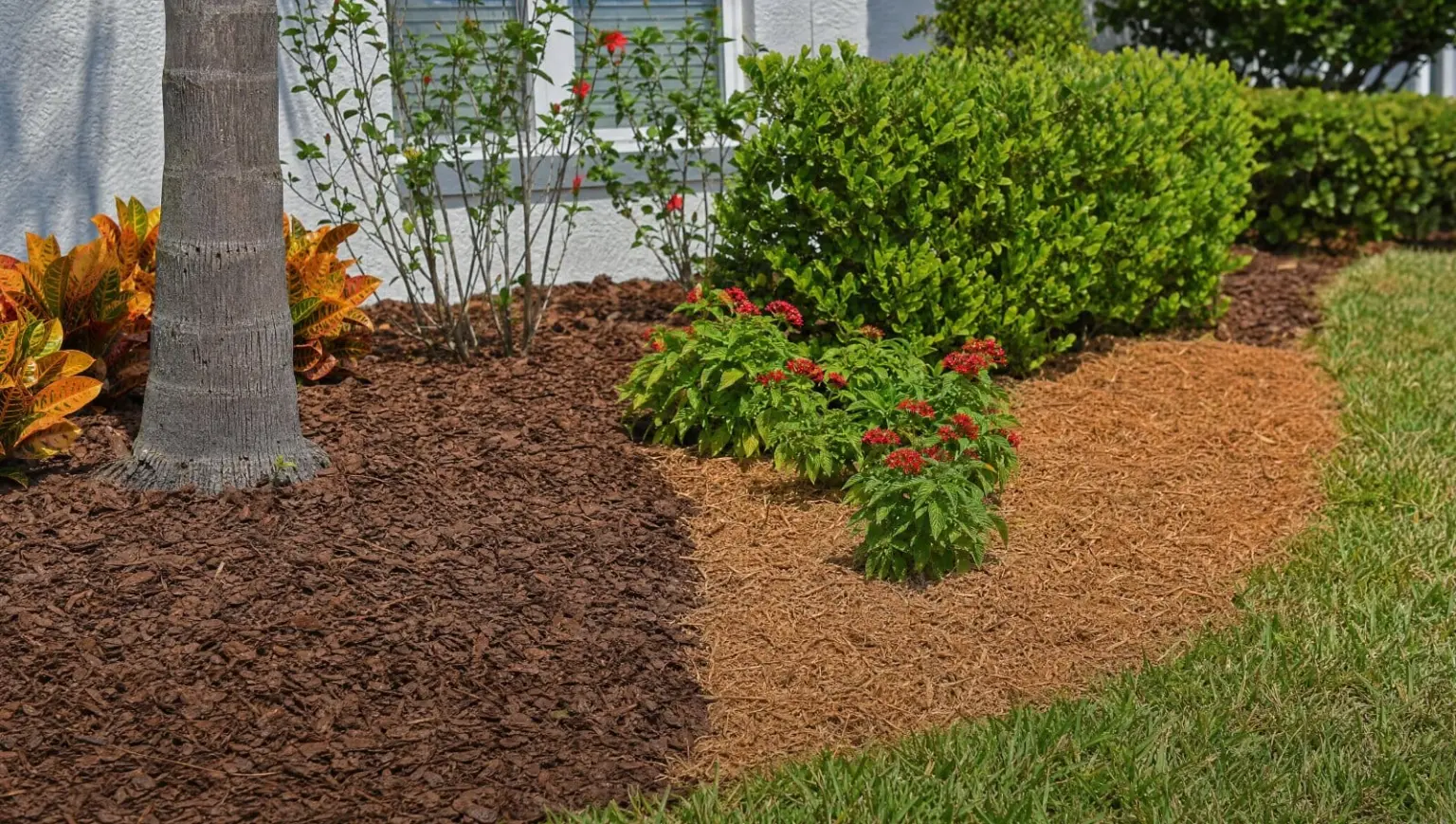
Mulch looks like a simple decision until you have watched a fresh bed get bleached gray by July, washed into the driveway after an August storm, or quietly feed a termite trail toward the house. Choosing among the mulch types for Florida is different from choosing in cooler, drier states, because our zone 9b climate throws three challenges at the same material: relentless heat, fast-draining sandy soil that dries out at the surface, and summer rain that comes in violent bursts. We install and refresh a lot of beds across Central Florida, and below is the honest breakdown of what holds up and what we steer clients away from.
What Central Florida demands from mulch
Before picking a material, it helps to know what your mulch is actually fighting here:
- Moisture retention: Sandy soil drains in minutes. Good mulch buys your plant roots hours of moisture between waterings, which matters most in the dry spring and the hot stretches of summer.
- Wash resistance: A single afternoon thunderstorm can float lightweight mulch right out of a bed and into the lawn or street.
- Heat and fade resistance: Our UV index is brutal. Cheap dyed products and thin layers fade fast and break down before they have earned their keep.
- Pest behavior: Warmth and humidity make Florida a paradise for termites and other insects, so where and how you place mulch matters as much as which kind.
The most common mulch types for Florida, compared
Cypress mulch
Cypress is everywhere down here and it does perform: it knits together into a mat that resists wash-out reasonably well, holds moisture, and settles slowly. The honest catch is sustainability. The UF/IFAS Florida-Friendly Landscaping program does not recommend cypress mulch because it may not be harvested sustainably (see UF/IFAS, Landscape Mulches: How quickly do they settle?), and a lot of it has come from cypress stands in wetlands that are slow to regrow. If you love the look but want a cleaner conscience, ask where it was sourced, or consider the melaleuca-based alternative below.
Melaleuca mulch (often sold as FloriMulch)
This is one we genuinely like for Florida. It is made from melaleuca, an invasive tree that crews remove from the Everglades and other natural areas, so using it actually helps the ecosystem rather than harming it. It performs much like cypress for moisture and wash resistance, it is naturally resistant to termites, and UF/IFAS settling research found it held its depth the longest of the common mulches after two years. It is our go-to recommendation when a client wants the cypress look without the downside.
Pine bark
Pine bark nuggets and mini-nuggets drain well and look clean around shrubs and trees. The trade-off is that the larger nuggets are light and float, so they tend to wander downhill and out of beds during heavy rain. They work best on flat beds or where a border holds them in. Pine bark is acidic as it breaks down, which suits azaleas, camellias, and gardenias.
Pine straw (pine needles)
Pine straw is a Florida classic for good reason. It is inexpensive, it interlocks so it resists wash-out surprisingly well even on slopes, and it gives that natural woodland look that suits our native and Florida-friendly landscapes. It breaks down fast, though; the same UF/IFAS settling research found pine straw nearly gone after two years, so plan to top-dress it once or twice a year. It is excellent around acid-loving plants and large tree rings.
Eucalyptus mulch
Eucalyptus is a fast-growing, renewable, often Florida-grown option. It holds color a bit better than some hardwoods, resists wash-out decently, and is generally affordable. It is a solid middle-ground choice when you want renewable sourcing without paying a premium.
Dyed (colored) mulch
Red, brown, and black dyed mulches give a uniform, manicured look that some homeowners love. Two honest cautions for Florida: the color fades faster under our intense sun than the labels suggest, and dyed product is often made from recycled wood of unknown origin, so quality varies a lot. If you choose dyed, buy a reputable brand and expect to refresh the color annually.
Rubber mulch
We generally do not recommend rubber mulch for Florida landscape beds. It does not retain moisture or improve soil, and in our sun it can get genuinely hot underfoot and give off an odor on the hottest days. It has a niche under playground equipment, but for plant beds, organic mulch is the better tool.
Rock and gravel
Stone never decomposes and never washes away, which sounds perfect until you remember it radiates the heat it absorbs back onto your plants and the surrounding soil. In zone 9b that extra heat load can stress plantings. Rock works well in pure hardscape zones and dry-style accents, but we are cautious about using it around heat-sensitive plants.
Quick comparison: the short version
If you only skim one section, here is how the main options stack up for our climate:
- Melaleuca (FloriMulch): best all-around for Florida; sustainable, termite-resistant, long-lasting.
- Pine straw: cheap, great on slopes, ideal for acid-lovers; breaks down fast, so refresh often.
- Pine bark: clean look and good drainage; floats in heavy rain unless edged.
- Eucalyptus: renewable, affordable middle-ground pick.
- Cypress: performs well but not recommended by UF/IFAS on sustainability grounds.
- Dyed mulch: manicured look; fades fast here and varies in quality.
- Rubber and rock: we avoid both around plants; fine for playgrounds and hardscape only.
How to make any mulch last in our climate
The material matters, but installation is what separates a bed that looks good for a year from one that needs constant attention. Here is what we do on every job:
- Aim for a 2 to 3 inch layer. That is the depth UF/IFAS recommends. Thinner and weeds break through and the soil dries; thicker and you can smother roots and trap too much moisture against stems in our humidity.
- Keep mulch off trunks and stems. Piling mulch into a volcano around a tree invites rot and pests. Pull it back a few inches to expose the root flare.
- Hold mulch back from the house. Because subterranean termites thrive here, we keep a clear gap of a foot or more between mulch and the foundation, and we never let mulch bridge up to wood siding (UF/IFAS covers this well in The Facts About Termites and Mulch).
- Use edging or natural borders on slopes. A defined edge keeps a hard rain from sending your mulch into the lawn.
- Refresh, do not just pile on. Top-dressing thin spots once a year keeps depth consistent without building up a suffocating crust.
So which mulch should you choose?
If we had to give a short answer for most Central Florida beds: melaleuca (FloriMulch) or pine straw are our favorites for performance plus a clear conscience, with pine bark and eucalyptus as strong situational picks. The right call really depends on your plants, your slope, your sun exposure, and the look you want. Among all the mulch types for Florida landscapes, the best one is the one matched to your specific yard and installed correctly.
If you would like a hand picking and installing the right mulch for your beds, we are happy to help. Reach out to LandTree for a free, no-pressure estimate, and we will walk your property, factor in your plants and drainage, and give you a straight recommendation built for our heat and our rain.