
Mole Crickets Florida: Season, Signs, and How to Protect Your Lawn
If you garden or keep a lawn anywhere in Central Florida, you’ve probably battled the damage these underground pests leave behind. Understanding mole crickets Florida homeowners contend with every year is the first step to keeping your turf thick and green. These insects thrive in our sandy soil and long warm season, and they can quietly thin a healthy lawn before most people realize what’s happening. The good news: once you know the signs and the timing, control is very manageable.
At LandTree (DeAngelo’s Land Services), we treat lawns across Orange City, DeLand, Lake Mary, Sanford, Oviedo, Apopka, and the greater Orlando metro. Here’s what we’ve learned about these pests after years in the field.
What Mole Crickets Are and Why Central Florida Loves Them
Mole crickets are tan, inch-long insects with shovel-like front legs built for digging. They spend most of their lives a few inches underground, tunneling through the root zone and feeding on grass roots and tender shoots. In our region, the two troublemakers are the tawny and southern mole crickets — both non-native species that have made themselves very comfortable here.
Why are they such a problem locally? Mole crickets in Florida thrive because our USDA zone 9b climate gives them a long active season, and our loose, sandy soil is easy for them to tunnel through. Bahiagrass and bermudagrass lawns — both common across Volusia, Seminole, and Orange counties, where bahiagrass also blankets countless pastures and roadsides — are their favorite targets, though they’ll damage other warm-season grasses too.
The Mole Crickets Florida Season Calendar
Knowing the calendar is half the battle. Here is the typical yearly cycle we see in our area:
- Spring (March–May): Overwintered adults become active and mate. According to UF/IFAS guidance, egg-laying peaks in April and May, around the time soil temperatures reach roughly 75°F.
- Late spring into early summer (mid-to-late June): Eggs hatch into small nymphs. This is the most important window for control, because young nymphs are far easier to kill than tough adults.
- Mid summer (July–August): Nymphs grow and feed steadily on roots. Damage starts to show.
- Late summer into fall: Nymphs reach larger sizes and feed heavily. Damage becomes very visible.
That late-spring-to-early-summer hatch is why timing matters so much. Treating large overwintered adults in spring is far less effective than catching small, freshly hatched nymphs in early-to-mid summer.
Signs You Have a Mole Cricket Problem
These pests work underground, so you usually spot the damage before you ever see the insect. Watch for:
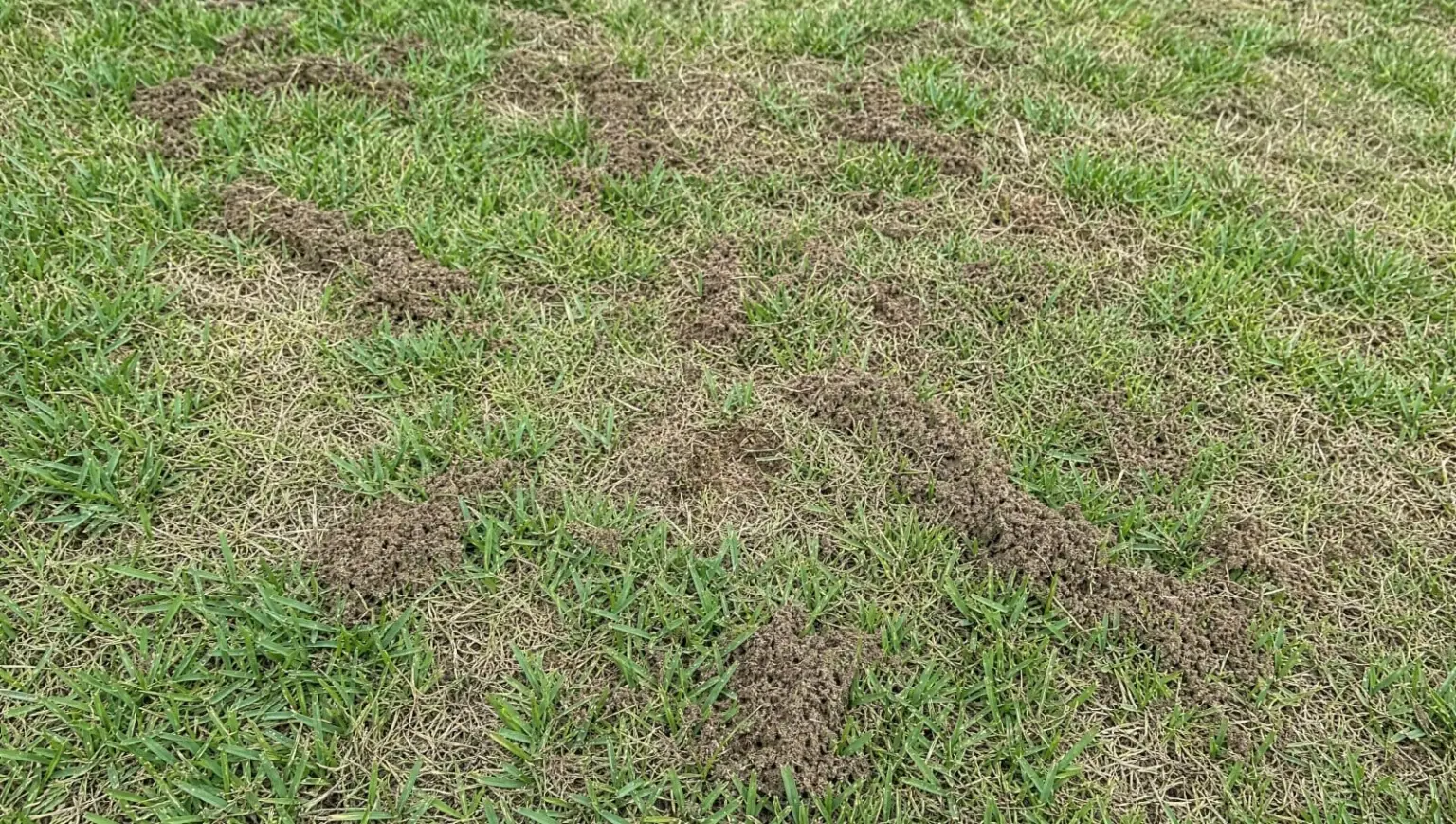
- Raised soil trails: Squiggly, raised ridges across the lawn where they’ve tunneled just below the surface.
- Spongy footing: Areas that feel soft or loose underfoot because the soil has been loosened from below.
- Thinning, dying patches: Grass that browns and weakens as its roots are chewed away, often in irregular spots.
- Loose dirt mounds: Small piles of churned soil, similar to tiny mole hills.
The Soapy Water Flush Test
The simplest way to confirm an infestation is the soapy water flush. Mix about two tablespoons of liquid dish soap into a gallon of water and pour it over a two-foot-square area (roughly 4 square feet) where you suspect activity. If mole crickets are present, the irritant drives them to the surface within a few minutes. UF/IFAS guidance suggests that finding two to four mole crickets in that two-foot-square (about 4 sq ft) test area — or two or more surfacing during the brief sampling period — usually means treatment is worthwhile. It’s a cheap, reliable check anyone can do.
How to Control the Mole Crickets Hiding in Florida Lawns
Effective control combines good timing with healthy turf. Here’s the approach we trust:
Time Treatments to the Hatch
Target the young nymphs in early-to-mid summer, after eggs have hatched but before the insects mature. Treating during this window gives you far better results than chasing tough adults later in the year. Use the flush test to confirm activity before applying anything.
Water Correctly Around Applications
Most soil-applied insecticides need to be watered in lightly so the product reaches the root zone where the pests live. Our heavy June-through-September rains can either help carry product down or wash it off if you apply right before a downpour — so check the forecast and follow the label.
Keep the Turf Healthy
A dense, well-rooted lawn shrugs off pest pressure far better than a thin one. Proper mowing height, smart watering, and balanced fertilization all make your grass more resilient. In our sandy soil, consistent care matters more than any single product.
Know When to Call a Pro
Store products can work on light infestations, but timing and proper application are everything. If damage keeps spreading or you’re unsure which pest you’re dealing with, a professional can confirm the culprit and apply the right material at the right moment.
Frequently Asked Questions
Do mole crickets bite people or pets?
No. They’re a turf pest, not a threat to people or animals. The harm is strictly to your grass roots and soil structure.
Will mole crickets go away on their own?
Rarely. Without intervention the population tends to build year over year, and damage usually worsens through late summer and fall.
Can a damaged lawn recover?
Yes. Once the pests are controlled and the turf gets proper care, most Central Florida lawns bounce back, especially during our warm, rainy growing season.
Get a Free Lawn Assessment from LandTree
If you’re seeing raised trails, spongy spots, or thinning patches and suspect mole crickets, we’re happy to take a look. As a veteran-owned company rooted right here in Central Florida, LandTree (DeAngelo’s Land Services) knows exactly how these pests behave in our zone 9b soil and climate. Reach out for a free lawn assessment and we’ll identify what’s happening and recommend the simplest fix for a healthy, resilient yard.