Magnolia Tree Problems in Central Florida (and How to Fix Them)
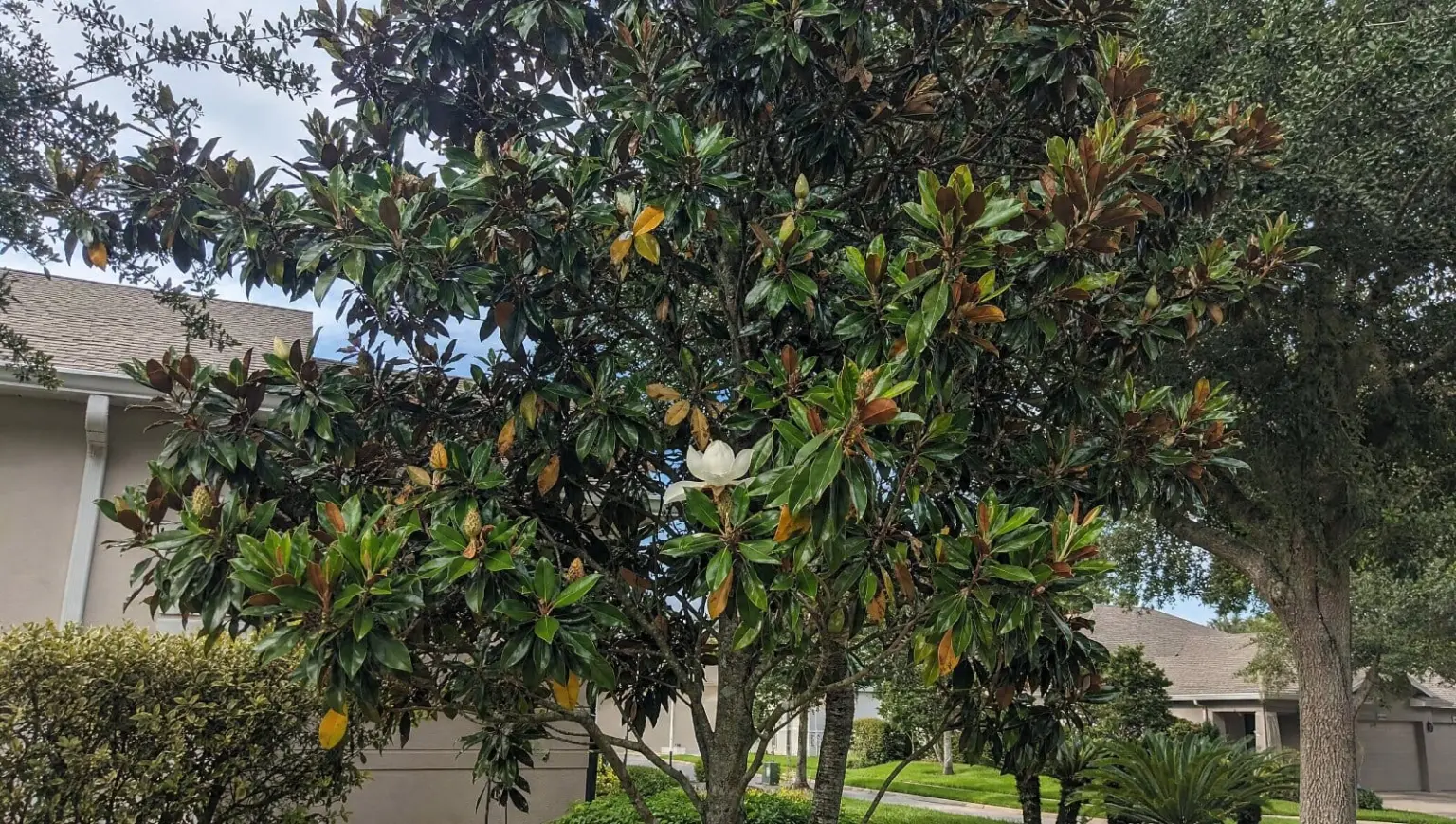
Few trees say “Southern landscape” quite like a magnolia. Across Orange City, DeLand, Lake Mary, and the greater Orlando metro, the glossy-leaved Southern magnolia (Magnolia grandiflora) and its cousin the sweetbay are some of the most-loved trees we work on. But our zone 9b climate — sandy soil, brutal summer humidity, and heavy June-through-September rain — creates a specific set of magnolia tree problems that we see again and again on Central Florida properties. The good news: almost all of them are manageable once you know what you’re looking at.
This guide walks through the issues we encounter most as a local tree crew, what actually causes them here, and the practical steps that fix them.
The most common magnolia tree problems we see in Central Florida
Magnolias are tough, long-lived trees, and most of what worries homeowners turns out to be cosmetic or seasonal rather than a true threat to the tree. Here are the issues that fill our service calls.
Black, sooty coating on the leaves
If your magnolia’s leaves look like they’ve been dusted with soot that smudges off, you’re almost certainly looking at sooty mold. The mold itself is harmless, but it’s a symptom: it grows on the sticky “honeydew” excreted by sap-feeding insects, usually magnolia scale — small, bumpy, brown-to-gray insects that cling to twigs and the undersides of leaves.
In our humidity, scale populations can build fast. The fix is to treat the insects, not scrub the mold. We typically recommend:
- A dormant-season application of horticultural oil to smother overwintering scale, ideally in our cooler months.
- Spot treatment of crawlers in late spring when the young insects are most vulnerable.
- Pruning out a few heavily infested twigs to knock the population back quickly.
Once the scale is under control, rain and time wash the sooty mold away on their own.
Reddish-brown, rust-colored crusty spots on the leaves
This one surprises a lot of homeowners. Those raised, reddish-brown to rust-colored velvety patches — often with a fringed, filamentous edge — are usually algal leaf spot, caused by a parasitic alga that thrives in exactly the warm, wet, humid conditions Central Florida hands out every summer. It’s extremely common on magnolias here and rarely serious.
You won’t eliminate it with a spray bottle. The real answer is airflow and dryness:
- Thin the canopy lightly so air moves through and leaves dry faster after our afternoon storms.
- Keep irrigation off the foliage — water the root zone, not the leaves.
- Rake up and remove fallen infected leaves to reduce the spore load.
Pale or yellow leaves with green veins
When a magnolia’s newer leaves turn pale yellow while the veins stay green, that’s classic iron chlorosis. It’s a frequent issue in our region because pockets of Central Florida sit over limestone, and sandy soils near foundations, driveways, and old fill can run alkaline. High soil pH locks up iron and manganese so the tree can’t use them, even when the nutrients are present.
The lasting fix is correcting the soil, not just feeding the tree:
- Test the soil pH first — magnolias prefer slightly acidic ground, and guessing wastes money.
- Apply chelated iron and an acidifying amendment such as elemental sulfur to gradually lower pH; these are what actually do the pH correction.
- Mulch with pine bark or pine straw to conserve moisture and moderate soil temperature, which keeps roots healthier while the amendments work.
A carpet of dropped leaves in spring
Here’s the one that causes the most needless panic. Southern magnolias are evergreen, but they shed a big flush of old leaves every spring as the new growth pushes out — usually around March and April here. Homeowners see a sudden pile of yellow-and-brown leaves under the tree and assume it’s dying.
It isn’t. If the leaf drop is the older, interior leaves and the canopy tips are pushing healthy new growth, this is completely normal seasonal behavior. Rake it up and use it as mulch.
Root and storm problems unique to our climate
Beyond leaf issues, our soil and weather create a couple of structural magnolia tree problems worth watching.
Soggy roots after summer rain
Magnolias like moisture but not standing water. During our intense summer rainy season, low spots and poorly draining sandy-clay pockets can stay saturated for days, starving roots of oxygen. Signs include wilting that doesn’t respond to watering, off-color foliage, and dieback in the upper canopy.
- Make sure the root flare — where the trunk widens at the base — is visible and not buried under soil or mulch.
- Never pile mulch against the trunk; keep it a few inches back in a wide, shallow ring.
- Improve grading or drainage in chronic wet spots before replanting anything there.
Hurricane-season limb risk
Mature magnolias hold a lot of dense, evergreen foliage, which means they catch a lot of wind. We’re in Atlantic hurricane country, so the smartest thing you can do for a big magnolia is keep it structurally sound year-round — not rush a heavy cut right before a storm. Proper structural pruning over time removes weak, crossing, and co-dominant limbs and reduces the odds of a failure during a blow. You can learn more on our tree care and pruning services page. Topping a magnolia, on the other hand, creates weak regrowth and does more harm than good.
When to call a professional
Plenty of magnolia care is genuinely DIY: mulching correctly, watering the root zone, and raking up infected leaves all help. But it’s worth bringing in a pro when you see:
- Large branches that are dead, cracked, or hanging — especially before hurricane season.
- Heavy scale and sooty mold high in a canopy you can’t safely reach.
- Persistent yellowing that hasn’t responded to your own efforts and may need a soil test.
- Trunk wounds, mushrooms at the base, or a leaning tree, which can signal root or decay issues.
Frequently asked questions
Why is my magnolia dropping so many leaves at once?
If it’s spring and the dropped leaves are older interior ones while new growth is emerging at the tips, that’s normal seasonal shedding for an evergreen Southern magnolia. Heavy drop at other times of year, paired with thinning canopy tips, is worth a closer look.
Are the black leaves on my magnolia a disease?
Usually no. Black, smudgy coating is sooty mold growing on insect honeydew. Treat the underlying scale insects and the mold clears on its own.
Can I save a magnolia with yellowing leaves?
Most of the time, yes. Yellowing with green veins points to a soil pH and iron issue that responds well to a soil test plus chelated iron and acidifying amendments. Catching it early makes the fix far easier.
If your magnolia is showing any of these symptoms and you’d like a second opinion from a crew that works on these trees every week, reach out to LandTree for a free, no-pressure estimate. We’re a veteran-owned, local team, and we’re happy to walk your property, tell you what’s actually going on, and give you honest options — even if the answer is simply “rake it up, your tree is fine.”