
Florida Wildfire Preparedness: A Homeowner’s Guide to Fuel Load Reduction & Defensible Space
Florida Wildfire Preparedness: A Homeowner’s Guide to Fuel Load Reduction & Defensible Space
Wildfires are a natural part of Florida’s landscape, but in recent years, the risk to homes and communities has grown. As more homes are built along the wildland-urban interface, even a small brush fire can quickly escalate into a life-threatening disaster.
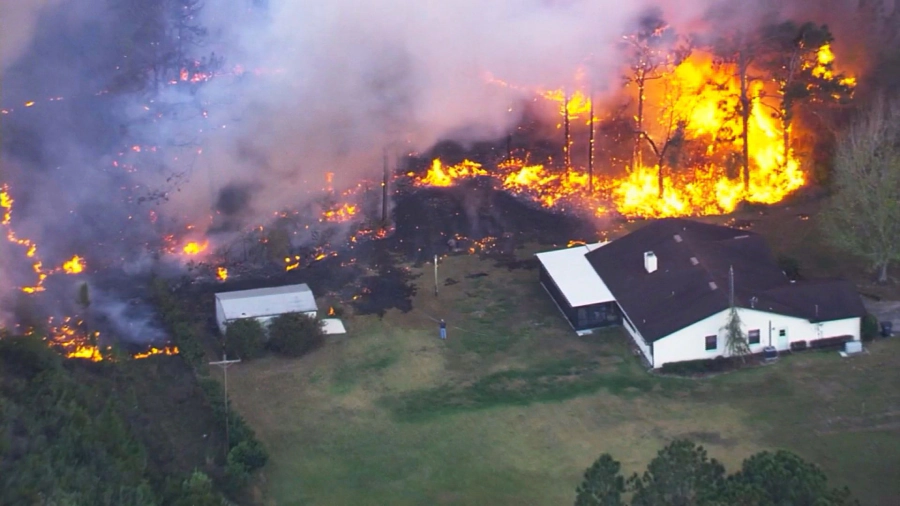
Just this week, Volusia County faced a stark reminder of this danger. The Powerline Fire, near Deltona and New Smyrna Beach, scorched over 270 acres, triggering evacuations and blanketing neighborhoods in smoke. With drought conditions and overgrown vegetation common throughout Florida, now is the time to act.
🌲 What Is Wildland Fuel — and Why It Matters
Wildland fuel is the natural vegetation — pine needles, dead branches, thick brush, and dry grass — that feeds a wildfire. When left unmanaged, especially near structures, these materials become highly combustible, turning yards into fire hazards.
According to Florida Forest Service, over 1,300 wildfires have burned more than 57,000 acres in 2025 alone. With each fire season growing more intense, reducing fuel loads has become a vital responsibility for landowners and homeowners alike.
🛠️ How DeAngelo’s Land Services Helps Reduce Wildfire Risk
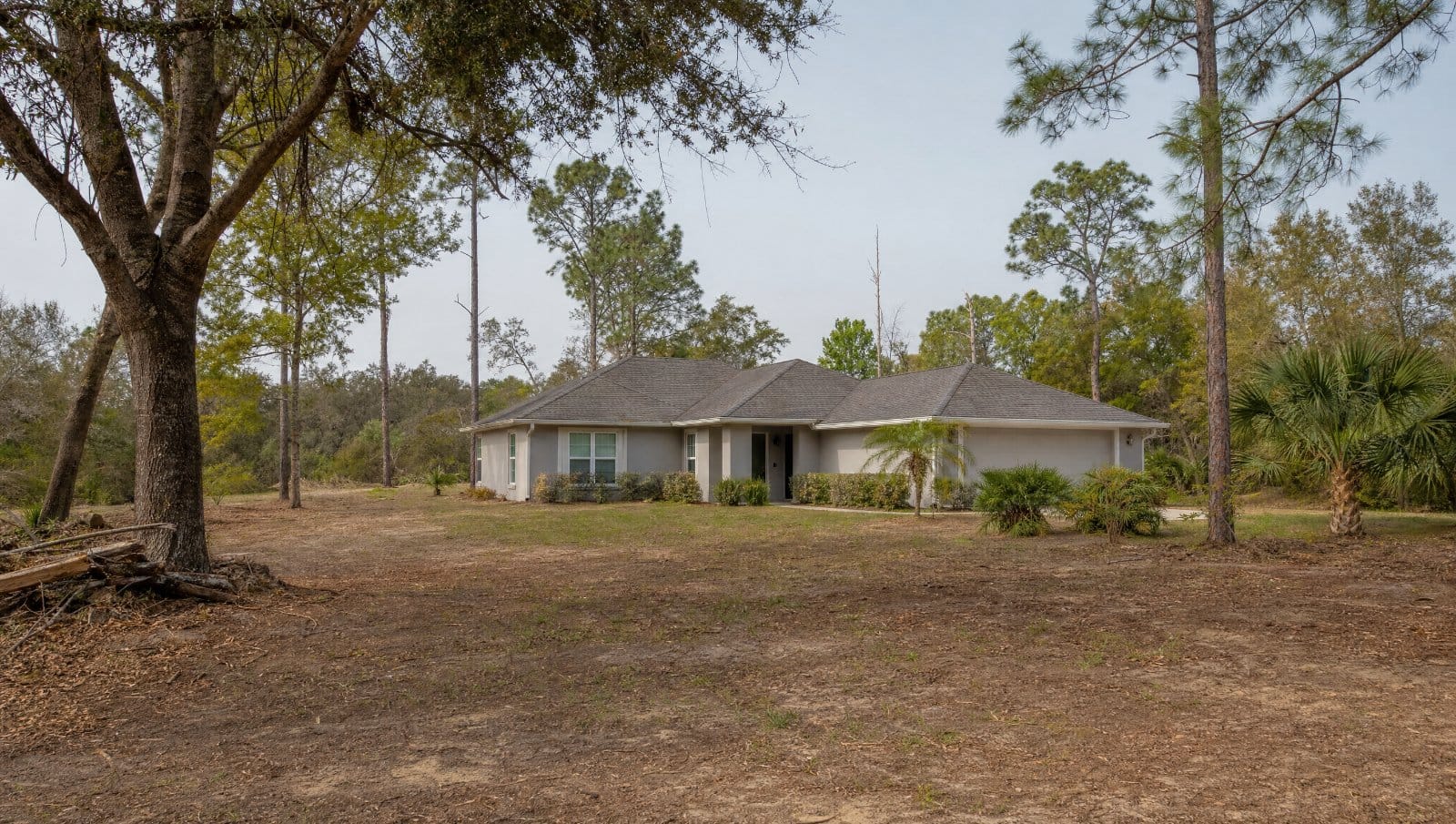
At DeAngelo’s, we specialize in mechanical fuel reduction and defensible space creation. Our services focus on clearing out vegetation that increases wildfire risk and ensuring your property is prepared to withstand and repel fire.
✔ Mechanical Treatments (Fuel Reduction)
- Mowing overgrown lots
- Removing dead limbs, pine needles, and brush
- Thinning trees and trimming overhanging limbs
- Creating fuel breaks and safety zones around properties
✔ Defensible Space Creation
- 30 to 200-foot buffers around homes
- Selective removal of “ladder fuels” (shrubs or vines that lead fire into treetops)
- Replacing flammable mulch with stone or gravel
- Strategic planting of low-flammability species
🌿 Florida’s Official Guidelines for Defensible Space
Creating and maintaining defensible space drastically increases your home’s survivability — even without firefighters present. According to the Florida Forest Service, homeowners should:
- Thin tree crowns to 10–15 feet apart
- Remove flammable plants like saw palmetto, wax myrtle, yaupon, and young pine
- Keep tree limbs pruned 6–10 feet off the ground
- Eliminate any vegetation within 5 feet of the home
- Store firewood or propane 50 feet or more away from structures
- Keep a 100-foot hose accessible outside the home
✅ Recommended Fire-Resistant Plants:
- Trees: Crape Myrtle, Dogwood, Loquat, Oaks, Jacaranda, Magnolia, Sycamore
- Shrubs: Agave, Aloe, Viburnum, Hydrangea, Camellia, Beautyberry, Coontie
🚫 Plants to Avoid Near Homes:
- Pines, Wax Myrtle, Italian Cypress, Red Cedar, Saw Palmetto, Juniper, Gallberry
🔍 How Much Fuel Is on Your Property?
While Florida does not currently have a public visual fuel loading guide, South Carolina’s Forestry Commission provides a powerful visual estimation tool that applies well to Southeastern ecosystems, including Florida’s.
Here are examples of fuel loads from their study:
| Fuel Type | Loading (Tons/Acre) |
| Pine Litter (Low) | 3.1 – 3.8 tons/acre |
| Pine Litter (Medium) | 7.5 – 11.5 tons/acre |
| Pine Litter (High) | 13.6 – 15.2 tons/acre |
| Slash in Place | ~12 tons/acre |
| Storm-Damaged Area | 20+ tons/acre |
This data can help landowners estimate the fire risk on their property. Areas with high tons-per-acre of dry material are critical priorities for clearing and maintenance.
🔥 Prescribed Fire vs. Mechanical Clearing
While prescribed burning is the most cost-effective and natural way to manage fuels, it’s not always possible — especially near homes or roadways due to smoke, visibility risks, or burn bans. In these cases, mechanical clearing (like mowing and thinning) is a safe and effective alternative.
DeAngelo’s Land Services works hand-in-hand with homeowners and local authorities to ensure land is fire-safe through both methods where appropriate.
📞 Take Action Now – Wildfire Season Won’t Wait
You don’t have to wait for a burn ban or evacuation order to take control of your land. Let us help you protect your family, property, and neighborhood from becoming the next headline.
📍 Serving Volusia County and Central Florida
📞 Call now or message us for a Free Wildfire Risk Assessment
“Create Defensible Space Around Homes
The goal of defensible space is to create and maintain a safety zone around the home, which increases the likelihood that a home will survive a wildfire even in the absence of firefighters.
Defensible space should extend outward from the home from 30 feet (minimum) to 100 to 200 feet if the home borders heavy wildland fuels. This area does not need to be devoid of shrubs and trees, but should be wisely landscaped with plants known to be less flammable separated by walkways and grassed areas.
Defensible space:
Breaks up the continuity of vegetation that might otherwise bring fire from adjacent wildland to the structure.
Provides room for firefighters to safely work to defend a structure.
Helps prevent a structure fire from spreading to adjacent wildland areas.
Guidelines for Creating Defensible Space
Within the zone of defensible space, follow these guidelines:
Thin trees so that the crowns (treetops) are 10 to 15 feet apart.
Remove any “ladder fuels.” Ladder fuels are vines and shrubs that can carry a ground fire up into the treetops.
Remove dense fuels, trim overhanging branches, and carefully plan your landscaping within 30 feet of homes.
Prune tree limbs so the lowest branches are 6 to 10 feet from the ground.
Remove any large groupings of plants like saw palmetto, yaupon, wax myrtle and gallberry, especially if the plants are close to the home, adjacent decks or porches or under eaves or overhangs.
Instead of flammable mulch like bark or wood chips, use lava stone or coarse gravel around any shrubbery that is within 5 feet of the structure.
Allow no flammable vegetation in contact with the structure.
Remove highly flammable plants characterized by resinous sap and waxy leaves. These include saw palmetto, wax myrtle, yaupon, red cedar, cypress and young pine trees.
Locate firewood and propane gas tanks at least 50 feet from the structure.
Keep 100 feet of hose readily available at a faucet away from the structure.
Select less-flammable plant species to plant within the zone of defensible space.
| Less-Flammable Trees and Shrubs | Less-Flammable Trees and Shrubs | More-Flammable Trees and Shrubs |
| Ash Citrus Crape Myrtle Dogwood Jacaranda Loquat Oaks Peach Black Cherry Sparkleberry Hophornbeam Pecan Willow Basswood Magnolia Maple Redbud Sycamore Viburnum Winged Elm Plum Sweet Gum Persimmon Blue Beach Sea Grape Catalpa Sweet Acacia Silver Button Tabebuia Gumbo Limbo Red Bay Green Button | Mahogany Satin Leaf Pigeon Plum River Birch Hawthorne Elm Palms Pindo Palm Queen Palm Alexander Palm Pygmy Date Palm Sago Palm King Sago Palm Shrubs Agave Aloe Azalea Viburnum Hydrangea Oleander Philodendron Pittosporum Red Yucca Beauty Berry Pyracantha Camellia Century Plant Coontie Anise Indian Hawthorne Oakleaf Hydrangea | Pines Italian Cypress Arbovitae Pampas Grass American Holly Yaupon Holly Juniper Bald Cypress Saw Palmetto Gallberry Boxwood Yew Red Cedar Arizona Cypress Wax Myrtle Cabbage Palm Melaleuca Leyland Cypress |
The main idea is to create a less-flammable landscape that also meets the homeowner’s needs. With a little planning, a landscape can be Firewise and also be aesthetically pleasing, provide food and cover for wildlife, require less water for irrigation, and provide shade to cool the home and reduce energy bills.”