How to Build a Flagstone Walkway With River Rock and Tropical Plantings
If you’ve been scrolling through Pinterest or driving through neighborhoods in Lake Mary and Longwood, you’ve probably noticed more homeowners swapping out plain concrete for natural flagstone walkways surrounded by river rock and tropical plantings. There’s a reason for that — it looks incredible, it lasts, and when it’s done right, it practically takes care of itself.
We build these walkways across Seminole County, Volusia County, and the greater Central Florida area. And after doing this work for years, we’ve learned that the difference between a walkway that holds up through Florida summers and one that shifts, cracks, or gets overrun with weeds comes down to four steps most contractors rush through.
Here’s exactly how we do it.
Step 1: Grading and Soil Preparation
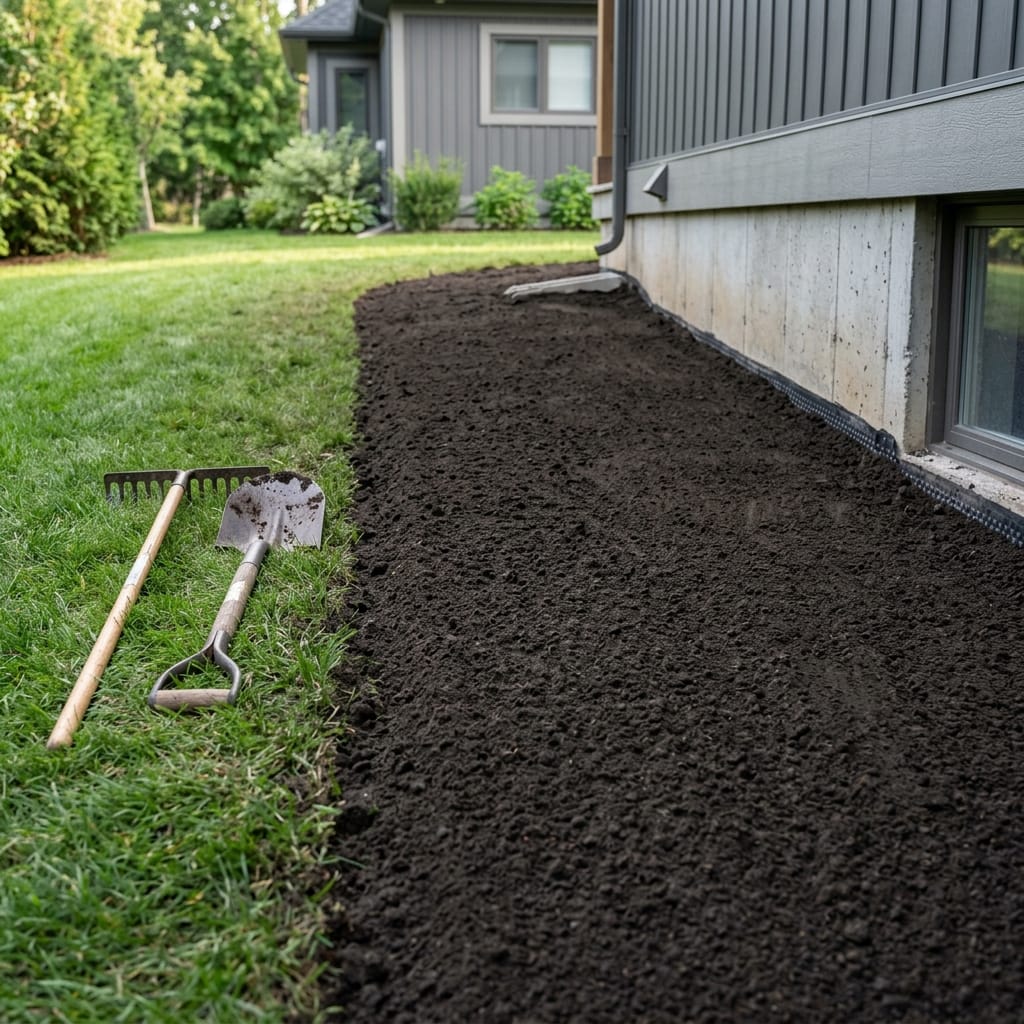
Everything starts in the dirt. Before a single stone gets placed, we excavate the walkway path down 4 to 6 inches and grade the subsoil so water drains away from your home’s foundation. In Central Florida, we’re working with sandy soil most of the time, which is actually an advantage — it drains naturally. But if your lot has clay pockets or sits low, we adjust the grade to prevent pooling.
We compact the subgrade with a plate compactor so it won’t settle later. This is the step that separates a walkway that stays flat for 10 years from one that develops trip hazards after the first rainy season.
Pro tip: If your walkway runs alongside the house, we slope it at least 1/4 inch per foot away from the foundation. Florida rain is no joke — 50+ inches a year in Seminole County — and every drop needs somewhere to go.
Step 2: Landscape Fabric and Staple Installation
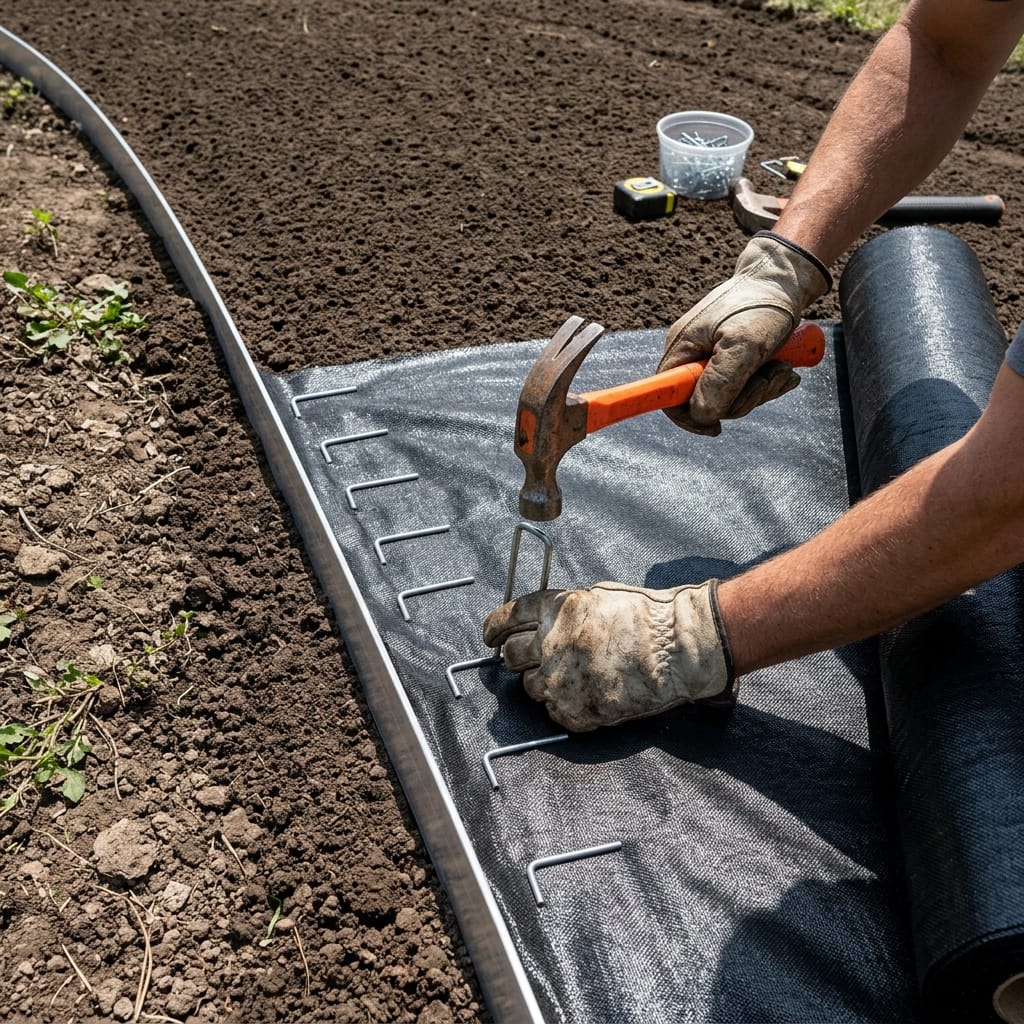
Once the grade is set, we lay commercial-grade landscape fabric over the entire walkway bed. Not the thin stuff from the hardware store — we use woven geotextile that lets water pass through but blocks weed growth from below.
The fabric gets secured with galvanized steel landscape staples every 12 inches along the edges and at every seam overlap. We also install aluminum or steel edging along the walkway borders to create a clean separation between your lawn and the rock bed. This edging is what keeps the river rock from migrating into your grass over time.
A lot of contractors skip the edging or use cheap plastic that warps in the Florida heat. We don’t. Metal edging costs more upfront but saves you from re-doing the borders every two years.
Step 3: Flagstone and Sand Base
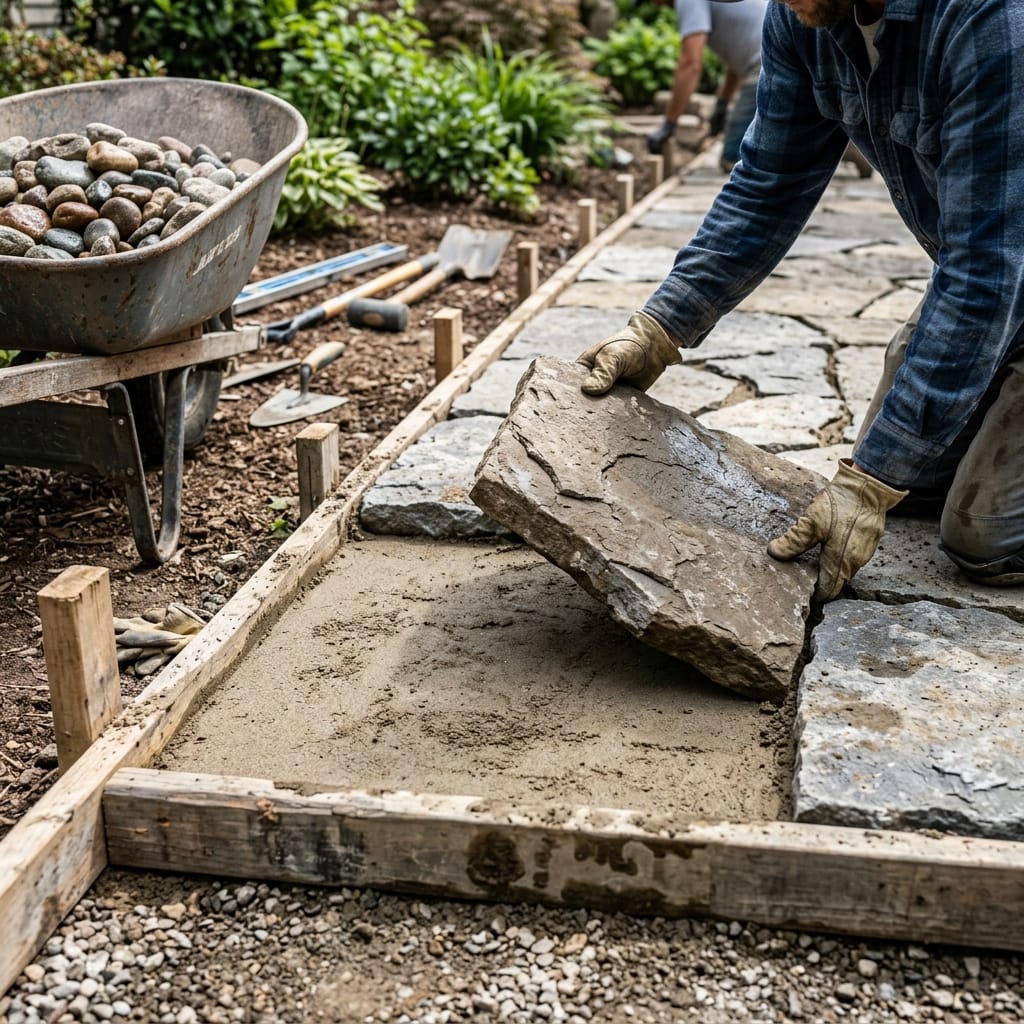
Now comes the part everyone pictures when they think “hardscape walkway.” We spread a 1-inch layer of leveling sand over the fabric, screed it flat, and start hand-fitting each flagstone.
Natural flagstone isn’t uniform — every piece is different. That’s what gives it character, but it also means each stone has to be placed individually, leveled, and checked against its neighbors. We tap each one down with a rubber mallet and check for wobble. If a stone rocks, we pull it, adjust the sand, and reset it.
Between the flagstones, we either fill the joints with polymeric sand (which hardens and locks the stones in place) or leave wider gaps for a more natural look that we’ll fill with river rock or low-growing groundcover.
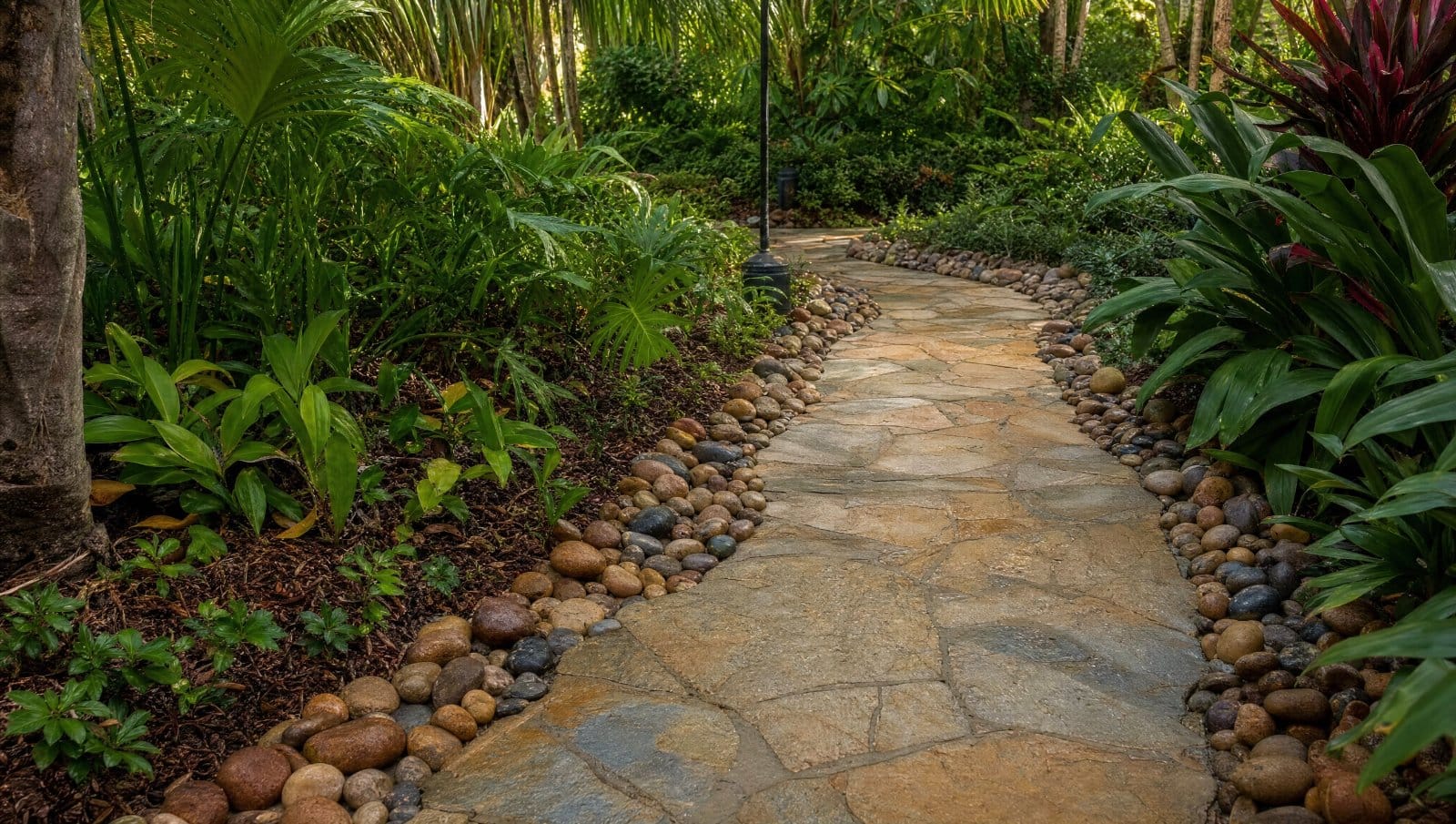
The river rock border goes in after the flagstones are set. We use 1 to 3 inch Mexican beach pebble or Florida river rock — smooth, rounded stones that won’t cut bare feet and won’t fade in the sun.
Step 4: Breathable Planting
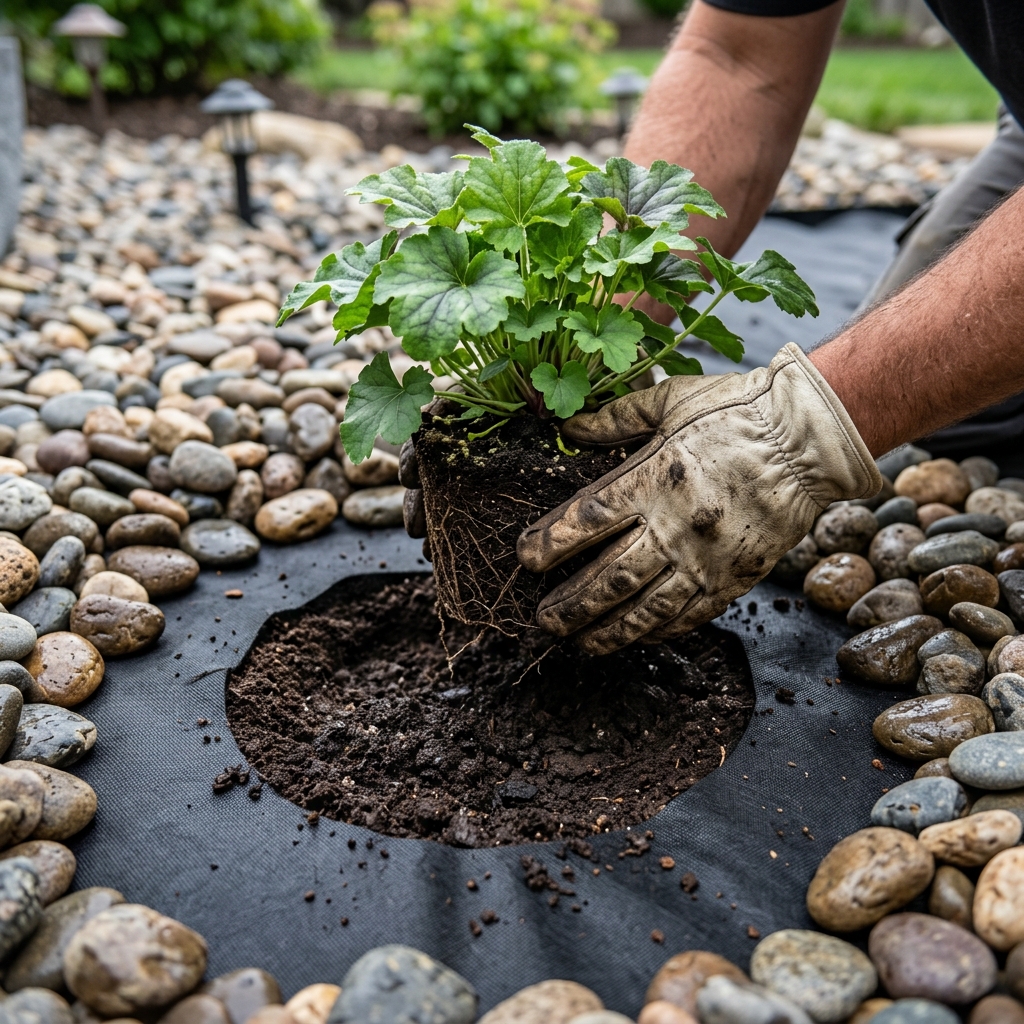
This is what takes a hardscape walkway from “nice” to “why doesn’t my yard look like that?” We cut X-shaped openings in the landscape fabric at strategic spots and plant directly through them. The fabric still blocks weeds everywhere else, but each plant gets its own pocket of soil to root into.
For Central Florida hardscape plantings, we typically use:
- Bromeliads — bold color, zero irrigation needed once established
- Crotons — red, yellow, and orange foliage that pops against gray stone
- Pygmy date palms — compact tropical look without overwhelming the walkway
- Liriope — low-growing, evergreen border plant that handles shade and sun
- Dwarf firebush — attracts hummingbirds and butterflies, blooms year-round in our climate
We mulch around each plant inside its fabric pocket to retain moisture and keep the root zone cool during July and August when ground temps can hit 130°F in direct sun.
What Does a Hardscape Walkway Like This Cost in Central Florida?
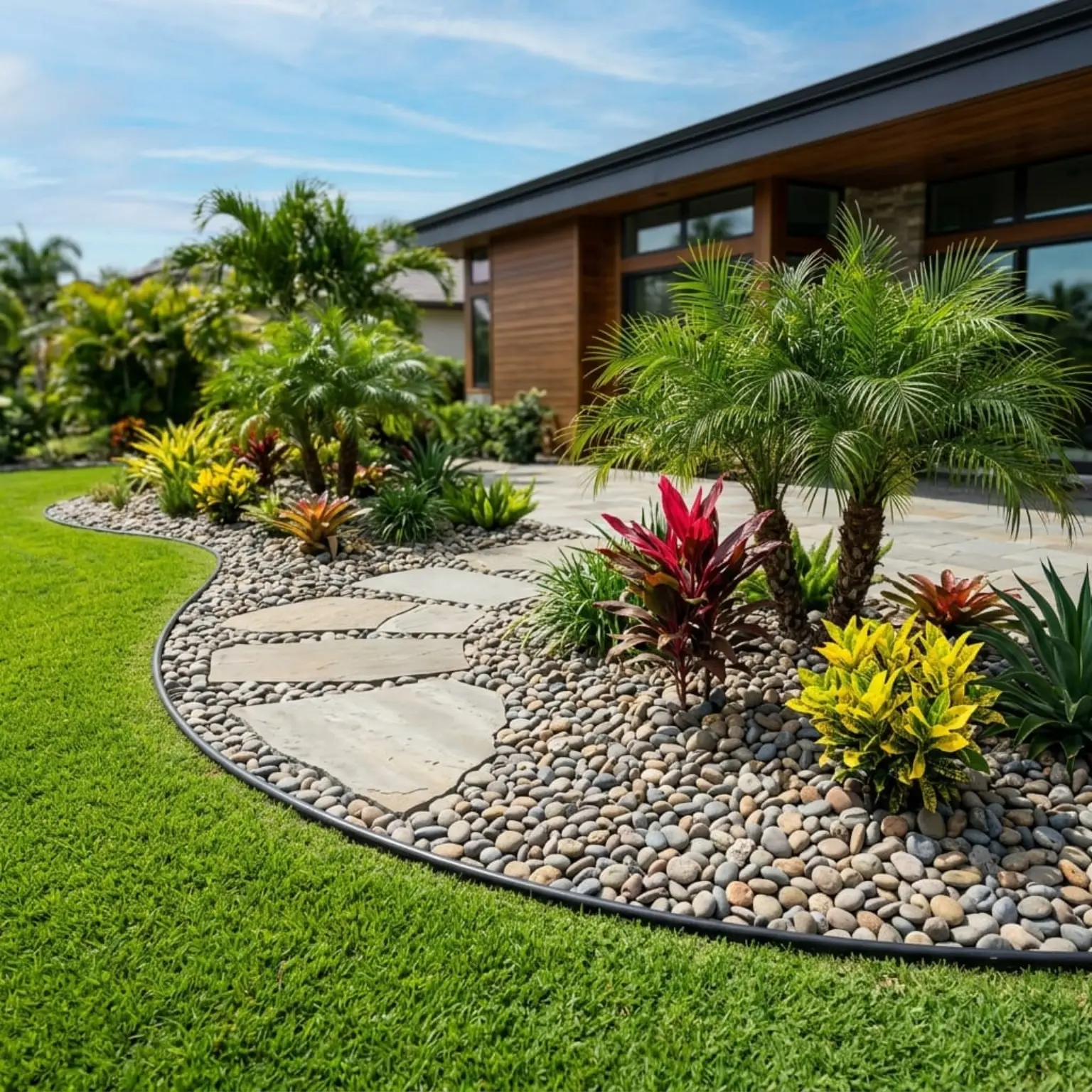
For a natural flagstone walkway with river rock borders and plantings like the one shown above, most homeowners in the Lake Mary, Sanford, and Longwood area pay between $15 and $35 per square foot installed. That includes grading, fabric, edging, stone, rock, and planting.
A typical front walkway (50-80 square feet) runs $1,200 to $2,800. A larger patio-style installation (200+ square feet) with multiple planting beds can range from $4,000 to $8,000+ depending on stone selection and plant choices.
The biggest variable? Stone type. Natural flagstone costs more than manufactured pavers, but it looks better, lasts longer, and doesn’t fade. We think it’s worth it every time.
Why Central Florida Homeowners Are Choosing Hardscape Walkways
Three reasons keep coming up in our estimates:
- Less maintenance than grass. No mowing, no irrigation, no fertilizer schedule. The rock and stone just sit there looking good.
- Curb appeal that actually increases home value. A well-designed front walkway is one of the highest-ROI landscaping improvements you can make. NAR data shows hardscaping returns 50-75% of cost at resale.
- Florida-proof durability. Flagstone and river rock don’t rot, don’t attract termites, and handle our freeze-thaw cycles (yes, we get them) without cracking.
Ready to Talk About Your Walkway?
If you’re thinking about a hardscape walkway, patio, or garden path for your Central Florida home, we’d love to take a look at your space and give you an honest estimate. No pressure, no upselling — just a straightforward plan based on what will actually work for your yard and budget.
Call DeAngelo’s Land Services today at (386) 675-2303 or request a free estimate online. We’re BBB A+ rated, Google Guaranteed, and backed by 211+ five-star reviews from homeowners across Seminole, Volusia, and Orange County.
Veteran-owned. Locally operated. We show up on time, we do the work right, and we clean up when we’re done.