
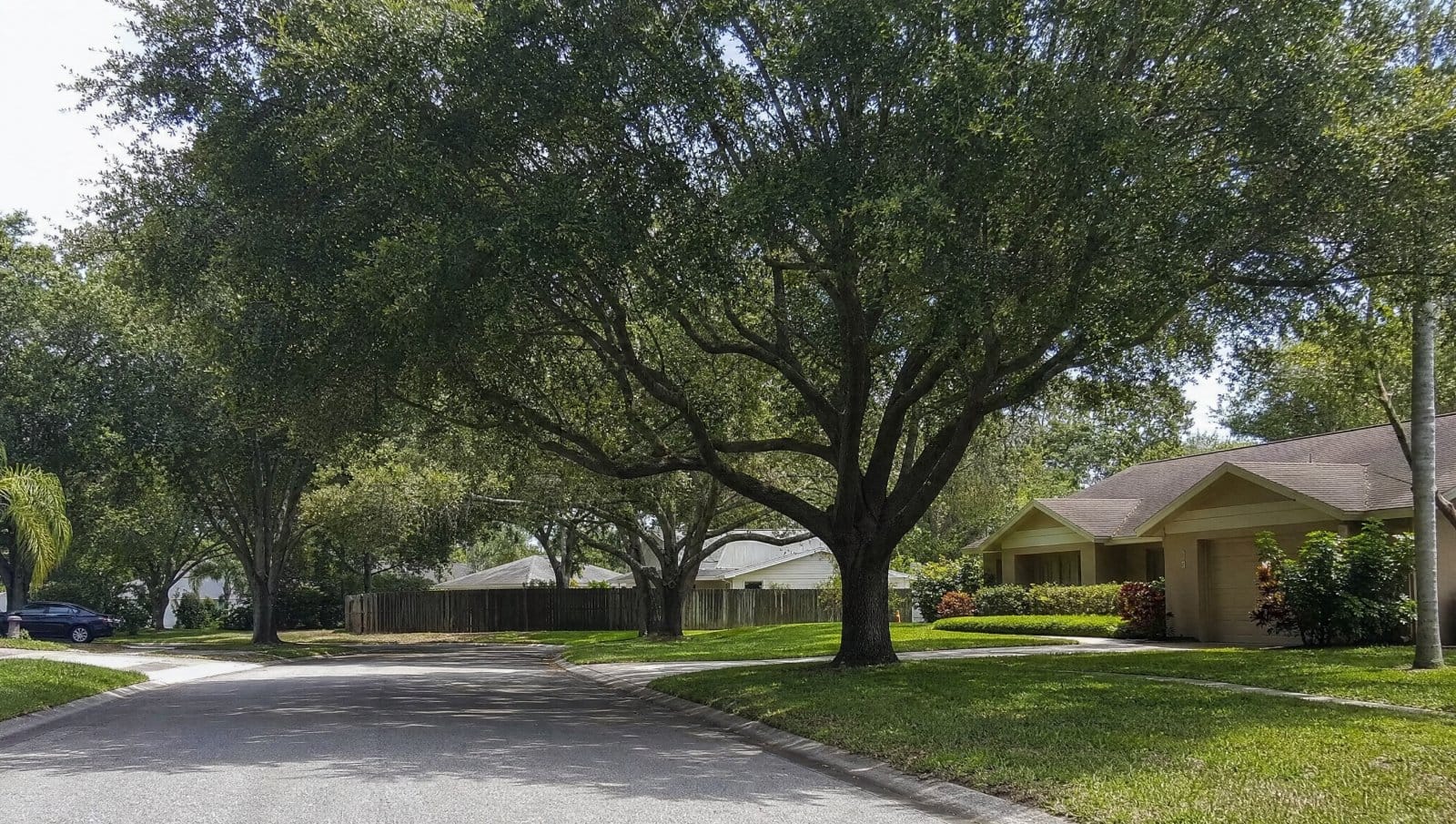
Casselberry and Longwood each have their own tree rules.
Casselberry Tree Ordinance and Longwood’s Rules, Explained by a Local Crew
If you own property in Seminole County, the casselberry tree ordinance and Longwood’s tree rules are two of the most common things our crews get asked about. Folks want a clean answer to a simple question: “Do I need a permit to take this tree down, or not?” The honest answer is “it depends on your city, your lot, and the tree” – so let’s walk through what each city’s code actually says, point you straight to the official source for every number, and save you a headache before the saw ever comes out.
As a Central Florida, veteran-owned tree company working zone 9b sandy soil and our usual summer storm season, we deal with these two municipal codes constantly. Here’s the plain-English version, with the city’s own pages linked so you can verify everything yourself.
How the Casselberry tree ordinance is structured
The casselberry tree ordinance lives in the city’s Unified Land Development Regulations, Part III, Chapter III, Article XIV – Tree Protection. We read it directly on the city’s Municode library, and the article is broken into clear sections worth knowing by name:
- Section 3-14.3 – Permit required for removal, permit exemptions, and exemptions from replacement requirements
- Section 3-14.5 – Tree protection and survival (protecting trees you keep during work)
- Section 3-14.6 – Specimen trees (larger, higher-value trees that get extra protection)
- Section 3-14.7 – Tree replacement requirements
- Section 3-14.8 – Violations, waivers, and appeals
That structure tells you most of what you need to plan a job: there’s a permit step, a separate and stricter category for specimen trees, and a replacement obligation when protected trees come down. The exact trigger diameter (the DBH, or diameter at breast height, that makes a tree “protected” or “specimen”) and the current fee are set in that article and in the city’s fee schedule, and those numbers do get amended – so we are not going to print a figure here that could be stale by the time you read it.
Where to get the exact Casselberry numbers
Before you remove anything in Casselberry, confirm the current diameter threshold, fee, and replacement formula with the source. Two reliable ways:
- Read Article XIV – Tree Protection directly in the Casselberry Code of Ordinances (Municode library, linked in our sources below).
- Call the Casselberry Building Division at (407) 262-7700, or apply and check requirements through the city’s online CitizenServe permitting portal at casselberry.org/permitting.
A five-minute call to the Building Division is the surest way to know whether your specific tree needs a permit – they deal with this every day and will tell you straight.
How Longwood’s tree rules compare
Neighboring Longwood handles this a bit differently, and the City spells it out in its Longwood Development Code, Section 3.5.5 (Tree Protection Standards). We confirmed the following from the City’s own ordinance (Ordinance 09-1894) and its tree-permit FAQ:
- What’s protected: trees with a trunk diameter of three (3) inches DBH or more are protected under Section 3.5.5.
- When a permit is required: a permit is required for the removal, replacement, or alteration of a protected tree. “Alteration” includes damaging, topping, root pruning, hat-racking, poisoning, or grade changes that harm the tree.
- Replacement: replacement trees must be three (3) inches DBH or greater, and the total replacement inches must equal or exceed the diameter inches removed. Longwood also runs an off-site tree mitigation account for cases where you can’t replant everything on site.
Longwood exemptions worth knowing
Longwood’s code includes some genuinely useful exemptions, confirmed directly in Section 3.5.5:
- Owner-occupied single-family dwellings are exempt from the tree protection requirements and are not required to obtain a tree removal permit. This is an important distinction – the exemption hinges on the home being owner-occupied, so if the property is a rental or otherwise not owner-occupied, confirm whether a permit is still required before you cut.
- Emergency storm removal and removal by the City from the right-of-way do not require a permit. Longwood does ask for a photo of the damaged tree in storm cases.
You apply for a Longwood tree removal permit through the City’s online SmartGov portal under Planning and Zoning applications. As always, verify the current fee and any replacement detail with Section 3.5.5 or Longwood’s Planning office.
A statewide rule that applies in both cities
There’s one Florida law worth knowing no matter which city you’re in: Florida Statute 163.045. In broad terms, it limits a city’s ability to require a permit when a tree on residential property poses a genuine danger and the owner has written documentation from a certified arborist (or licensed landscape architect) supporting removal. The exact wording and conditions matter, so don’t assume it covers your situation – have the assessment done properly, keep the documentation, and confirm how your city applies it.
Frequently asked questions
Do I need a permit to remove a tree in my own yard?
In Longwood, owner-occupied single-family dwellings are exempt from the tree protection requirements (if your home is a rental or not owner-occupied, confirm whether a permit still applies). In Casselberry, it depends on the tree’s size and category under Article XIV – call the Building Division to confirm before you cut.
What about a tree that fell or split in a summer storm?
Both cities exempt emergency storm removal from the permit requirement. Document the damage with photos first; Longwood specifically asks for a photo of the damaged tree.
What’s a “specimen tree”?
It’s a larger, higher-value tree that codes protect more strictly, usually with bigger replacement obligations. Casselberry addresses specimen trees in Section 3-14.6 – check that section for the city’s current size definition.
What happens if I remove a protected tree without a permit?
You can face replacement obligations and penalties (Casselberry covers violations in Section 3-14.8). It’s almost always cheaper and simpler to permit it correctly up front.
Let us handle the code so you don’t have to
Tree codes change, fees get updated, and the difference between a routine trim and a permitted removal isn’t always obvious from the ground. If you’re in Casselberry, Longwood, or anywhere in Seminole County and you’re weighing a removal, reach out to LandTree (DeAngelo’s Land Services) for a free, no-pressure estimate. We’ll walk your property, tell you honestly whether your tree likely falls under the permit rules, and help you line up the paperwork through the right city portal before any work begins.