
Altamonte Springs Free Tree Program: How F.A.S.T. Works in 2026
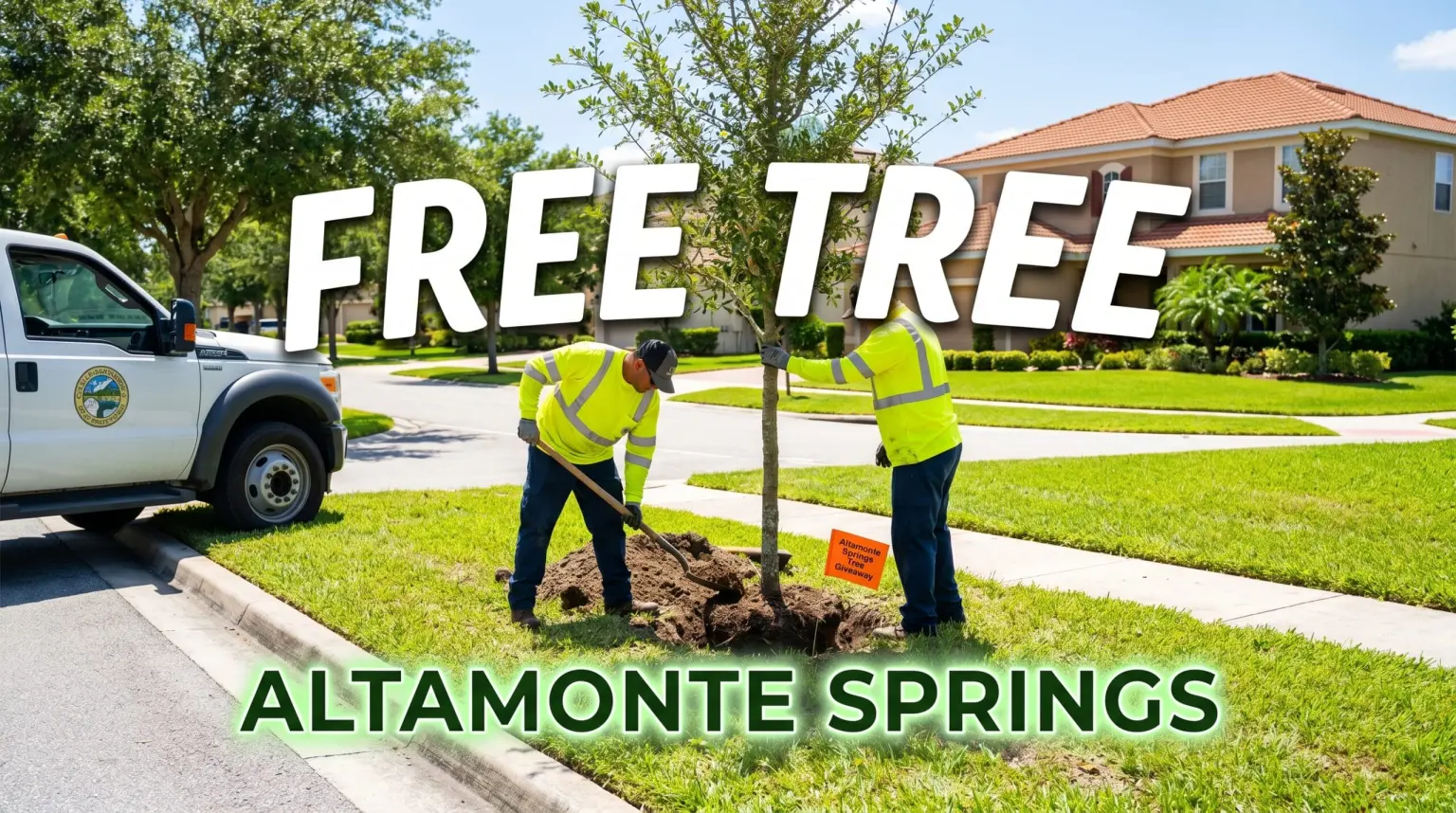
The Altamonte Springs free tree program — officially called F.A.S.T., for Future Altamonte Springs Trees — will plant a tree in your home’s right-of-way at no cost. The catch: you have to agree to maintain it for life.
Here’s exactly how the program works, who qualifies, what species you can request, and the ongoing care the city expects you to handle.
What Is the F.A.S.T. Program?
F.A.S.T. stands for Future Altamonte Springs Trees. It’s run by the city’s Park Landscape Management and Operations Division.
The division purchases and plants assorted shade and ornamental trees in the public right-of-way fronting residential properties. The goal is to replenish and expand Altamonte Springs’ urban forest and street tree canopy.
The strip of grass between your property line and the road pavement is city land. But it directly benefits the homeowner next to it — and a mature street tree adds property value on top of shade.
The Altamonte Springs free tree program is not the same as the city’s annual Arbor Day Tree Giveaway. That’s a separate one-day event on the last Friday of April where residents pick up a sapling to plant in their own yard. F.A.S.T. is a year-round, planted-for-you program tied to a specific spot on your street.
Who Qualifies for a Free Right-of-Way Tree in Altamonte Springs?
To qualify for the Altamonte Springs free tree program, you need to:
- Live inside the Altamonte Springs city limits (not unincorporated Seminole County)
- Provide proof of residency — a Florida driver’s license or a utility bill with your service address
- Own or have authorization from the owner of the adjacent property
- Agree in writing to maintain the tree once it’s planted
There’s no income requirement and no application fee. If your address is inside the city, you’re eligible.
How to Apply for the Altamonte Springs Free Tree Program
The application process is refreshingly low-friction compared to most government programs:
- Call the city arborist at (407) 571-8883 or email ajcapuano@altamonte.org to start a request
- Schedule a site visit — the arborist comes out to look at the planting location and any overhead utility, sidewalk, or setback conflicts
- Pick a species together based on what the site can support (sun exposure, soil, drainage, and clearance from power lines all matter)
- Sign the maintenance agreement that transfers ongoing care to you
- Wait for planting season — orders are accepted year-round, but actual plantings start in February and run through the cooler months when trees establish best
The city’s landscape office is at 950 Calabria Dr., Altamonte Springs, FL 32714, open Monday through Friday, 7 a.m. to 3:30 p.m.
What Species Can You Request?
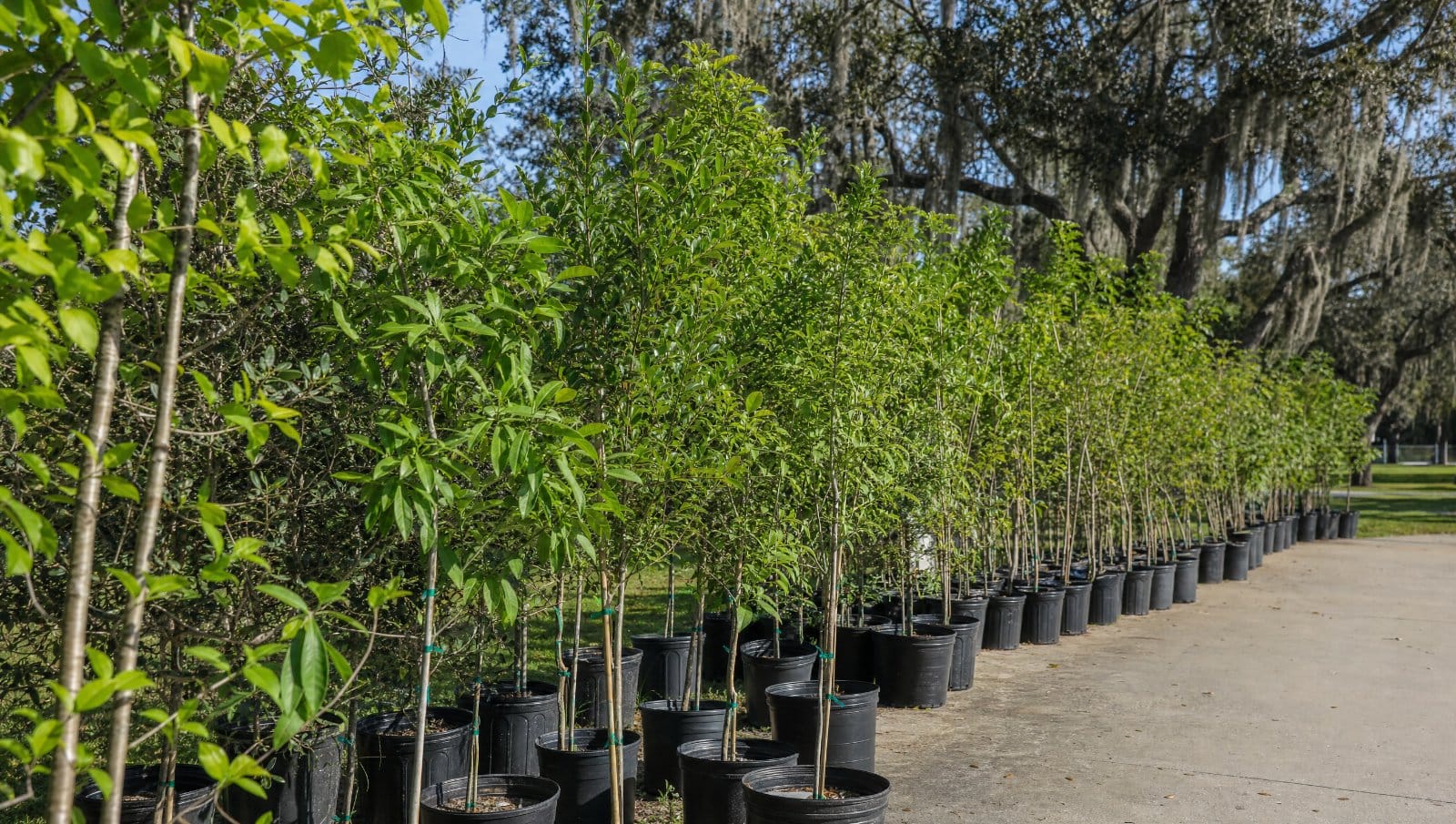
The city doesn’t publish a fixed menu. The arborist selects from an assortment of Florida-friendly species suited to USDA hardiness zone 9b and the specific planting site. For a typical Altamonte Springs right-of-way, common options include:
| Tree Type | Best For | Mature Height |
|---|---|---|
| Live oak | Large front yards, no overhead wires | 40-60 ft |
| Southern magnolia | Shade + evergreen screening | 60-80 ft |
| East Palatka holly | Tight spaces, under-wire sites | 20-30 ft |
| Crape myrtle | Ornamental color, under-wire sites | 15-25 ft |
| Red maple | Fall color, moist soils | 40-60 ft |
| Dahoon holly | Native, wet-area tolerant | 20-30 ft |
If the right-of-way strip is narrow or power lines run above it, expect the arborist to steer you toward a shorter ornamental. Planting a live oak under a 40-foot distribution line is a maintenance nightmare the city won’t approve.
What Maintenance Are You Agreeing To?
This is the part most residents skim past. Then three years later they discover the tree leaning over the sidewalk.
Under both the F.A.S.T. agreement and Altamonte Springs city code, the property owner is responsible for maintaining the right-of-way. That runs from your private property line to the road pavement. For a new F.A.S.T. tree, that realistically includes:
- Watering the first two years. A newly planted tree needs 10-15 gallons per week in dry months until the root system establishes. This is the #1 reason free city trees die.
- Mulching correctly. A 3-inch ring of mulch pulled back from the trunk — never piled against the bark in a “mulch volcano.”
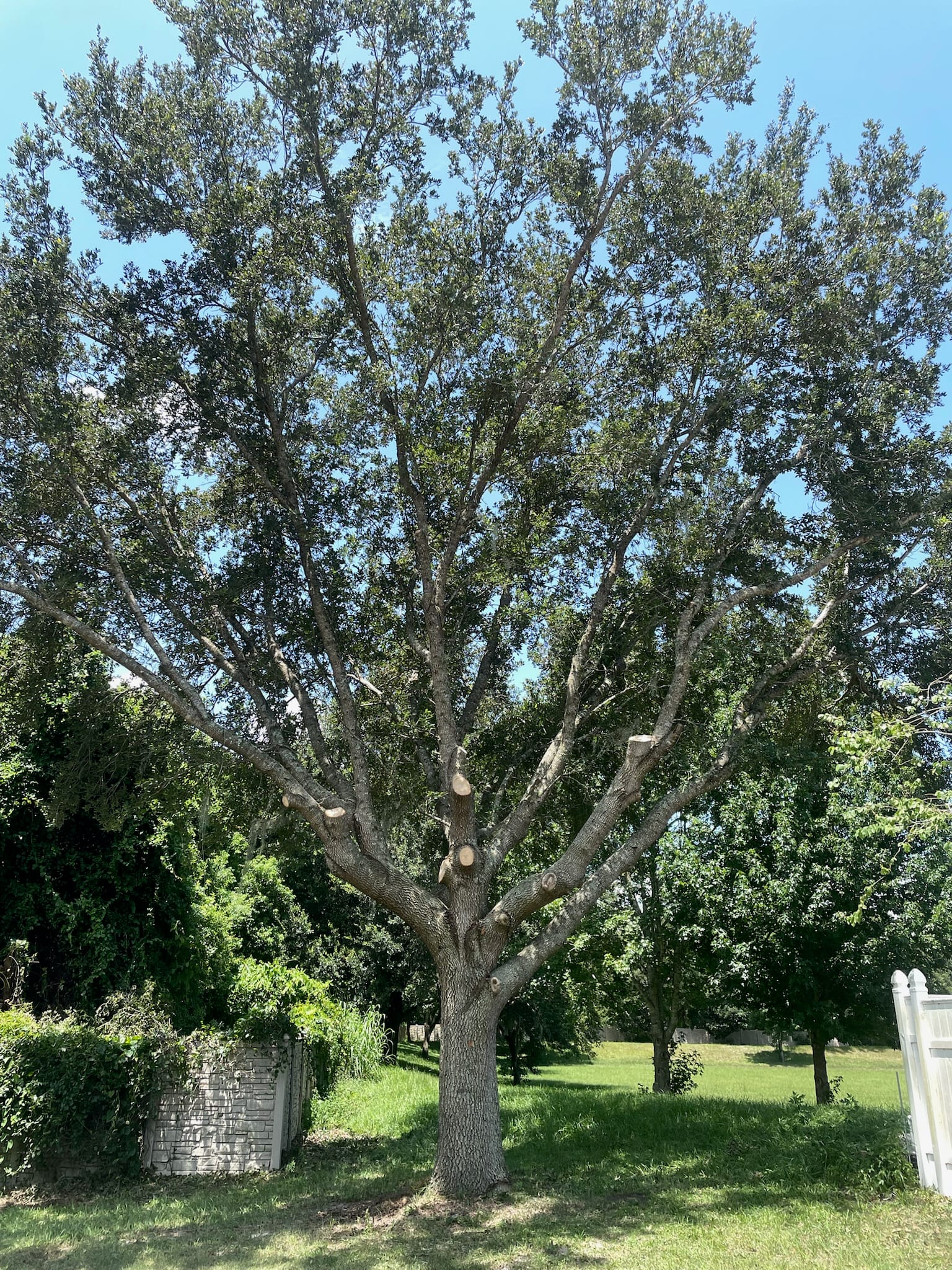
- Structural pruning in years 2-5. This sets the tree up for the next 50 years. Badly trained young trees become hazard trees later. Sidewalk buckling from root conflict is the #2 reason street trees get removed.
- Ongoing pruning every 3-5 years for clearance, deadwood, and storm resilience once the canopy matures.
- Storm cleanup and hazard removal if the tree is damaged or dies. The city planted it for free, but they’re not coming back out for cleanup.
Skip any of these and you end up with either a dead sapling you have to replace yourself, or a mature tree dropping limbs on cars and becoming a liability.
Do You Need a Permit to Work on the Tree Later?
Yes — and this catches people off guard. Even though you’re maintaining the tree, Altamonte Springs requires an Arbor Permit for any significant trimming or removal of trees over a certain size. This applies whether the tree is in your yard or the right-of-way. Light deadwooding and watering don’t require a permit. Major pruning, canopy reduction, or removal does.
If you need to remove a F.A.S.T. tree that dies or becomes hazardous, apply for a removal permit through the city. In most cases you’ll need to replace it with a comparable species.
Is the Altamonte Springs Free Tree Program Worth It?
For most Altamonte Springs homeowners, yes — with eyes open.
A 15-gallon live oak installed by a private landscaper runs $275-$450. A larger 30-gallon shade tree installed with staking and mulch is $500-$900. Getting that tree planted for free saves real money. A mature shade tree also adds measurable property value and cuts cooling costs on the shaded side of the house.
The catch is the lifetime maintenance obligation. Budget roughly $150-$400 every 3-5 years for professional structural pruning once the tree is established. Add the occasional health check if it shows signs of stress, lightning damage, or pest pressure.
Who Handles the Maintenance After the City Plants It?
The city plants, the homeowner maintains. That’s the whole deal.
For the first two years, watering and mulching are DIY jobs any resident can handle. After that, anything above ground level gets safer and cheaper with a licensed local arborist. This is especially true for structural pruning on young trees and hazard assessments on mature ones.
We handle ongoing F.A.S.T. tree maintenance across Altamonte Springs and the rest of Seminole County. See our Altamonte Springs tree care options for pricing and scheduling.
If a tree you were assigned has outgrown its space or is interfering with power lines, sidewalks, or foundations, we can also handle the permitted removal and replacement process with the city.
Altamonte Springs Free Tree Program FAQs
How long does it take to get a F.A.S.T. tree planted?
From first call to planted tree is usually 1-6 months depending on when you apply. Plantings happen in the cooler months starting in February. A summer request gets queued for the next planting season.
Can I pick exactly which species I want?
You can request a species, but the arborist has final say based on the site. Overhead utilities, underground lines, sidewalks, and soil conditions all narrow the options.
What happens if my F.A.S.T. tree dies?
If it dies inside the establishment period (typically the first year), the city may replace it. After that, replacement is on you. If it needs removal, you’ll still need an Arbor Permit.
Can I get more than one tree?
The Arbor Day giveaway caps at two trees per household. F.A.S.T. plantings are done one at a time based on site suitability. If you have frontage for multiple trees, talk to the arborist about a phased plan.
Is the tree mine or the city’s?
Legally, it’s planted on city right-of-way, so the city owns the tree. Practically, you maintain it. You also need a city permit to prune heavily or remove it.
Is the Altamonte Springs free tree program available to renters?
Only homeowners (or renters with written authorization from the property owner) can enroll. The maintenance agreement is tied to the address, not just to whoever is living there at the time.
Get Your F.A.S.T. Tree Planted — and Keep It Healthy
Start with a call to the Altamonte Springs arborist at (407) 571-8883 to get on the planting list. The Altamonte Springs free tree program saves you real money up front, but the ongoing maintenance is what determines whether you end up with a signature shade tree or an expensive removal job in ten years. If you need help with structural pruning, health assessments, or a permitted removal of an existing right-of-way tree, reach out to our Altamonte Springs team for a free estimate.
Information in this article reflects Altamonte Springs program details as of 2026. Program specifics, tree species availability, and maintenance requirements are set by the City of Altamonte Springs Park Landscape Management and Operations Division. Verify current details at altamonte.org/521/Tree-Giveaway-FAST-Program or by calling (407) 571-8883.