
French Drain Installation: A Central Florida DIY Guide
How to Install a French Drain: A DIY Guide From Guys Who Dig Trenches for a Living
If your yard in Central Florida turns into a swamp every time it rains, you’re not alone. Sandy soil, a high water table, and heavy summer downpours make drainage one of the most common problems we see across Lake Mary, Sanford, and Seminole County. After installing hundreds of French drains from Deltona to Winter Park, our crew knows this fix inside and out.
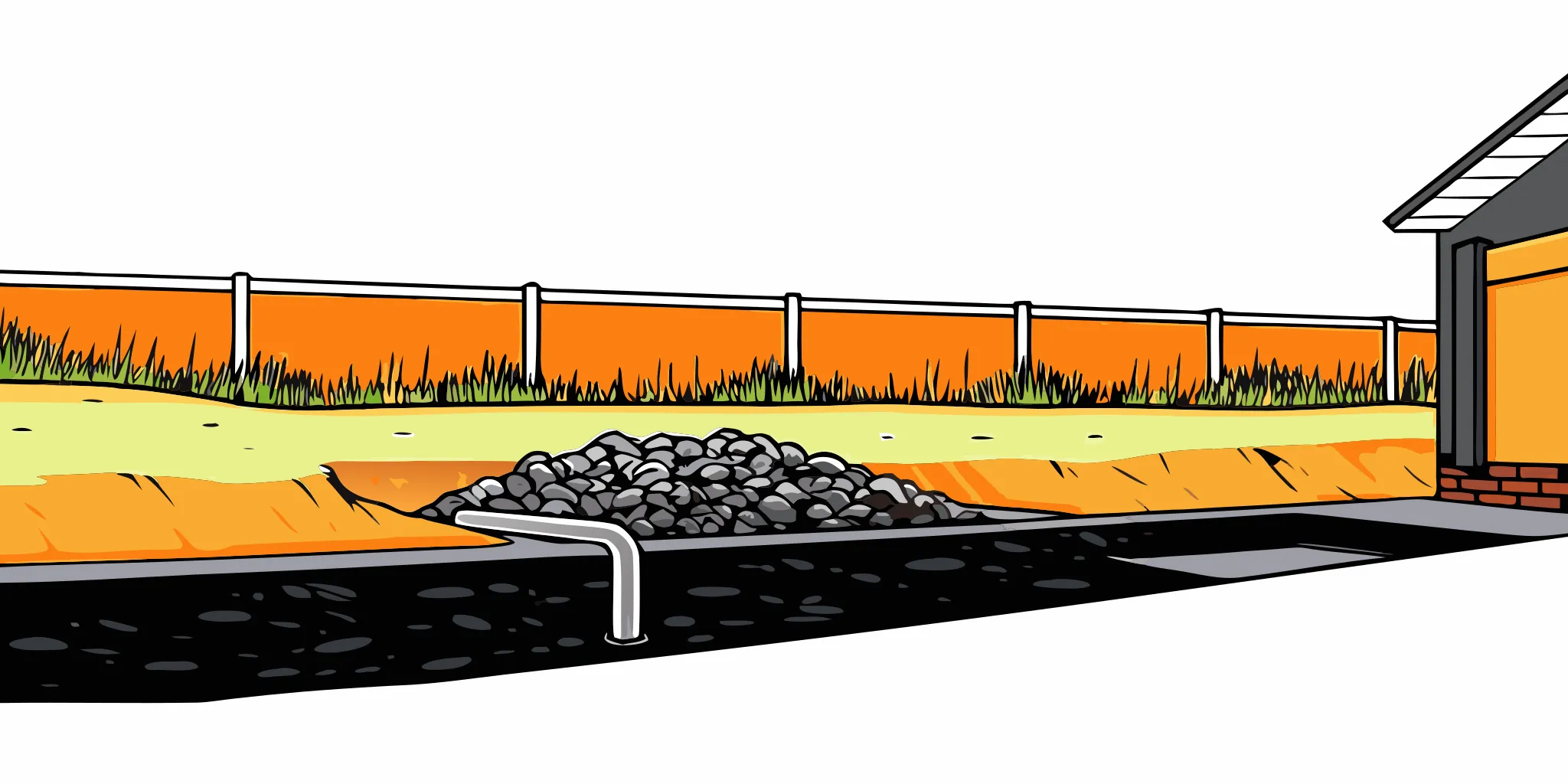
So what is it exactly? It’s a hidden gutter system buried in your yard. A sloped trench lined with landscape fabric, filled with gravel, and fitted with a perforated pipe that catches groundwater and moves it away from your foundation. It works with gravity, not pumps. Once it’s in, it runs maintenance-free for years.
This guide walks you through the full french drain installation process. What materials you need. How to plan the slope. And when it makes sense to call a pro instead of grabbing a shovel.
Why French Drains Work So Well in Central Florida
Here’s the thing most people get wrong about our soil. Everybody assumes sand drains great, so why would you have standing water? But sand is only half the story. Underneath that top layer, a lot of Seminole and Volusia County lots hide a clay hardpan or compacted fill dirt that water can’t punch through. Add a water table that sits just a couple feet down in the rainy season, and the sand saturates fast with nowhere to go.
That’s exactly what a French drain is built for. Instead of fighting the water table, you give the water an easy path — a gravel-filled trench that carries it downhill to daylight, a dry well, or the street. During our summer afternoons, when two inches of rain falls in 40 minutes, a properly sloped drain keeps that water moving instead of pooling against your slab.
If you’ve already got water sitting against the house, you may have more than one problem. A French drain is one piece — sometimes you also need regrading or other yard drainage fixes to get the surface water moving in the first place.
What You’ll Need: Materials and Tools
Stage everything before you put a shovel in the ground. Here’s the shopping list for a standard residential run:
- Perforated drain pipe — 4-inch corrugated or rigid PVC. We prefer rigid PVC for longevity; corrugated is cheaper and fine for short runs.
- Drainage gravel — 3/4-inch washed stone (#57 stone). Skip crushed limestone with fines in it; the fines clog the pipe.
- Landscape fabric — non-woven, permeable filter fabric. This is the part DIYers cut corners on, and it’s why their drains fail in two years. The fabric keeps Florida sand out of the gravel.
- Drain grate or pop-up emitter for the discharge end, plus marking paint and stakes to lay out the run.
Tools: a trenching shovel, a wheelbarrow, a hand tamper, a level (a laser level is better), and a tape measure. For runs longer than 40 feet, rent a trencher — your back will thank you.
Step-by-Step: How to Install a French Drain
Step 1 — Call 811 and Plan the Route
Before any digging in Florida, call 811. It’s free, it’s the law, and hitting a buried utility line is how a Saturday project becomes a very bad day. While you wait for the locate, map your run. The drain should start at the wettest spot and end somewhere lower — a swale, a dry well, the curb, or a catch basin tied into the rest of your drainage.
Step 2 — Dig the Trench (Mind the Slope)
Dig your trench 8 to 12 inches wide and 18 to 24 inches deep. The single most important number in this whole job is the slope: you need at least a 1% grade, which means the trench drops 1 inch for every 8 feet of length. No slope, no flow — the drain just becomes an underground bathtub. This is where a laser level earns its keep. In our flat Central Florida lots, getting consistent fall over a long run by eye is nearly impossible.
Step 3 — Line the Trench With Fabric
Roll non-woven landscape fabric into the trench with plenty of overhang on both sides to fold over later. The fabric is your filter. Skip it, and Florida’s fine sand migrates into the gravel and clogs everything within a couple of rainy seasons.
Step 4 — Add a Gravel Base and Lay the Pipe
Shovel 2 to 3 inches of washed gravel into the bottom and rake it level, keeping the downhill slope consistent. Set the pipe on the gravel bed with the holes facing down — this trips people up every time because it feels backwards, but the point is to capture groundwater rising from below. Holes down. Check the slope one more time with your level.
Step 5 — Backfill With Gravel and Wrap
Cover the pipe with gravel until you’re a few inches below the surface. Then fold the overhanging fabric over the top like a burrito. This full wrap is what keeps your drain working for 20 years instead of 2.
Step 6 — Cap It Off
Top the trench with a few inches of soil and sod, or finish it with decorative river rock if you want a visible dry-creek look. Set your pop-up emitter or grate at the discharge end. Run a hose into the high end and watch the water come out the low end. If it flows, you nailed it.
When to Call a Pro Instead
We’re not going to pretend every French drain needs a contractor. A short, straightforward run in an open yard is a legitimate weekend project. But here in Central Florida, a few situations turn a DIY job into a money pit:
- Water against the foundation. Get the slope wrong here and you can push water *toward* the house. Not worth the gamble.
- Mature oak roots. Our heritage oaks send roots everywhere. Trenching through them by hand is brutal, and you can damage the tree.
- A high water table. In parts of Seminole and Volusia County, you hit groundwater two feet down. Now you’re digging in a puddle, and the slope math gets tricky.
- Long runs or tie-ins. Anything connecting to a larger excavation or grading project needs equipment and a plan.
When any of those apply, that’s where our crew comes in with mini excavators, laser levels, and commercial-grade pipe — and we get the slope right the first time.
Frequently Asked Questions
How deep should a French drain be in Florida?
Most residential French drains run 18 to 24 inches deep. In areas with a high water table, going much deeper means digging in standing groundwater, so the trick is depth plus slope rather than depth alone. A drainage pro can read your lot and tell you the right target.
How much does French drain installation cost in Central Florida?
A professionally installed residential French drain typically runs $1,500 to $5,000 depending on length, depth, and where the water discharges. Runs that wrap a foundation or tie into multiple catch basins cost more. We give free, no-pressure estimates so you know the number before any digging starts.
Do French drains really work in sandy soil?
Yes — and they’re especially valuable here. People assume sand drains itself, but compacted fill, clay hardpan, and a high water table mean Central Florida sand saturates fast. A sloped, fabric-wrapped French drain gives that trapped water a path out. According to UF/IFAS Extension, managing surface and subsurface water is one of the biggest factors in protecting Florida landscapes and foundations.
How long does a French drain last?
A properly built drain — washed gravel, non-woven fabric fully wrapped, correct slope — easily lasts 15 to 20 years with no maintenance. The failures we get called out to fix almost always come down to skipped fabric or no slope.
Ready to Fix Your Drainage Problem for Good?
Installing a French drain is a solid DIY project if you’ve got a straightforward yard and the time to do it right. But here in Central Florida, we often run into complications that turn a weekend project into a headache. Buried utility lines. Tree roots from mature oaks. Or a water table that’s only a couple feet down in parts of Seminole and Volusia County.
That’s where our crew comes in. DeAngelo’s Land Services has been solving drainage problems across Central Florida for years. We bring the equipment — mini excavators, laser levels, commercial-grade pipe — and the experience to get the slope right the first time. No guessing, no rework.
Here’s what you get when you call us:
- Free on-site estimate — we’ll assess your yard, identify the water source, and recommend the right solution (French drain, re-grading, catch basins, or a combination)
- Licensed & insured — BBB A+ rated with a 5.0-star rating across 211+ Google reviews
- Veteran-owned — 10% veteran discount on all services
- Google Guaranteed — backed by Google’s service guarantee
Your yard shouldn’t be underwater six months a year. Call DeAngelo’s at (386) 675-2303 or request a free estimate and we’ll get it sorted.
We serve Lake Mary, Sanford, Deltona, Orlando, Winter Park, Oviedo, Longwood, Altamonte Springs, DeBary, Orange City, and all of Seminole and Volusia County.