
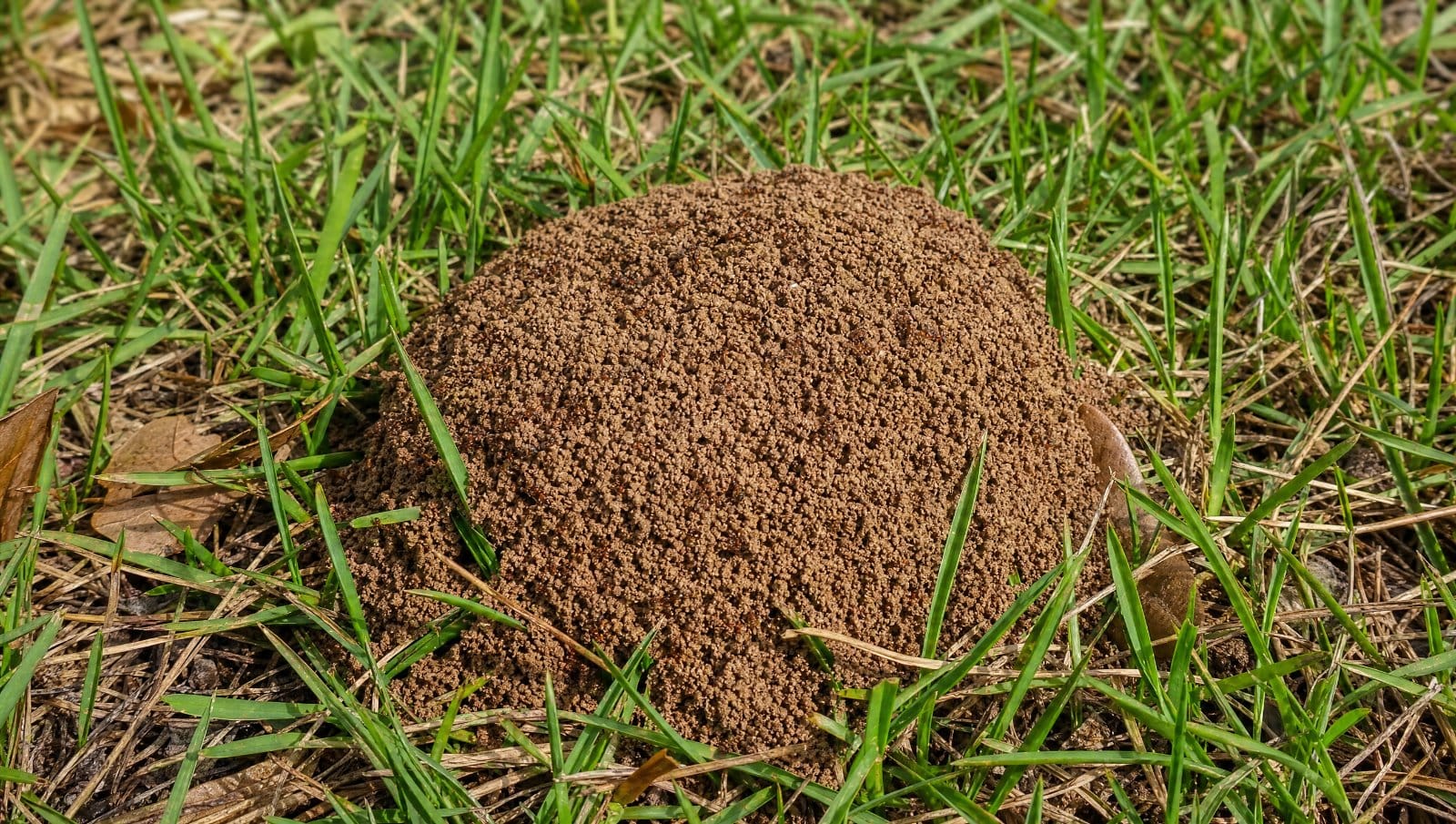
Treat fire ant mounds before they spread across the yard.
Fire Ant Control for Florida Lawns and Beds You Can Actually Count On
If you live in Central Florida, you already know the imported red fire ant is a permanent neighbor. They thrive in our zone 9b heat, our sandy soil, and the steady moisture of our long summers. The good news is that effective fire ant control that Central Florida homeowners can rely on is not complicated once you understand how these ants live and what actually works against a colony. This guide lays out a practical, no-nonsense plan for both your lawn and your planting beds, the same approach our crews use across Orange City, DeLand, Lake Mary, Oviedo, and the Orlando metro.
The single biggest reason people lose the fire ant battle is treating the wrong thing at the wrong time. Let us fix that.
Why fire ants thrive in Central Florida
Fire ants love what our region offers year-round. Sandy, well-drained soil is easy for them to tunnel. Warm temperatures keep colonies active across most of the calendar instead of forcing a long dormancy. And our heavy June-through-September rains push colonies to build the raised, dome-shaped mounds you see pop up overnight in open lawn after a storm. A single mature mound can hold tens of thousands of ants and one or more egg-laying queens, and as long as a queen survives, the colony rebuilds.
That last point is the whole key to lasting control: if you only knock down the workers you can see, the queen keeps producing more. You have to reach the queen.
The two-step method that actually works
For most home lawns, the proven approach is what the University of Florida extension service has long called the two-step method. It is the backbone of how we treat properties, and it works because it combines patience with precision.
Step 1: Broadcast a bait over the whole lawn
Bait products are designed to be carried back into the mound by foraging workers and fed to the queen. Instead of spot-treating mounds you can see, you spread a small amount of bait across the entire lawn so foragers from every colony, including the young ones you have not noticed yet, pick it up.
- Apply bait when the ants are actively foraging, typically in the warm part of the day but not the blazing midday heat of summer.
- Use fresh bait and apply to dry grass with no rain in the immediate forecast, since bait is oil-based and moisture ruins it.
- Be patient. Bait works slowly by design, often over a few weeks, because the goal is to reach the queen, not to produce an instant pile of dead ants.
Step 2: Treat any individual mounds that remain
About a week or two after baiting, treat any stubborn mounds directly. Mound treatments give you faster knockdown of the colonies that did not take the bait, especially near patios, play areas, or doorways where you want ants gone quickly.
- Drench, granular-and-water, or dust products can all work for individual mounds.
- Treat in the cooler morning or evening when ants and the queen are nearer the surface.
- Disturb the mound as little as possible beforehand, or the colony may relocate before treatment reaches the queen.
Lawns versus planting beds
Beds and vegetable gardens need a slightly different touch than open turf, and this is where a lot of homeowners get tripped up.
Ornamental beds
In flower beds and around shrubs, broadcast baiting still works well, and you can spot-treat mounds among the plants. Keep granular and drench products off the foliage and follow the label for use around ornamentals.
Vegetable gardens and edibles
This is the one place to be genuinely careful. Many fire ant products are not labeled for use in vegetable gardens. Always read the label and choose a product specifically cleared for edibles, or keep treatments to the perimeter. When in doubt, the label is the law, and it exists to protect you and your harvest.
Seasonal timing in zone 9b
Because our winters are mild, fire ants stay active far longer here than in most of the country. A smart rhythm for Central Florida looks like this:
- Spring and early summer: the best windows for a lawn-wide bait broadcast, as colonies ramp up foraging and start building mounds.
- Rainy season: expect new mounds after storms, and follow up with spot mound treatments as they appear.
- Fall: a second broadcast helps suppress colonies heading into the cooler months.
Two well-timed broadcasts a year, spring and fall, plus spot treatment as mounds show up, keep most properties comfortable. One-and-done never holds in our climate. Whatever season you treat in, match the bait product and application rate to the label for your turf, just as you would in the beds, since the label is the law for lawns too.
Safety and the green-lane way
Fire ant stings are no fun, especially for kids, pets, and anyone with sensitivities, so it is worth handling colonies near high-traffic areas first. That said, you do not need to carpet-bomb your yard. Targeted baiting plus selective mound treatment uses far less product than blanket spraying and is gentler on the beneficial insects, including the native ants that compete with fire ants for territory.
Frequently asked questions
Why do mounds come back after I treat them?
Usually because the queen survived, or a neighboring colony moved in. Whole-lawn baiting addresses the colonies you cannot see, which is why it outperforms chasing individual mounds.
Are home remedies like boiling water effective?
They can kill surface workers and sometimes a small mound, but they rarely reach the queen in a mature colony and can scald your grass and plants. Bait remains the most reliable tool.
How fast will I see results?
Mound treatments work within hours to a day. Bait works over weeks because it has to travel to the queen. Both together give you speed and lasting control.
If the mounds in your yard are winning, or you would rather hand off the timing and product choices to someone who does this every week, LandTree can help. We are a veteran-owned Central Florida company, and we build simple, seasonal fire ant programs tailored to your lawn and beds. Contact us for a free property walk-through and a straightforward estimate, no obligation.