
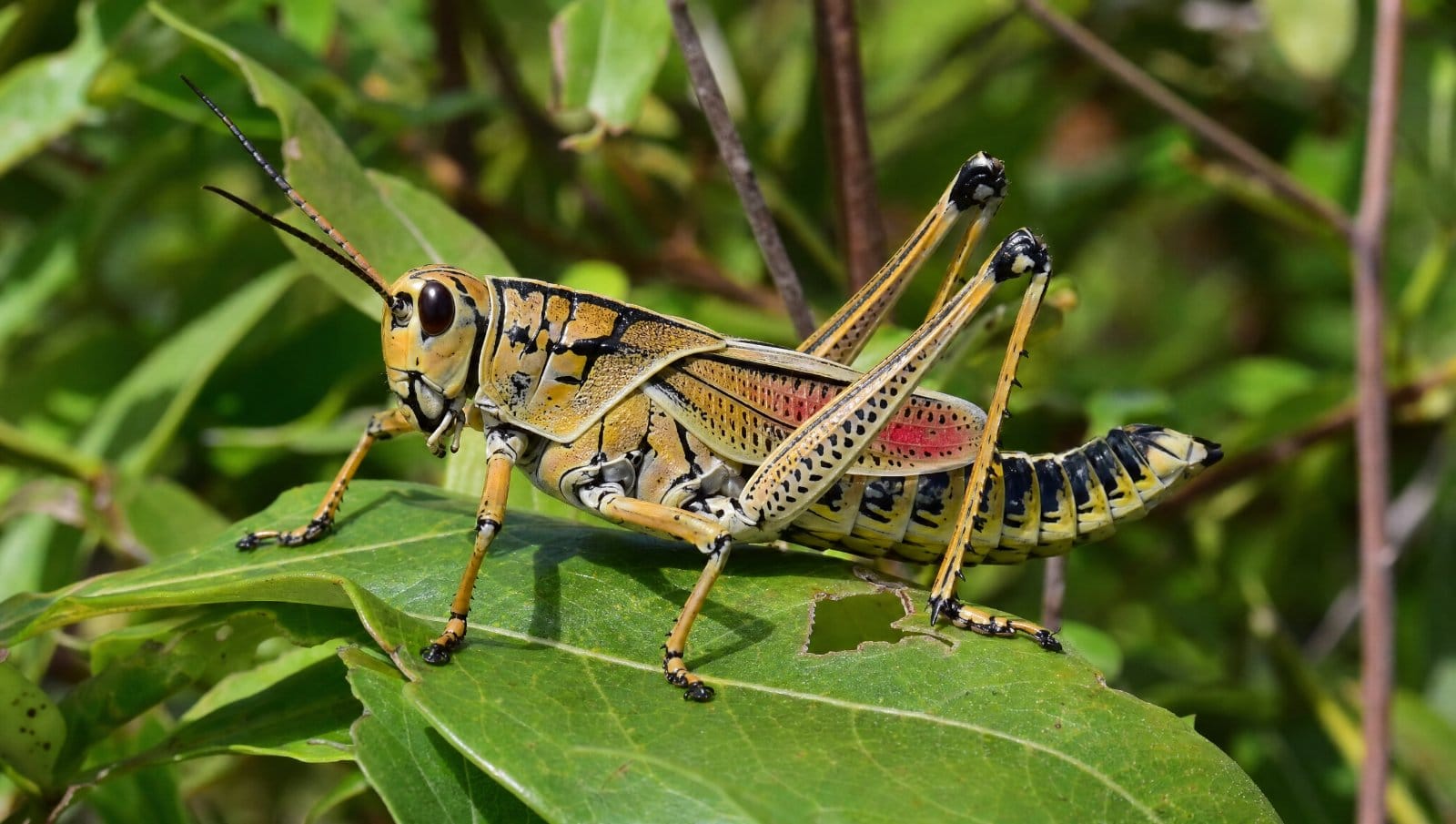
Lubber grasshoppers are big, slow, and tough on plants.
How to Stop Lubber Grasshoppers in Central Florida Landscapes
Every spring, Central Florida gardeners start spotting clusters of small black insects with a bright stripe down their backs, gathered on stems and tender new growth. Those are young lubber grasshoppers, and they are one of the few pests in our area that can strip a favorite plant in days. The good news is that lubbers are also one of the easiest pests to manage if you act early. Here is how a local crew thinks about them.
Meet the Eastern Lubber Grasshopper
The eastern lubber, sometimes called the Georgia thumper, is a large, slow, flightless grasshopper native to the Southeast. It only produces one generation a year, which is exactly why timing your response matters so much. Knowing what stage you are looking at tells you what to do about it.
- Nymphs (spring to early summer): mostly black with a yellow, orange, or red stripe, roughly half an inch to under two inches long.
- Adults (by July and August): big yellow-orange grasshoppers, often dusky, growing up to about three and a half inches.
According to UF/IFAS, freshly hatched nymphs climb the nearest stem and congregate in tight groups, sometimes dozens at a time. That gathering behavior is the homeowner’s best opportunity, which we will come back to.
A One-Generation Life Cycle You Can Plan Around
Because lubbers hatch in a single wave each year, their calendar is predictable, and that predictability is your advantage. Eggs laid in the soil the previous summer and fall sit dormant through winter, then hatch as the weather warms, typically across late winter into spring here in Central Florida. The tiny black nymphs feed and molt their way through several stages over a couple of months, growing larger and harder to handle with each one. By mid to late summer they reach the big, colorful adult stage, mate, and the females deposit the next year’s eggs in loose, sunny soil. Understanding this single-cycle rhythm is what lets you stop a population before it ever reaches the stubborn adult phase, rather than reacting after the damage is done.
Why Lubbers Are Hard to Kill Once They Grow Up
Lubber grasshoppers are loaded with a distasteful, mildly toxic defense that makes most birds and other predators leave them alone. They are slow and obvious precisely because they do not need to flee. That same chemistry, combined with their tough bodies, is why insecticides become largely ineffective on full-grown adults.
UF/IFAS entomologists are clear that chemical sprays are usually neither needed nor effective for lubbers, especially the adults. Spraying mature lubbers tends to waste product and hit beneficial insects without solving the problem. A quick safety note for our clients with pets: because lubbers are toxic, dogs and cats should not be allowed to eat them.
What They Damage in Central Florida Yards
Lubbers are not picky, but they have clear favorites. In zone 9b landscapes they gravitate to soft, juicy foliage, and they love members of the amaryllis family.
- Amaryllis, crinum, and other lilies
- Tender bulbs and ornamental grasses
- Citrus and vegetable garden seedlings
- Many low, leafy bedding plants
Because they feed in groups, a colony can skeletonize a clump of lilies or a row of seedlings quickly. Spotting the damage early, ragged chewed edges and stripped stems, is often what tips homeowners off.
How to Manage Lubber Grasshoppers the Smart Way
The single most effective approach is also the simplest: deal with them while they are young and clustered. A few minutes of work in spring beats fighting tough, scattered adults all summer.
1. Hand-Pick Early
When nymphs are still bunched on a stem, put on a glove and knock them straight into a bucket of soapy water. Because they congregate, you can often clear 20 or more in a single pass. This is the method UF/IFAS recommends first, and it works.
2. Scout Regularly in Spring
Walk your beds once a week from early spring on, paying special attention to amaryllis, crinum, and lilies. Catching the first hatch is worth far more than any product later in the season.
3. Reserve Spot-Treatment for Young Nymphs Only
If a population is heavy, a targeted treatment while they are small can help. Once they reach adult size, hand removal is again your most reliable tool. Skip broad-spectrum spraying of big adults, it mostly harms the beneficial insects you want to keep.
4. Keep Beds Tidy
Clearing weedy, overgrown edges removes the hidden cover where eggs are laid and nymphs first gather, making next spring’s batch easier to spot and control. Routine bed care and seasonal cleanups are part of what our landscaping team handles for Central Florida properties.
Protecting Your Most Vulnerable Plants
If you grow the plants lubbers love most, a little extra attention goes a long way. Keep your amaryllis, crinum, and lily clumps toward the front of your weekly scouting route, since these are usually the first to get hit and the easiest spot to catch a fresh hatch. For a small vegetable garden or a prized bed of seedlings, lightweight row cover during peak hatch season adds a simple physical barrier without any chemicals. And because lubbers travel on foot rather than flying in, a tidy, well-defined bed edge genuinely slows their spread from one planting to the next, which buys you time to remove them by hand.
Frequently Asked Questions
Are lubber grasshoppers dangerous to people?
They will not bite or sting you. Their toxins are a concern mainly for pets that might eat them, so it is best to keep dogs and cats away from them.
Why didn’t my insecticide work?
Adult lubbers are highly resistant to common sprays. That is why early hand removal of young nymphs is the proven strategy rather than chemicals.
Will they come back next year?
Likely yes, since they lay eggs in the soil that hatch the following spring. Consistent early scouting each year keeps the numbers low over time.
If lubbers are overrunning your lilies or you would rather have a pro handle spring scouting and bed care, we can help. LandTree’s team knows these pests and the Central Florida plants they target. Reach out for a free landscape consultation and we will build a simple, season-long plan to keep your yard healthy, no scare tactics, just honest local know-how.