
Oak Wilt & Summer Tree Threats in Central FL
Oak Wilt & Other Summer Tree Threats in Central Florida
Oak wilt in Florida is real, it’s spreading, and summer is exactly when fresh pruning wounds put your oaks at risk — but it’s not the only threat our trees face in the heat. From the beetle-spread fungus behind oak wilt to hypoxylon canker on stressed oaks and Ganoderma butt rot on palms, the warm, wet months are when Central Florida trees quietly get sick. The good news: most of it is preventable with smart timing and clean cuts.
The single biggest thing you can do for your oaks is avoid pruning healthy oak wood during the warm season — fresh summer wounds are the open door pathogens walk through.
We’ve spent years watching how disease moves through Lake Mary, Sanford, and Deltona canopies, and almost every case traces back to two things: a wound made at the wrong time, or a tree already stressed by heat, construction, or root damage.
What Is Oak Wilt, and What’s Its Status in Florida?
Oak wilt is a vascular disease caused by a fungus (Bretziella fagacearum) that plugs a tree’s water-conducting vessels. The tree can’t move water, so leaves wilt, brown, and drop — often shockingly fast in red-oak species like laurel oak and water oak, which are everywhere here.
The fungus spreads two ways. Underground, through grafted roots between neighboring oaks of the same type — which is why it can move down a row. And above ground, when sap-feeding beetles carry fungal spores from an infected tree to a fresh pruning wound or storm break on a healthy oak. That second pathway is the one homeowners control, and it’s why timing your cuts matters so much.
The disease has been confirmed in Florida and has arborists on alert. The University of Florida tracks it closely — their UF/IFAS oak wilt resource is the authoritative free reference for our region. The takeaway isn’t panic; it’s discipline about when and how oaks get cut.
Why Summer Wounds Invite Disease and Borers
Three forces line up against your trees in a Central Florida summer:
- Active pathogen and insect pressure. Warm, humid weather is peak season for the fungi and the beetles that vector them — a wound made in July is far more likely to be “found” than one in January.
- Heat and storm stress. Trees already working against sun, drought, and wind seal their wounds more slowly, leaving the door open longer.
- Fresh-cut chemistry. A new cut releases compounds that actually attract sap-feeding beetles and wood-borers. You’re not just leaving a door open — you’re ringing the dinner bell.
That’s why we tell homeowners to keep summer pruning to deadwood, clearance, and light thinning, and save structural work for the dormant season — see our guide to what’s safe to cut in the summer heat. When an oak genuinely must be cut in the warm months — a storm break or hazard limb — we make a clean cut and seal the fresh wound immediately to shut the beetle-attraction window.
Other Summer Tree Threats in Central Florida
Oak wilt gets the headlines, but it’s not the only thing we diagnose in summer:
Hypoxylon Canker (on Stressed Oaks)
Hypoxylon is an opportunist — often already present on a tree, staying harmless until drought, root damage, soil compaction, or construction stresses the oak. Then it takes over. The tell is bark sloughing off in patches to reveal a silvery-gray to brown, dusty fungal mat underneath, usually high in a thinning canopy. By the time you see it, the tree is generally too far gone to save, so it’s a risk-management call: it signals a declining tree that may become a hazard. Prevention is all about keeping oaks un-stressed — don’t pile soil over roots, don’t compact the root zone, and water deeply during dry spells.
Ganoderma Butt Rot (on Palms and Hardwoods)
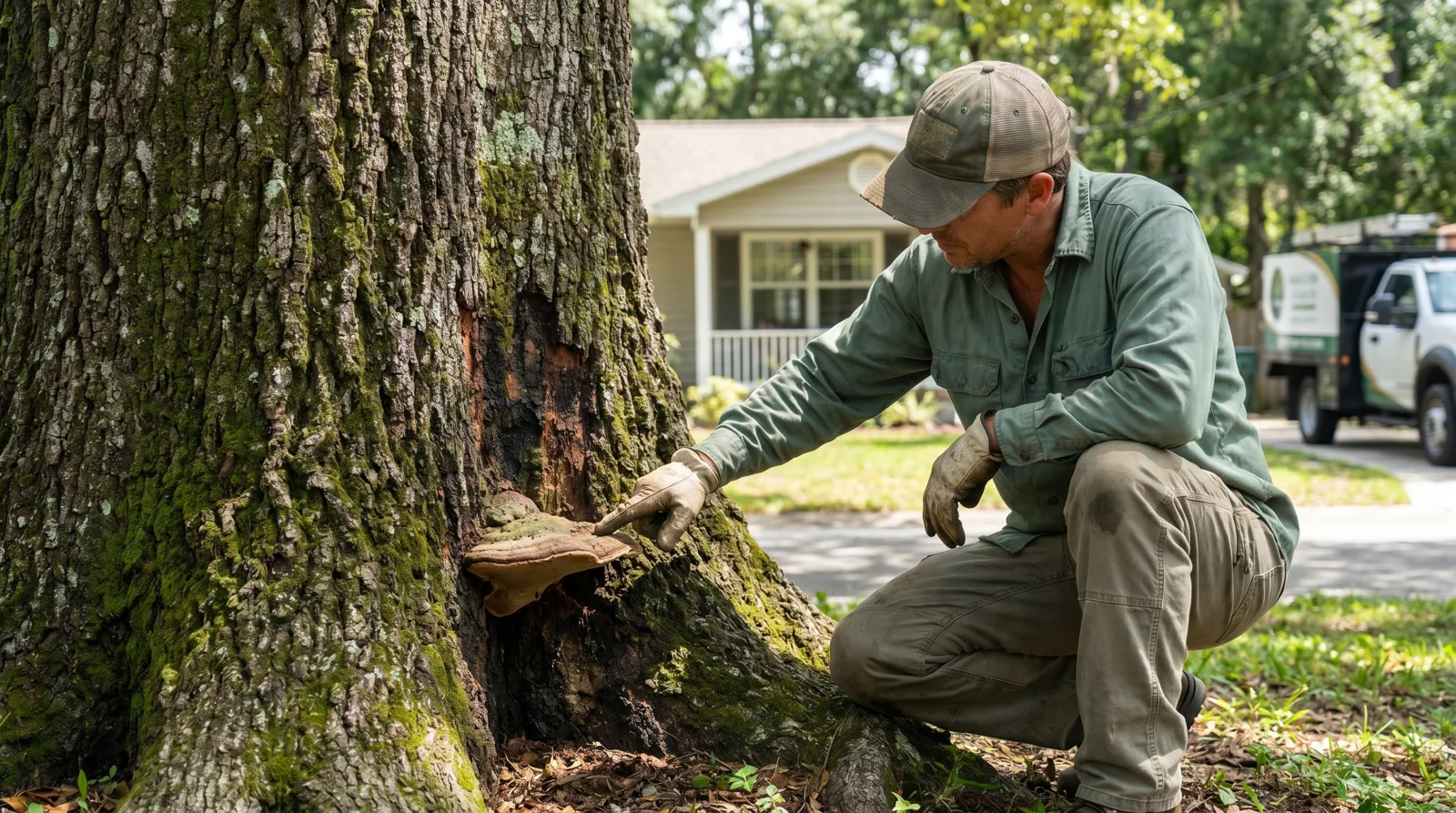
Ganoderma is a root-and-trunk rot, especially serious on palms but also hitting hardwoods. The signature is a conk — a shelf-like, white-to-reddish-brown bracket fungus emerging from the lower trunk within a few feet of the ground. There’s no cure. On a palm, a Ganoderma conk means the tree is structurally compromised and needs to come down before it fails, because the rot is hollowing the base from inside. We treat any basal conk as serious, especially on a palm near a house, driveway, or walkway — it’s a call-us-today situation.
General Summer Decline
Heat, our high water table, and root-zone disturbance push many trees into decline that looks like disease. Sparse canopy, early leaf drop, and upper-branch dieback usually trace back to root problems — flooding, compaction, or fill dirt over the roots — not a pathogen. Diagnosing it right separates a tree we can save from one quietly becoming a hazard. Our guide on how to tell if a storm-damaged tree can be saved walks through the warning signs.
How to Prevent Summer Tree Disease
Most of what protects your trees comes down to four habits:
- Time your pruning. Save structural oak work for December–February. In summer, stick to deadwood, clearance, and light thinning — and seal fresh oak wounds right away.
- Keep tools clean. Disinfect pruning blades between trees, especially on oaks, so you don’t carry spores tree to tree. We do this as standard practice.
- Reduce stress. Don’t compact or pile soil over root zones, protect roots during construction, and water deeply in dry stretches. A healthy tree resists infection; a stressed one invites it.
- Inspect and act early. Walk your trees a couple of times a season. Wilting from the top down on an oak, bark sloughing with a dusty mat underneath, or a shelf fungus at the base all warrant a professional look — the same eye we bring to routine pruning in Longwood and across Seminole County.
Frequently Asked Questions
Is oak wilt in Florida something I should worry about?
It’s worth taking seriously, not panicking over. Oak wilt is confirmed in Florida and spreads to healthy oaks mainly through fresh wounds during the warm season. The practical defense is straightforward: don’t prune healthy oak wood in summer, and if a cut is unavoidable, seal the fresh wound immediately. Red-oak-group species like laurel and water oak are the most vulnerable.
When should I never prune my oak trees?
Avoid pruning healthy oak wood during the warm growing season — roughly April through the summer — when beetles that carry oak wilt are active and fresh cuts attract them. The safest window in Central Florida is the dormant season, December through February. Dead or genuinely hazardous limbs can be removed any time, with the wound sealed if it’s made during the high-risk months.
What does a fungal conk at the base of my tree mean?
A shelf-like bracket fungus low on the trunk — especially on a palm — often signals Ganoderma butt rot, a root-and-trunk decay with no cure. It means the base is being hollowed out and the tree is becoming a structural hazard. If it’s near a house, driveway, or walkway, have it evaluated for removal promptly rather than waiting for it to fail in a storm.
Can a tree with hypoxylon canker be saved?
Usually not. Hypoxylon takes hold on already-stressed oaks, and by the time the silvery-gray fungal mat shows under sloughing bark, the tree is in serious decline. The focus shifts to safety — whether it’s likely to fail and needs removal. The real win is prevention: keep oaks un-stressed with proper watering and by protecting the root zone.
Protect Your Oaks and Palms This Summer
Oak wilt and the other warm-season threats here are largely preventable when you get the timing and technique right — and catch trouble early. The wrong cut in July can cost you a 60-year live oak; the right inspection can save it. That’s the difference an ISA Certified Arborist makes.
DeAngelo’s Land Services is veteran-owned, BBB A+ rated, Google Guaranteed, and proud to hold a 5.0-star rating across 211+ reviews. We serve Lake Mary, Longwood, Sanford, Winter Springs, Oviedo, Deltona, Orlando, and communities across Central Florida. Veterans and active military receive a 10% discount on all services.
Worried about one of your trees? Contact us online or call (386) 675-2303 today for a free estimate, and we’ll inspect your oaks and palms, diagnose what’s going on, and give you an honest plan.
About the Author: Mark DeAngelo is the founder of DeAngelo’s Land Services and an ISA Certified Arborist serving Lake Mary, Sanford, Orlando, and the greater Central Florida area. A USAF combat veteran, Mark and his crew diagnose and treat tree disease, prune to ISA standards, and care for Central Florida’s oaks and palms every day, earning a 5.0-star rating across 211+ reviews.