
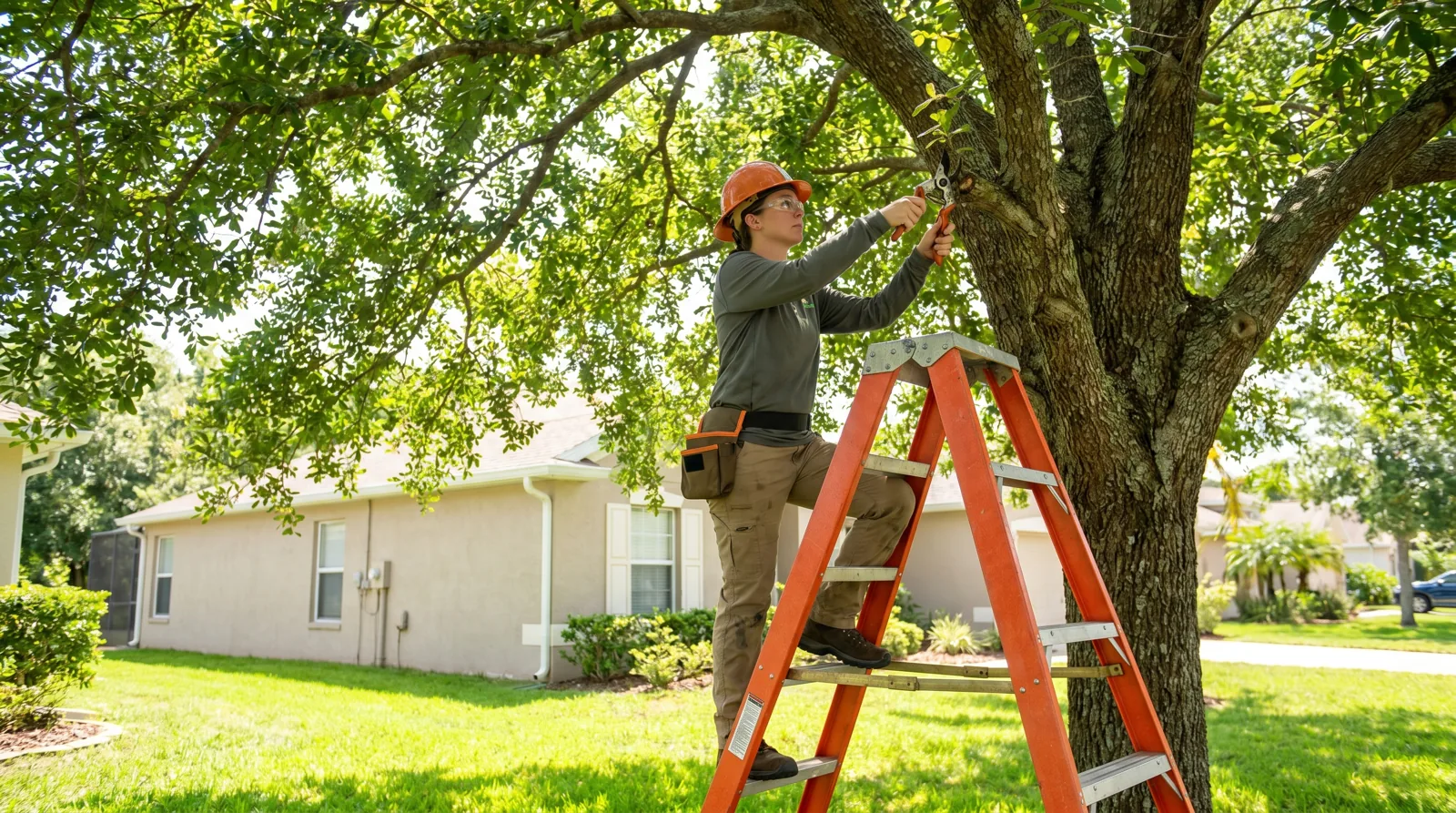
Summer Tree Trimming in Florida: What’s Safe
Summer Tree Trimming in Florida: What’s Safe to Cut in the Heat
Yes, you can do some summer tree trimming in Florida — but it’s about what you cut, not just whether you cut. Light maintenance, deadwood removal, raising a low limb off the roof, and pre-storm canopy thinning are all fair game in July and August. Heavy structural pruning and cutting back into healthy live wood are best saved for the cooler, dormant months. Get that distinction right and you protect both your trees and your house through storm season.
In a Central Florida summer, prune for safety and storm-readiness — remove deadwood, clear structures, and thin lightly — but leave major reshaping for late winter.
We get this question constantly from June through September. A branch is scraping the roof, a limb looks dead, a thunderstorm just rocked the canopy, and homeowners want to know if it’s okay to deal with it now. Here’s how our crew thinks about it.
What’s Safe to Trim in Summer (and What to Hold Off On)
The healthiest pruning works with a tree’s growth cycle. Our trees grow hard through the warm season, and every fresh cut is an open wound that pests and disease can enter. In the heat, trees are also under stress from sun and storms, so they have less energy to seal those wounds. That doesn’t mean hands-off — it means measured.
Safe to do in summer:
- Deadwood removal. Dead, broken, and hanging limbs aren’t alive, so cutting them creates no new wound on living tissue. This is the single most valuable summer job — a dead branch is exactly what comes down on your roof in a thunderstorm.
- Clearance pruning. Lifting limbs off a roof, gutters, walkways, or power-line setbacks. Small, targeted cuts.
- Light storm-thinning. Selectively reducing canopy density so wind passes through instead of pushing on a solid sail. The keyword is light — a proper thinning, not a butcher job.
- Sucker and water-sprout removal. Quick, low-impact cleanup.
Hold off until the dormant season:
- Heavy structural pruning and major reshaping that removes a lot of live canopy at once.
- Big cuts on oaks, which we’ll cover below — summer wounds invite serious disease.
- Crown reduction or “topping” (topping is never okay, in any season).
Removing more than about a quarter of a tree’s live canopy in one summer session stresses it badly in our heat. If your tree needs that much work, we stage it or schedule the structural cuts for winter. The ISA’s homeowner resource on proper pruning practices is a solid free reference on why how-much and how-clean matter as much as when.
What’s Safe by Species
Central Florida’s common trees don’t all play by the same summer rules. Here’s the species-by-species breakdown our crew uses.
Live Oaks and Laurel Oaks — Be Careful
Oaks are the species where summer timing matters most. Avoid pruning healthy oak wood in summer whenever you can. Fresh cuts in the warm season are an open door for oak wilt and for the sap-feeding beetles that spread it, plus opportunistic fungal pathogens that thrive in heat and humidity. We dig into this in our guide to oak wilt and other summer tree threats.
If an oak limb is dead or genuinely hazardous and can’t wait for winter, we’ll still take it — but we make clean, proper cuts and, on fresh wounds during the high-risk window, we seal them right away. Routine oak shaping, though, belongs in December through February.
Palms — Less Is More
Palms are the one species you really can clean up year-round, and summer cleanup of brown, fully dead fronds and seed pods before a storm is smart. But this is where we have to push back hard on a Florida habit: don’t over-lift your palms.
“Hurricane cutting” or “rooster-tailing” — stripping a palm down to a few upright green fronds — actually weakens it. Palms pull potassium and other nutrients out of older fronds to feed new growth, so cutting green fronds early starves the tree, invites yellowing, and leaves the bud more exposed to wind, not less. A healthy palm should keep a full, rounded crown; we never cut fronds growing above the horizontal (the “9-and-3” line). If your palms are already yellowing, that’s usually nutrition, not over-watering — see why palm fronds turn yellow and how to fix it.
Crepe Myrtles, Maples, and Most Hardwoods
Light summer cleanup is fine — remove suckers, deadwood, and a stray crossing branch. Save the structural shaping for late winter when you can see the bare framework and the tree is dormant. Whatever you do, skip “crepe murder”; chopping crepe myrtles to stubs ruins their form and creates weak regrowth.
Summer Tree Trimming for Storm-Thinning Before the Peak
Here’s why we lean into the right kind of summer pruning: Atlantic hurricane season runs June 1 through November 30, and our worst storms typically hit Central Florida in August and September. The trees most likely to fail are the ones with dense, top-heavy canopies that catch wind like a sail, and the ones carrying deadwood waiting to be launched.
A proper pre-storm service — removing deadwood, lifting limbs off structures, and selectively thinning the canopy so wind can flow through — measurably lowers the odds of a failure. We recently cleared a heavy, deadwood-laden laurel oak hanging over a Longwood roofline ahead of a tropical system, and that homeowner kept their roof while two neighbors didn’t. That’s the work worth doing in summer. To find your highest-risk trees before you spend a dime on pruning, walk our pre-hurricane tree risk assessment checklist first.
Frequently Asked Questions
Can you trim oak trees in summer in Florida?
You can remove dead or hazardous oak limbs in summer, but avoid pruning healthy oak wood from roughly April through the warm months. Fresh cuts on live oak tissue invite oak wilt and the beetles that spread it, plus heat-loving fungi. If a cut can’t wait, an ISA Certified Arborist should make a clean cut and seal the wound immediately. Save routine oak shaping for December through February.
Is it bad to trim palms in summer?
Cleaning up fully dead, brown fronds and seed pods before a storm is fine and even helpful. What hurts a palm is over-lifting — cutting healthy green fronds to create that “hurricane” look. That starves the tree of potassium, triggers yellowing, and exposes the bud to more wind, not less. Keep the crown full and rounded.
Will trimming my trees now help with hurricane season?
The right trimming does. Removing deadwood, clearing limbs off your roof, and lightly thinning a dense canopy so wind passes through all reduce the chance of failure. What doesn’t help — and actively hurts — is heavy topping or stripping the canopy, which creates weak regrowth and a more dangerous tree.
How much can I safely cut off a tree in one summer session?
As a rule of thumb, keep summer pruning under about 25% of the live canopy, and less for stressed or older trees. Removing more than that in our heat stresses the tree and slows wound sealing. If your tree needs major work, it’s better to stage it or wait for the dormant season.
Schedule Smart Summer Tree Care Before the Next Storm
Summer tree trimming in Florida is about doing the right work at the right time — pulling deadwood, clearing your roofline, and thinning the canopy so your trees stand up to August and September storms, while leaving the heavy structural cuts for winter. Done well, it protects your property and keeps your trees healthy.
DeAngelo’s Land Services is veteran-owned, BBB A+ rated, Google Guaranteed, and proud to hold a 5.0-star rating across 211+ reviews. Our ISA Certified Arborist knows exactly what’s safe to cut in our heat and what should wait. We serve Lake Mary, Longwood, Sanford, Winter Springs, Oviedo, Deltona, Orlando, and communities across Central Florida. Veterans and active military receive a 10% discount on all services.
Ready for a free estimate? Contact us online or call (386) 675-2303 today. We’ll walk your property and tell you honestly what to trim now and what to put off until winter.
About the Author: Mark DeAngelo is the founder of DeAngelo’s Land Services and an ISA Certified Arborist serving Lake Mary, Sanford, Orlando, and the greater Central Florida area. A USAF combat veteran with more than a decade of hands-on experience caring for live oaks, palms, and storm-stressed trees, Mark and his crew hold a 5.0-star rating across 211+ reviews and are Google Guaranteed and BBB A+ rated.