
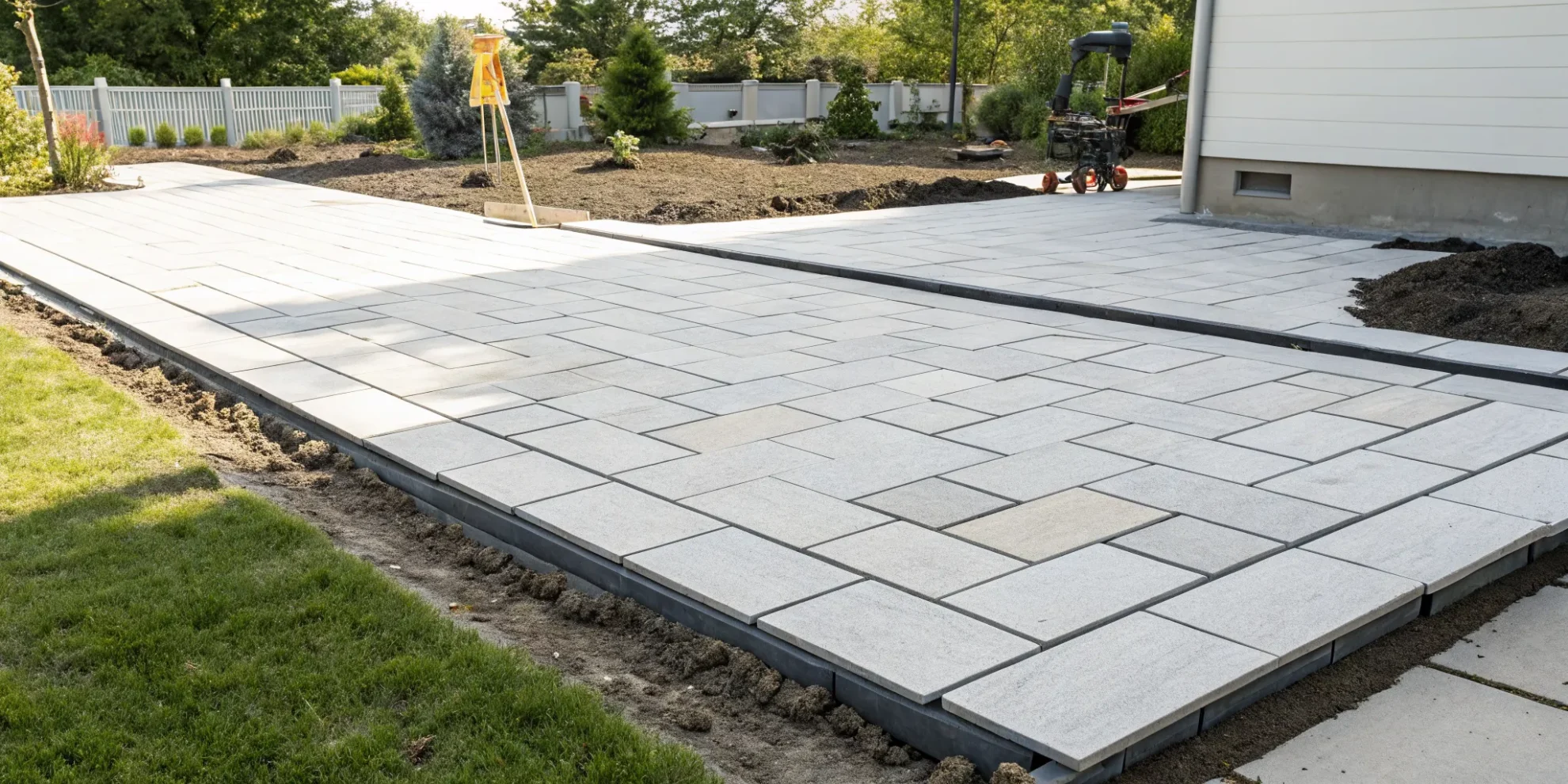
Step-by-Step Patio Stone Paver Installation
We’ve all seen them: paver patios with sunken spots, crooked lines, and weeds sprouting from every joint. These common problems are almost always the result of a few critical mistakes made during installation. A beautiful patio that lasts for decades doesn’t happen by accident; it’s the result of careful planning and proper technique. This guide is your roadmap to avoiding those pitfalls. We will walk you through every stage of a successful patio stone paver installation, from creating a stable base to finishing the joints correctly. Following these steps will help you build a flawless outdoor space that remains level, stable, and beautiful for years to come.
Key Takeaways
- Your Patio’s Foundation is Everything: The long-term stability of your patio comes from the work you do before laying a single stone. Focus on excavating to the correct depth and building a compacted base with a slight slope for proper drainage.
- Work Methodically for a Professional Finish: Use string lines to keep your rows perfectly straight, and place each paver gently to avoid disturbing the sand bed. Paying attention to details like consistent spacing and clean edge cuts creates that polished, high-end look.
- Secure Your Work for Long-Term Success: The final steps are crucial for durability. Install edge restraints to hold the patio’s shape, sweep polymeric sand into the joints to prevent weeds and shifting, and run a final compaction to lock everything tightly together.
What Tools and Materials Do You Need?
Getting your materials and tools organized before you start is the secret to a smooth project. A little preparation goes a long way in preventing mid-project runs to the hardware store. Think of it as setting up your workspace for success. Having everything on hand lets you focus on the task at hand: building a beautiful and durable paver patio. Here’s a complete breakdown of what you’ll need to get the job done right.
Choose the Right Pavers for Your Climate
The pavers you choose will define the look of your patio, but they also need to stand up to the Florida weather. When you’re selecting pavers, think about the material type, its durability, and how porous it is. In Central Florida, you’ll want a material that doesn’t get scorching hot in the sun and won’t become a slip-and-slide after a downpour. Concrete pavers are a versatile and popular choice, while travertine is a natural stone that stays remarkably cool to the touch. Brick offers a classic look but can sometimes encourage mildew in damp, shady areas. The right choice will create a comfortable and safe outdoor space for years to come.
Gather Your Essential Tools
You might have some of these tools in your garage already, but a few items, like the plate compactor, will likely be rentals. Having the right equipment makes the work much easier and ensures a professional-looking result. Before you break ground, make sure you have everything on this list ready to go:
- Shovels and a wheelbarrow
- Garden rake
- Stakes and string line
- Tape measure
- A long level and a 2×4 for screeding
- Rubber mallet
- Paver saw or a circular saw with a diamond blade
- Plate compactor
- Push broom
Calculate Materials and Prep Your Workspace
Proper site preparation is the most critical step for a long-lasting patio. This starts with digging out the area. You’ll need to excavate about eight to ten inches deep to make room for the base material. This is often the most physically demanding part of the project. After digging, you will add and compact a sub-base of about four inches of paver base. This layer is essential for providing drainage and stability, which prevents the pavers from shifting or sinking over time. For larger or more complex projects, professional hardscaping services can handle the heavy lifting and ensure a perfect foundation.
How to Prepare the Installation Site
A beautiful, long-lasting paver patio starts from the ground up. The preparation you do before laying a single stone is the most critical part of the entire project. It’s what separates a professional-looking patio that stands the test of time from one that shifts and settles after a few seasons. Proper site prep ensures your patio has a stable foundation and effective drainage, preventing future headaches. While it might seem like a lot of work, getting this stage right is non-negotiable. For those who want a flawless finish without the heavy lifting, our hardscaping services handle every detail from start to finish, ensuring your new outdoor space is built to last.
Plan and Measure Your Patio Layout
First, grab a garden hose or some string and stakes to outline your patio’s shape on the ground. This helps you visualize the final layout and make adjustments before you start digging. Once you’re happy with the shape, it’s time for some simple math. You need to calculate the total depth for your excavation. This includes the thickness of your pavers, a one-inch layer of sand, and a solid four-to-six-inch gravel base. Most importantly, plan for a gentle slope away from your house or any other structures to ensure water drains properly. A good rule of thumb is a one-inch drop for every four feet of patio.
Excavate the Area to the Proper Depth
Now for the most physically demanding part: digging. You’ll need to excavate the entire area to the depth you calculated, which is typically between eight and ten inches. Don’t be tempted to cut corners here; this depth is essential for creating a strong, stable base that prevents pavers from sinking or shifting over time. For small patios, a shovel will do the trick, but for larger projects, renting equipment can be a game-changer. If the thought of moving that much dirt sounds daunting, professional excavation is always an option to get the job done quickly and correctly.
Install the Base Layer with the Correct Slope
With the area excavated, it’s time to build your foundation. Start by adding a two-to-three-inch layer of crushed gravel base material. Lightly mist it with water and use a plate compactor to pack it down until it’s firm and level. Repeat this process, adding layers and compacting each one, until your base reaches a total depth of four to six inches. As you build up the base, constantly check that you’re maintaining that gentle slope for runoff. This step is fundamental for creating effective drainage solutions that protect both your patio and your home’s foundation from water damage.
How to Lay the Patio Pavers
This is where your vision starts to become a reality. After all the digging and prep work, laying the pavers is the most satisfying part of the project. Think of it as putting together a giant, beautiful puzzle. The key to a great result is to work methodically and focus on keeping your lines straight from the very beginning. Rushing this stage can lead to uneven surfaces and crooked patterns that are difficult to fix later.
Your starting point makes all the difference. It’s best to begin laying pavers along the longest straight edge you have, such as the foundation of your house. This provides a stable, straight line to build from. As you work, you’ll move outward from this reference line, placing pavers according to your chosen pattern. A good tip is to work from the section of pavers you’ve already laid down. This helps you avoid disturbing the carefully leveled sand bed underneath. When you place each paver, set it down gently; don’t slide it into place, as this can push the sand around. If you’re planning a more intricate design or just want a flawless finish, our professional hardscaping services can handle the installation with expert precision.
Establish Straight Reference Lines
For a patio that looks clean and professionally installed, straight lines are everything. Don’t make the common mistake of assuming a wall or foundation is perfectly straight. Your most valuable tool here is a simple string line. Place stakes at both ends of your longest straight edge and pull a string taut between them to create your guide. This line will be the reference for your first row of pavers, ensuring it’s perfectly aligned. Taking a few extra minutes to set up this guide is a crucial step that prevents your pattern from becoming wavy and ensures the entire patio looks uniform and well-planned.
Lay Pavers with Proper Spacing and Alignment
Once your reference line is set, you can begin laying the first row. Place the pavers directly onto the sand bed, setting them down gently next to each other. Most modern pavers come with built-in spacer bars that automatically create a small, consistent gap of about ⅛ inch. This space is essential for the polymeric sand you’ll add later, which locks the pavers together. As you continue laying more rows, always work in a forward motion, standing on the pavers you’ve already placed. Every few rows, take a moment to check your alignment against the string line to ensure everything is still perfectly straight.
Cut Pavers to Fit Edges and Irregular Areas
It’s rare for a patio to be a perfect rectangle, so you’ll almost certainly need to cut some pavers to fit along the edges or around curves. For simple straight cuts, a masonry saw or a paver splitter will do the trick. If you need to make more intricate cuts for curves or custom shapes, a wet saw with a diamond blade is the best tool for the job. To create a smooth curve, lay the full pavers over the edge of your planned border, mark the curve with a pencil, and then carefully cut along the line. Making these precise cuts is what gives your patio a polished, high-end finish.
How to Secure and Finish Your Installation
You’ve laid the pavers, and your new patio is starting to look like the real deal. Now it’s time for the finishing touches that truly lock your work in place and give it a polished, professional appearance. These final steps are not optional; they are essential for the long-term stability and durability of your patio. Skipping them can lead to shifting pavers, weed-filled joints, and an uneven surface over time.
This final stage involves three key actions: securing the perimeter with edge restraints, filling the joints with polymeric sand, and running a final compaction to settle everything into a solid, interlocking surface. Each step builds on the last to create a beautiful and resilient outdoor space. Taking the time to do this right ensures your hard work pays off for years to come. For complex projects that integrate patios with other features, working with a professional hardscaping services team can ensure every detail is handled correctly from start to finish.
Install Edge Restraints to Prevent Shifting
Think of edge restraints as the frame that holds your picture together. Without them, the pavers along the perimeter will slowly shift and spread outward under pressure and from natural ground movement. All paver projects need some form of edge restraint to maintain their shape and integrity. You can use plastic or metal edging that is secured into the base material with long spikes, or you can create a concrete toe to hold the border pavers in place. The top of the restraint should sit low enough that it won’t be visible once you add soil or mulch along the patio’s edge, giving you a clean, seamless look.
Apply Polymeric Sand and Fill Joints
Once your pavers and edge restraints are secure, it’s time to fill the joints. For this, you’ll want to use polymeric sand, often called “poly sand.” Unlike regular sand, it contains polymers that harden when activated with water. This creates a firm, flexible bond that locks the pavers together, prevents weeds from growing in the cracks, and resists erosion from rain. Simply sweep the dry sand across the surface of your patio, allowing it to fall into the joints. Continue sweeping until every joint is completely full. Then, use a leaf blower on a low setting to gently blow any excess sand off the paver surfaces before moving to the next step.
Complete the Final Compaction and Cleaning
With the joints filled, the last step is to compact the entire patio one more time. This settles the pavers into the bedding sand and helps lock the polymeric sand into the joints. Rent a plate compactor and make sure it has a rubber mat or protective pad on the bottom to avoid scratching or cracking your new pavers. Run the compactor over the entire surface. You may notice the sand settling further, so you might need to sweep more sand into the joints and repeat the process until they are full. Finally, lightly mist the patio with a garden hose to activate the polymeric sand, following the manufacturer’s instructions. Let it cure, and your patio will be ready to enjoy.
What Common Mistakes Should You Avoid?
Installing a paver patio is a rewarding project, but a few common missteps can lead to a finished product that looks unprofessional or fails prematurely. The difference between a beautiful, long-lasting patio and one that sinks, shifts, or grows weeds often comes down to avoiding a handful of critical errors during the installation process. Even with the highest quality materials, a mistake in the foundation or finishing can compromise the entire structure.
Taking the time to get the details right, from the base preparation to the final sweep of sand, is essential. It’s about more than just laying stones in a pattern; it’s about building a stable, durable surface that can withstand Florida’s weather and years of enjoyment. By understanding where things can go wrong, you can take steps to ensure your project is a success from the ground up. Let’s walk through the most common mistakes and how you can steer clear of them.
Improper Base Preparation and Drainage
The success of your entire patio rests on its foundation, which is why improper base preparation is one of the biggest mistakes you can make. A weak or uneven base will cause pavers to sink and shift over time, creating a wavy, unstable surface. It’s crucial to excavate to the correct depth and build up a compacted base of the right materials. Rushing this step or cutting corners will almost certainly lead to problems down the road.
Equally important is ensuring proper drainage. Your patio must have a slight, consistent slope away from your home to prevent water from pooling. Without it, standing water can weaken the base, wash out joint sand, and create a slippery surface. Planning for effective drainage solutions from the start protects both your patio and your home’s foundation from water damage.
Crooked Layouts and Uneven Surfaces
Nothing detracts from a new patio more than crooked lines and an uneven surface. A common error is assuming an existing wall or foundation is perfectly straight. Always use a string line as your guide for the first row of pavers to establish a true, straight reference point. Even a tiny deviation at the beginning can become a noticeable curve by the time you reach the other side.
As you lay the pavers, check your work frequently with a level. It’s much easier to adjust a single paver as you go than to fix a low spot or a tripping hazard later. Taking your time to ensure each stone is properly seated and aligned with its neighbors will result in a smooth, professional-looking finish that is both beautiful and safe to walk on.
Incorrect Compaction and Joint Filling
The final steps of the installation lock everything together, and getting them wrong can undo all your hard work. When compacting the pavers, always use a protective pad on the plate compactor. The bare metal plate can easily scratch, scuff, or even crack the surface of your new stones. Before you begin, make sure the surface is completely clean of any debris.
For the joints, using the right sand is key. While regular sand can work, it often washes out or allows weeds to grow. Polymeric sand is a much better option because it contains polymers that harden when wet, locking the pavers firmly in place and resisting weeds and erosion. Be sure to sweep the sand carefully into every joint, then use the compactor one last time to settle it in for a secure, durable finish for all your hardscaping projects.
How to Maintain Your Paver Patio
You’ve put in the work to create a beautiful paver patio, and now it’s time to enjoy it. The good news is that paver maintenance is straightforward. With a little routine care, you can keep your outdoor space looking fantastic for years. Protecting your investment is all about staying on top of a few simple tasks that prevent small issues from becoming bigger problems. Regular upkeep ensures your patio remains a safe, functional, and attractive extension of your home.
Keep it Clean and Prevent Weeds
One of the easiest ways to maintain your patio is to sweep it regularly with a stiff-bristle broom. This simple action prevents dirt, leaves, and other debris from settling in and staining the surface. It also keeps the joints between your pavers clean, which discourages weeds from taking root. If you do spot a few weeds, pull them before they spread. For more persistent growth, use a weed killer formulated for paver patios. Keeping nearby garden beds tidy with fresh mulching also helps reduce the amount of organic material that lands on your patio and breaks down in the joints.
Reseal and Maintain Joint Sand as Needed
Think of paver sealant as sunscreen for your patio. It provides a protective layer that helps prevent stains, fading from UV rays, and weather damage. Depending on your patio’s exposure to traffic and sun, you’ll want to reapply a sealant every few years. You should also keep an eye on the sand in the joints, which is crucial for locking the pavers together and keeping them stable. If you notice the sand levels are low, simply sweep more polymeric sand into the joints to top them off. Proper hardscaping services during installation gives you a solid foundation that makes this upkeep much easier.
Address Settling and Seasonal Issues
Over time, you might notice a paver or two has settled slightly, creating a minor dip. This is a big advantage of pavers over a solid concrete slab; individual stones can be easily adjusted. To fix a sunken paver, carefully lift it out, add a bit of new base material to level the area, and set the paver back in place. Addressing these small shifts as they happen prevents them from getting worse and keeps your patio surface even and safe. For properties with slopes, a professionally installed retaining wall can also help prevent soil erosion that might otherwise affect your patio’s foundation.
Related Articles
- How to Install Pavers for Beginners: A Simple Guide
- Patio Installation 101: Your Ultimate DIY Guide
- How to Lay Pavers on Sand Without Edging
Frequently Asked Questions
How long does it usually take to build a paver patio? The timeline for a paver patio project really depends on the size and complexity of your design, as well as your experience level. For a small, simple patio, you might be able to complete it over a long weekend. Larger or more intricate projects can take a week or more. Remember that the excavation and base preparation is the most time-consuming and physically demanding part, so be sure to budget plenty of time for that initial stage.
What is the single most important step I shouldn’t skip? Without a doubt, the most critical step is preparing the base. A solid, well-compacted foundation is what prevents your pavers from sinking, shifting, or becoming uneven over time. Rushing through the excavation or failing to properly compact the gravel layers will compromise the entire project. Taking your time here ensures your patio has the stable structure it needs to last for many years.
Can I just use regular sand instead of polymeric sand for the joints? While you technically can use regular sand, it’s not something I recommend. Regular sand can easily wash out during heavy rain and often becomes a breeding ground for weeds and ants. Polymeric sand, on the other hand, contains special polymers that harden after being wetted. This creates a firm yet flexible bond that locks your pavers together, resists erosion, and keeps weeds from sprouting in the cracks.
What should I do if a paver sinks or becomes uneven a few years from now? This is one of the best features of a paver patio. Unlike a solid concrete slab that requires a major repair, fixing a sunken paver is quite simple. You can use a flathead screwdriver or a paver puller to carefully lift the affected stone, add a small amount of paver base to level the area underneath, and then set the paver back into place.
When should I consider hiring a professional instead of doing it myself? A DIY paver patio is a very achievable project for many people, but there are times when calling a professional is the best choice. If you’re planning a very large or complex patio with intricate patterns, dealing with a significant slope in your yard, or simply don’t have the time for the heavy labor involved, a professional team can get the job done efficiently and correctly. They have the right equipment and experience to handle challenges like poor drainage or difficult excavation.