French Drain Without Pipe: The Pros and Cons
The concept of a pipeless French drain is beautifully simple: create an underground channel of gravel that gives water an easier path to follow than soaking through dense soil. This method can be an excellent fix for those annoying damp spots in your lawn or garden that just won’t dry out. It’s a straightforward, cost-effective solution that minimizes disruption to your yard. But that simplicity comes with limitations. It drains water more slowly and is more vulnerable to clogging from silt and soil over time. To figure out if this is the right strategy for your water woes, you need to carefully consider the french drain without pipe pros and cons, ensuring you choose a solution that will stand up to Florida’s weather.
Key Takeaways
- Choose Pipeless for Simplicity and Savings: This system uses a gravel-filled trench instead of a pipe to manage water, making it a budget-friendly and straightforward solution for minor soggy spots in your yard.
- Know Your Yard’s Limits: A pipeless drain is most effective in sandy or loamy soils. If you have heavy clay soil or deal with significant water volume during storms, you’ll need a more robust, traditional piped system to handle the job.
- Commit to Consistent Maintenance: Because there’s no pipe to protect the channel, this type of drain is more prone to clogging from soil and debris. Plan on regular inspections and cleaning to keep the gravel clear and the water flowing freely.
What is a Pipeless French Drain and How Does It Work?
If you’re dealing with a soggy yard, you’ve probably heard about French drains. But did you know there’s a version that doesn’t even use a pipe? It’s a simpler take on a classic solution, and it might be just what your property needs. Let’s break down what a pipeless French drain is and the mechanics behind how it keeps your yard from turning into a swamp.
The Core Concept
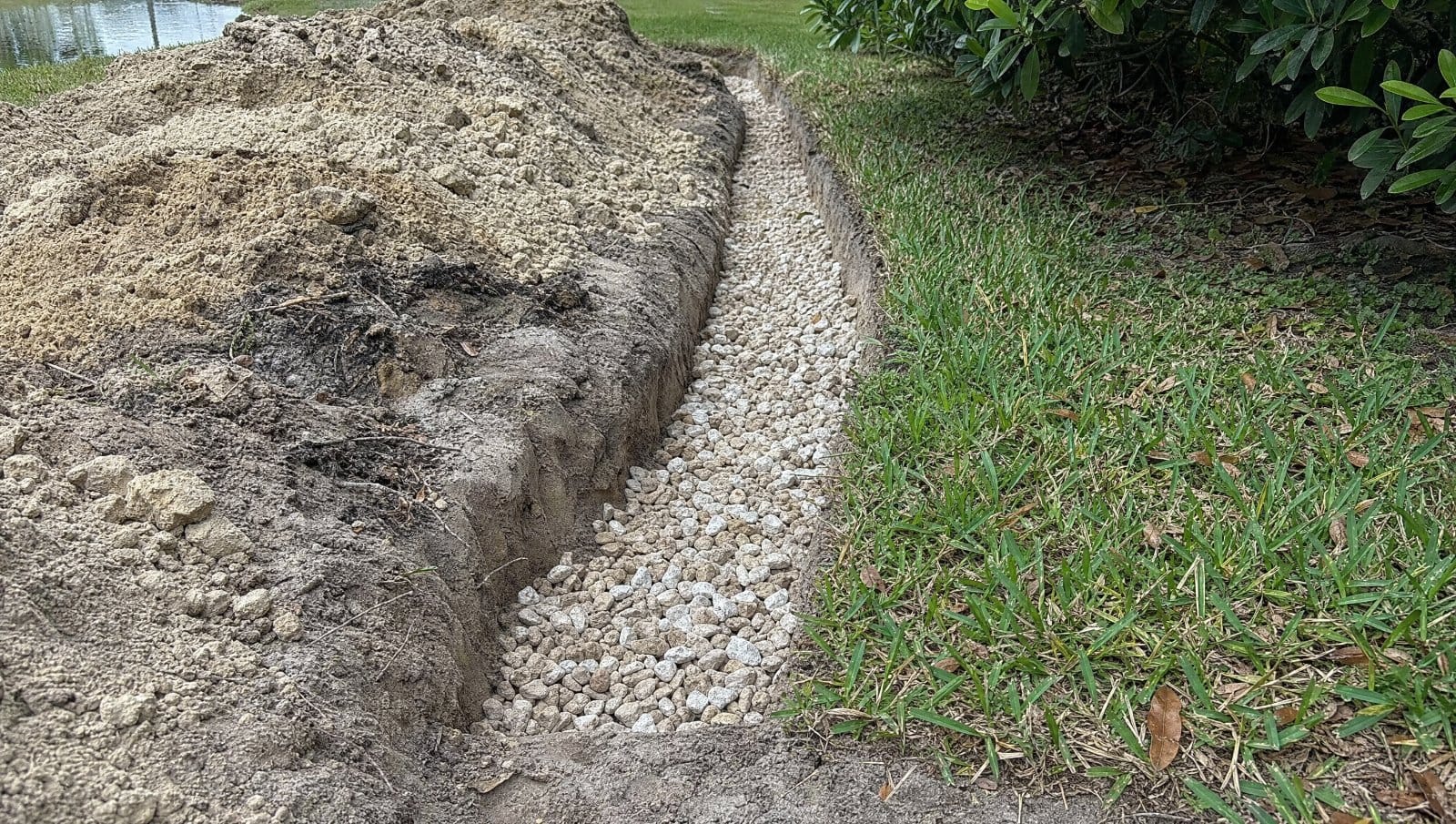
A pipeless French drain is exactly what it sounds like: a drainage system that works without a traditional perforated pipe. Instead of a pipe carrying water away, this system uses a trench filled with gravel to do the job. The whole idea is based on a simple principle: water follows the path of least resistance. The gravel creates a highly permeable channel that’s much easier for water to flow through than compacted soil. This method is particularly effective for managing mild drainage issues in yards with decent soil and a gentle, natural slope to guide the water. It’s a more natural-looking solution that relies on gravity and the right materials to redirect excess water.
Essential Materials
The beauty of a pipeless French drain lies in its simplicity, and that extends to the materials. The primary component is gravel or crushed stone. This is what fills the trench and creates the channel for water to flow through. The size and type of gravel are important for ensuring good water flow without being too loose. The other critical material is a high-quality landscape fabric. This fabric acts as a filter, lining the trench before the gravel is added. Its job is to keep soil, silt, and other debris from mixing with the gravel and clogging up the system over time. Without it, your drain’s effectiveness and lifespan would be significantly shorter.
The Installation Steps
The process for installing a pipeless French drain is straightforward but requires precision. First, a trench is dug with a slight downward slope, guiding water away from problem areas toward a suitable exit point. Next, the trench is lined with landscape fabric, with enough excess on the sides to fold over the top later. Then, the trench is filled with gravel. When it rains, water soaks into the ground and easily enters the gravel-filled trench. Gravity takes over, pulling the water along the sloped channel until it can safely disperse. While it sounds simple, getting the slope and materials right is key. For a system built to last, professional drainage solutions ensure every detail is handled correctly from the start.
The Pros: Why Choose a Pipeless French Drain?
A pipeless French drain might sound a bit unconventional, but it comes with some serious perks, especially for specific yard situations. If you’re dealing with minor water pooling and are looking for a straightforward solution, this approach has a lot to offer. It strips the traditional French drain down to its essentials—a trench and gravel—making it a simpler and often more accessible option. Before you start digging, let’s walk through the key advantages that make a pipeless drain an attractive choice for many Florida homeowners.
It’s More Budget-Friendly
One of the biggest draws of a pipeless French drain is the cost savings. By eliminating the perforated pipe, you cut down on material expenses right from the start. Pipes can be a significant part of the budget for a traditional drain, so removing that component makes the whole project more affordable. This is perfect if you’re looking for an effective water management solution that won’t break the bank. You’re essentially getting the core function of a French drain—creating a path for water to flow away—without the added cost of manufactured piping, making it a smart financial choice for smaller-scale drainage issues.
A Manageable DIY Project
If you’re the type who likes to roll up your sleeves and tackle home improvement projects yourself, the pipeless French drain is a great weekend warrior task. The installation is much simpler without a pipe to wrangle. You don’t have to worry about fitting long, rigid sections of pipe into a trench or ensuring the connections are perfect. This simplicity makes it easier to install in tricky spots, like narrow side yards or areas with underground utility lines. While it still requires some muscle for digging, the straightforward process makes it one of the more approachable drainage solutions for a DIYer to handle.
Less Disruption to Your Yard
No one wants their yard to look like a major construction zone. A pipeless French drain is a less invasive option that minimizes disruption to your established lawn and garden beds. Because it’s often used for smaller, more localized water problems, the trench you need to dig can be narrower and shallower than one for a traditional system. This means less digging, less displaced soil, and a quicker recovery time for your grass and plants. You can solve that annoying soggy spot near your patio without having to undertake a massive excavation project, keeping your landscape looking its best.
Blends Naturally into Your Landscape
Aesthetics matter, and a pipeless French drain scores high marks for its ability to disappear into your yard. Once the trench is filled with gravel, you have a few options. You can use decorative stone that complements your garden design, or you can cover the gravel with topsoil and plant grass or ground cover right over it. This makes the drain virtually invisible, preserving the natural look of your lawn. It integrates seamlessly, unlike some drainage systems that can be an eyesore. This allows you to manage water effectively while enhancing your property’s overall curb appeal and complementing your other hardscaping services.
The Cons: Potential Downsides to Consider
While a pipeless French drain can be a great fit for certain situations, it’s not a one-size-fits-all fix. It’s important to look at the potential drawbacks before you start digging. For many Florida properties, especially those dealing with significant water issues or specific soil types, these limitations can be a dealbreaker. Understanding the cons will help you decide if this DIY-friendly option is truly the right long-term solution for your yard.
Slower Drainage Speed
Without a perforated pipe to create a clear channel, water has to work its way through the gravel and landscape fabric on its own. This process is naturally slower. In soil with a high clay content, which is common here in Central Florida, water movement is already sluggish. A pipeless drain in this environment can be less efficient, meaning water might not drain away as quickly as you need it to during a sudden downpour. This can lead to the very pooling and soggy spots you were trying to eliminate.
Higher Risk of Clogging
One of the biggest challenges with a pipeless French drain is its susceptibility to clogging. Over time, fine particles of soil, silt, and other debris can wash into the gravel, filling the small gaps that allow water to flow. When these gaps get clogged, the drain stops working effectively. This means you’ll likely face more frequent maintenance to keep it clear. A system with a pipe is better protected from this kind of sediment buildup, giving it a distinct advantage for long-term, low-maintenance performance.
Not Ideal for Heavy Downpours
Florida is no stranger to heavy, intense rainstorms. A pipeless French drain simply isn’t designed to handle a large volume of stormwater all at once. During a significant downpour, the system can quickly become overwhelmed and may overflow, failing to protect your foundation or garden beds. If your property struggles with major water accumulation after a storm, you’ll need more robust drainage solutions that can move a high capacity of water away from your home quickly and efficiently.
A Shorter Lifespan
Because they are more prone to clogging and drain water more slowly, pipeless French drains often have a shorter functional lifespan than their piped counterparts. The constant battle with sediment and the potential for slow-moving, standing water within the trench can cause the system to fail sooner. While the initial cost is lower, you might find yourself needing to dig it up and replace it much earlier than you would a professionally installed system with a pipe, which is built for greater durability and longevity.
Depends Heavily on Your Soil Type
The success of a pipeless French drain is heavily dependent on the type of soil in your yard. It can work reasonably well in sandy or loamy soils that drain fairly well on their own. However, if your yard is mostly dense clay soil, a pipeless drain will struggle. Clay particles are very fine and can easily clog the system, and the soil itself doesn’t allow water to percolate through easily. Before committing to this method, it’s crucial to understand your soil composition, as it’s a major factor in whether this type of drain will help or hinder your water problems.
Is a Pipeless French Drain the Right Choice for Your Yard?
Deciding on the best drainage system isn’t a one-size-fits-all situation. A pipeless French drain, often called a rock drain, can be a fantastic and simple fix, but its success really hinges on your yard’s specific conditions. Before you start digging, it’s important to weigh a few key factors to see if this more natural approach is the right fit for your property. Think of it like choosing the right plant for the right spot in your garden—you need to consider the soil, the amount of sun (or in this case, water), and the overall environment. Getting this right from the start can save you a lot of headaches down the road.
When you’re facing soggy spots and standing water, finding the right landscape drainage solutions is key to protecting your property and enjoying your outdoor space. Let’s walk through the specific scenarios where a pipeless French drain truly shines.
Best for Certain Soil Conditions
The type of soil in your yard is probably the biggest factor in whether a pipeless drain will work. This method is most effective in yards with sandy or loose soil that drains well on its own. The whole concept relies on water filtering down through the gravel trench and then naturally seeping into the surrounding subsoil. If your soil is porous, it can handle this process beautifully.
However, if you’re dealing with heavy, compacted clay soil—which is common in many parts of Central Florida—a pipeless drain will likely struggle. Clay holds onto water instead of letting it pass through, which means your trench could just turn into a water-logged ditch that doesn’t drain.
Ideal for Minor Water Issues
Think about the scale of your water problem. Is it a small, persistently damp area on your lawn after it rains, or is it a major issue where water pools against your home’s foundation? A pipeless French drain is an excellent tool for tackling minor drainage annoyances. It can effectively dry out a soggy patch in a garden bed or a low spot in the yard that takes too long to dry.
For more serious water problems, like significant runoff from a slope or heavy seasonal downpours that threaten your home, you’ll need a more powerful solution. A traditional French drain with a perforated pipe is designed to capture and move large volumes of water quickly and efficiently to a safe exit point.
A Great Option for Smaller Budgets
If you’re looking for a cost-effective fix, a pipeless French drain is definitely an attractive option. The savings come from a few places. First, you eliminate the cost of the perforated pipe itself. The installation is also generally simpler, requiring less digging and labor compared to a traditional piped system. This makes it a more manageable project, whether you’re doing it yourself or hiring professionals.
While the upfront cost is lower, it’s important to be sure it’s the right long-term solution for your specific problem. If a pipeless drain isn’t quite up to the task, you might end up spending more later to install a more robust system.
Works Well in Tricky Spaces
Sometimes, the best location for a drain is also the most complicated. Your yard might have underground utility lines, sprinkler systems, or mature tree roots that you absolutely cannot disturb. In these situations, digging a deep, wide trench for a traditional piped system can be risky or even impossible.
A pipeless French drain offers a great alternative. Since it can often be shallower and requires less extensive digging, it can be carefully installed in tight or sensitive areas. This makes it a practical choice for narrow side yards or spots where you need to provide effective drainage without disrupting existing infrastructure or landscaping.
How to Keep Your Pipeless French Drain Working
A pipeless French drain is a fantastic, low-profile solution for managing excess water, but it isn’t a “set it and forget it” feature. Because it relies entirely on gravel to channel water, it’s more susceptible to clogs from soil, silt, and debris over time. The good news is that a little proactive care can go a long way in keeping your drain flowing freely and protecting your property from water damage. Regular inspections, simple cleaning, and knowing what to look for can extend the life of your drain significantly. When you stay on top of maintenance, you ensure your yard gets the protection it needs. If you find the issues are beyond simple upkeep, professional drainage solutions can restore proper function to your landscape.
Simple Inspection and Cleaning Tips
The best time to check on your pipeless French drain is right after it rains. Take a walk along the trench and look for any areas where water is pooling on the surface instead of soaking in. This is your first clue that a clog might be forming. Throughout the year, make a habit of clearing away leaves, twigs, and other yard debris from the top of the gravel bed. For a more thorough cleaning, some DIY installers create what are called “rock socks” by wrapping sections of gravel in landscape fabric. This allows you to lift out a section, rinse the gravel, and clear out any accumulated sediment before placing it back in the trench.
Maintaining Your Gravel Bed
The gravel in your drain is the star of the show, creating the channels for water to flow away from your home. Over time, fine particles of soil and silt can wash into the trench and settle between the stones, slowly reducing the drain’s effectiveness. To combat this, you can gently rake the top layer of gravel a few times a year to break up any compacted sediment. You may also notice the gravel level sinking over time as it settles. It’s a good idea to top it off with fresh, clean gravel as needed to keep the trench full and ensure it can handle the water volume it was designed for.
Common Maintenance Myths
One of the biggest myths about pipeless French drains is that they are completely maintenance-free. While they are simpler than piped systems, they absolutely require attention. Without a pipe to protect the channel, they are vulnerable to sediment buildup and root intrusion. Roots from nearby trees and shrubs are naturally drawn to the water source in the trench and can quickly fill the gaps between the gravel, creating a dense, water-blocking mat. Keeping an eye on surrounding plants and considering professional arborist services to manage root growth can prevent major clogs before they start. Ignoring your drain is the fastest way to find yourself with a soggy, flooded yard again.
Warning Signs It’s Time for a Repair
Your drain will give you clear signals when it’s struggling. If you notice that water is moving much slower than it used to or that your yard remains soggy long after a storm, it’s a major red flag. Puddles forming directly over the drain path are a sure sign of a clog. You might also see mud or silt accumulating on the surface of the gravel, which means the system is getting overwhelmed and can no longer filter water effectively. When you spot these issues, it’s time to call for help. A professional can assess whether the drain can be repaired or if you need a more permanent excavation and drainage solution.
Related Articles
Frequently Asked Questions
How deep does a pipeless French drain need to be? The depth of the trench really depends on the specific water issue you’re trying to solve. For general surface water problems, a trench that’s about 8 to 12 inches wide and 12 to 18 inches deep is often sufficient. The most critical factor isn’t the depth but the slope. You need to ensure the trench has a consistent, gentle downward slope—about a 1% grade, or one inch of drop for every eight feet of length—to keep the water moving in the right direction.
Is a pipeless French drain better than one with a pipe? One isn’t necessarily “better” than the other; they’re just suited for different jobs. A pipeless drain is a great, cost-effective solution for minor, localized soggy spots in yards with soil that drains well. Think of it as a targeted fix. A traditional French drain with a pipe is the heavy-duty option, designed to handle a much larger volume of water and move it quickly over long distances. It’s the right choice for serious drainage problems, heavy clay soil, or protecting your home’s foundation from significant runoff.
How long will a pipeless French drain actually last? The lifespan of a pipeless drain is shorter than a piped system and depends heavily on your soil type and how well you maintain it. In ideal sandy soil with regular upkeep, it could function well for many years. However, because it’s more prone to clogging from silt and soil, its effectiveness can decline over time. Consistent cleaning and preventing debris from building up are key to getting the most life out of it.
What if my yard has heavy clay soil? Can I still install one? It’s generally not a good idea to use a pipeless French drain in heavy clay soil. Clay particles are very fine and don’t allow water to pass through easily, which means your trench will likely fill with water and stay full instead of draining away. The clay will also quickly clog the gravel. For properties with clay soil, a traditional French drain with a perforated pipe and professional installation is a much more reliable and effective long-term solution.
Can I plant grass or other plants on top of the drain? Yes, you can absolutely make the drain blend in with your landscape. After filling the trench with gravel and folding the landscape fabric over the top, you can add a layer of topsoil and plant grass seed or lay sod directly over it. Shallow-rooted ground covers also work well. Just be sure to avoid planting trees or large shrubs near the drain, as their roots will seek out the water and can quickly clog the entire system.